

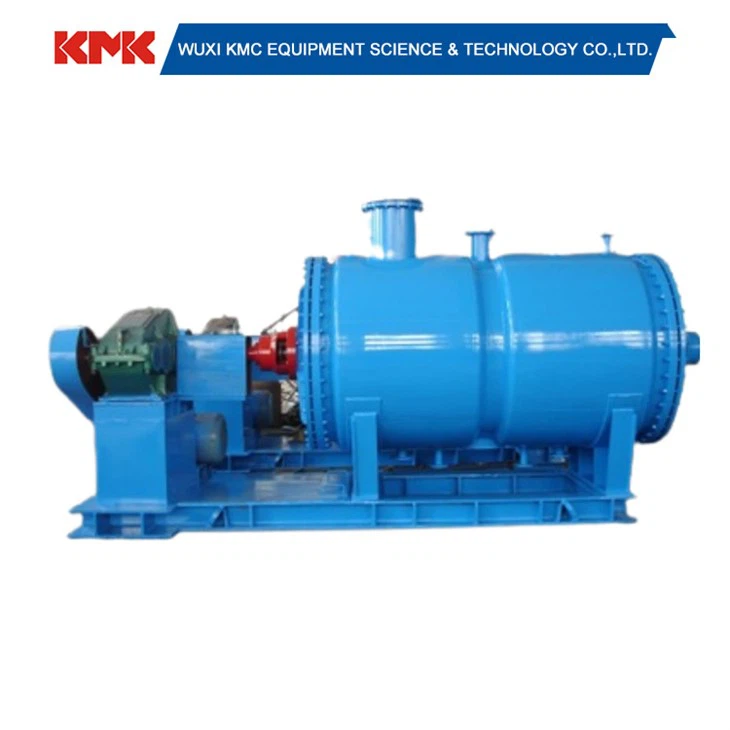
Rotary Vacuum Dryer
Description
Technical Parameters
Introduction
The drying process flow of the rotary vacuum dryer:
1. The heated thermal working fluid of the heating device enters the vacuum heat exchange and heat dissipation drying chamber through the thermal inlet
The thermal energy of the thermal conductive working fluid is transmitted through the inner wall of the heat pipe type heat exchange device and the heat dissipation riser of the drying chamber through vacuum heat exchange and heat dissipation
Row heat dissipation.
2. After the wet materials enter the interior of the vacuum heat exchange and heat dissipation drying chamber through the inlet and outlet valves of the vacuum heat exchange and heat dissipation drying chamber, close the inlet and outlet valves
3. After the heat dissipation, the heat conduction working fluid is discharged from the vacuum heat exchange drying chamber through the heat conduction outlet, and then enters the heating device again for heating. The heat conduction working fluid circulates back and forth for heat conduction, heat dissipation, and heat conduction heating.
4. The thermal conductive working fluid described is water.
5. Start the vacuum unit and extract the gas from the drying chamber for vacuum heat exchange and heat dissipation. The preferred air pressure inside the drying chamber for vacuum heat exchange and heat dissipation is -0.096Mpa.
6. Activate the driving device, which drives the rotary motion of the vacuum heat exchange and heat dissipation drying chamber.
7. During the rotation process of the vacuum heat exchange and heat dissipation drying silo, the heat dissipation riser can stir wet materials, prevent the agglomeration of wet materials, and reduce the drying dead angle of materials.
8. The materials in the vacuum heat exchange and heat dissipation drying chamber are dried and heated, resulting in moisture that is pumped out of the drying chamber through the vacuum unit through the air extraction port.
9. The dried materials are discharged through the inlet and outlet valves outside the drying chamber for vacuum heat exchange and heat dissipation


Hot Tags: rotary vacuum dryer, China rotary vacuum dryer manufacturers, suppliers, factory, drying engineer, drying upgrade, quality drying equipment, Horizontal Thin Film Dryer, agricultural drying equipment, drying belt
Previous
Vacuum Harrow DryerNext
Vacuum Rake DryerSend Inquiry


