

What is the working principle of a Wiped Film Dryer?
May 16, 2025
Leave a message
Hey there! As a supplier of Wiped Film Dryers, I'm super excited to share with you the ins and outs of how these amazing machines work. In this blog, we'll dig deep into the working principle of a Wiped Film Dryer, exploring its components, processes, and benefits. So, let's get started!
The Basics of a Wiped Film Dryer
A Wiped Film Dryer is a type of evaporator that's designed to handle heat-sensitive, viscous, and high-boiling point materials. It's widely used in various industries, including chemical, pharmaceutical, food, and environmental protection. The main advantage of a Wiped Film Dryer is its ability to provide a short residence time and a high heat transfer coefficient, which helps to minimize product degradation and improve the efficiency of the drying process.

Components of a Wiped Film Dryer
Before we dive into the working principle, let's take a look at the main components of a Wiped Film Dryer:
- Evaporator Body: This is the main part of the dryer where the evaporation process takes place. It's usually a cylindrical vessel with a heating jacket on the outside to provide the necessary heat for evaporation.
- Rotary Wiper System: The wiper system consists of a set of blades or brushes that rotate inside the evaporator body. The purpose of the wiper system is to spread the feed material into a thin film on the heated surface of the evaporator body, which increases the surface area for evaporation and improves the heat transfer efficiency.
- Feed Inlet: This is where the feed material is introduced into the dryer. The feed material can be a liquid, a slurry, or a paste, depending on the nature of the product.
- Vapor Outlet: The vapor outlet is located at the top of the evaporator body and is used to remove the vapor generated during the evaporation process. The vapor is usually condensed and collected in a separate condenser.
- Residue Outlet: The residue outlet is located at the bottom of the evaporator body and is used to remove the dried product or residue from the dryer.
Working Principle of a Wiped Film Dryer
Now that we know the components of a Wiped Film Dryer, let's take a closer look at how it works. The working principle of a Wiped Film Dryer can be divided into the following steps:
- Feed Introduction: The feed material is introduced into the dryer through the feed inlet. The feed material can be preheated or cooled before entering the dryer, depending on the requirements of the process.
- Film Formation: As the feed material enters the evaporator body, it comes into contact with the heated surface of the evaporator body. The rotary wiper system then spreads the feed material into a thin film on the heated surface, which increases the surface area for evaporation and improves the heat transfer efficiency.
- Evaporation: As the thin film of feed material moves along the heated surface of the evaporator body, the heat from the heating jacket causes the volatile components of the feed material to evaporate. The vapor generated during the evaporation process rises to the top of the evaporator body and is removed through the vapor outlet.
- Condensation: The vapor removed from the evaporator body is then condensed in a separate condenser. The condensed vapor can be collected and reused or disposed of, depending on the nature of the product.
- Residue Removal: The dried product or residue that remains on the heated surface of the evaporator body is scraped off by the rotary wiper system and falls to the bottom of the evaporator body. The residue is then removed through the residue outlet.
Advantages of a Wiped Film Dryer
There are several advantages of using a Wiped Film Dryer compared to other types of dryers:
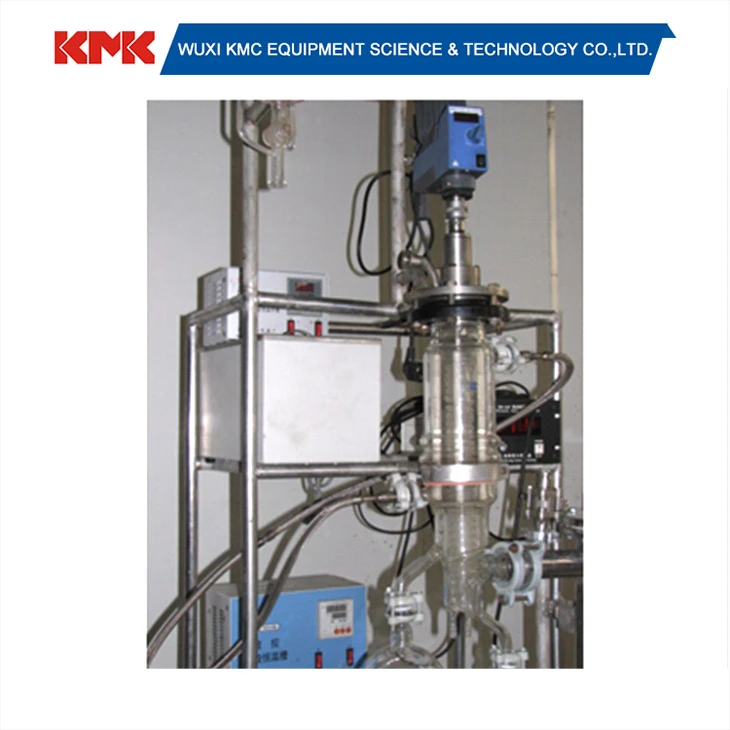
- Short Residence Time: The short residence time of the feed material in the dryer helps to minimize product degradation and improve the quality of the dried product.
- High Heat Transfer Coefficient: The high heat transfer coefficient of the dryer helps to improve the efficiency of the drying process and reduce the energy consumption.
- Ability to Handle Heat-Sensitive Materials: The Wiped Film Dryer is designed to handle heat-sensitive materials, which makes it suitable for use in the pharmaceutical, food, and chemical industries.
- Low Operating Pressure: The low operating pressure of the dryer helps to reduce the boiling point of the feed material and minimize the risk of product degradation.
- Easy to Clean and Maintain: The simple design of the dryer makes it easy to clean and maintain, which helps to reduce the downtime and improve the productivity of the process.
Applications of a Wiped Film Dryer
The Wiped Film Dryer is widely used in various industries for the drying, concentration, and purification of heat-sensitive, viscous, and high-boiling point materials. Some of the common applications of a Wiped Film Dryer include:
- Chemical Industry: The dryer is used for the drying and purification of chemicals, such as polymers, resins, and solvents.
- Pharmaceutical Industry: The dryer is used for the drying and concentration of pharmaceutical products, such as antibiotics, vitamins, and enzymes.
- Food Industry: The dryer is used for the drying and concentration of food products, such as fruit juices, milk, and coffee.
- Environmental Protection Industry: The dryer is used for the treatment of industrial wastewater and the recovery of valuable resources from waste materials.
Related Products
If you're interested in learning more about thin film drying technology, you might want to check out our Thin Film Drying page. We also offer a Vertical Thin Film Dryer and a Vacuum Harrow Dryer, which are both designed to provide efficient and reliable drying solutions for a wide range of applications.

Conclusion
In conclusion, the Wiped Film Dryer is a highly efficient and versatile drying solution that's suitable for use in a wide range of industries. Its short residence time, high heat transfer coefficient, and ability to handle heat-sensitive materials make it an ideal choice for the drying, concentration, and purification of various products. If you're looking for a reliable and efficient drying solution for your business, we encourage you to contact us to discuss your specific requirements. We'd be happy to help you find the right Wiped Film Dryer for your needs.
References
- Perry, R. H., & Green, D. W. (Eds.). (2008). Perry's Chemical Engineers' Handbook (8th ed.). McGraw-Hill.
- Geankoplis, C. J. (2003). Transport Processes and Unit Operations (4th ed.). Prentice Hall.
- Mujumdar, A. S. (Ed.). (2007). Handbook of Industrial Drying (3rd ed.). CRC Press.