

How to improve the heat transfer coefficient in a Short Path Evaporator?
May 15, 2025
Leave a message
As a supplier of Short Path Evaporators, I've had the privilege of working closely with various industries that rely on this advanced equipment for efficient separation and purification processes. One of the most critical factors in the performance of a Short Path Evaporator is the heat transfer coefficient. A higher heat transfer coefficient means more efficient heat transfer, leading to better evaporation rates, improved product quality, and reduced energy consumption. In this blog, I'll share some practical strategies on how to improve the heat transfer coefficient in a Short Path Evaporator.
Understanding the Heat Transfer Coefficient
Before delving into the methods of improvement, it's essential to understand what the heat transfer coefficient represents. The heat transfer coefficient (h) is a measure of the ability of a material or system to transfer heat. In the context of a Short Path Evaporator, it quantifies the rate of heat transfer from the heating medium (usually a hot fluid) to the feed solution being evaporated. A higher value of h indicates that heat can be transferred more quickly and efficiently.
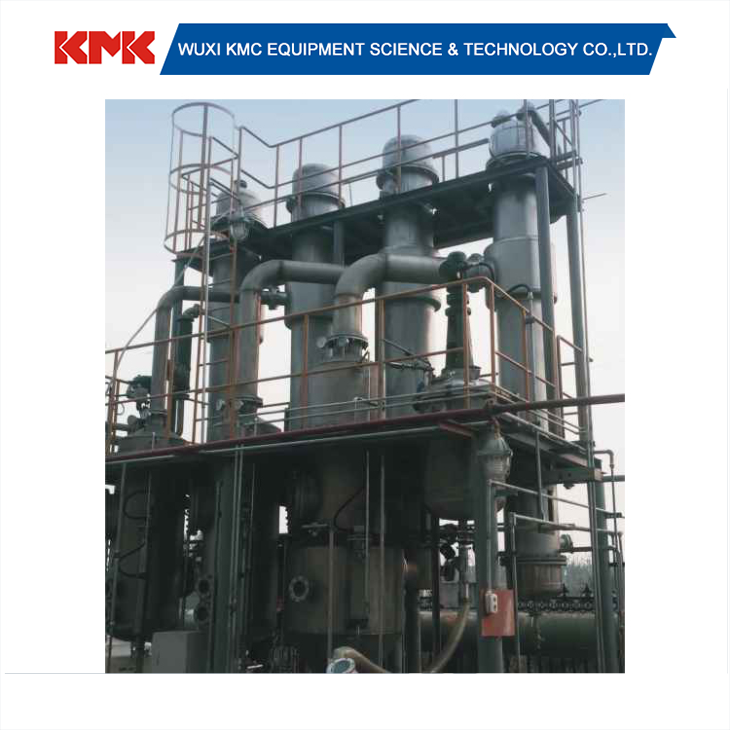
The heat transfer coefficient is influenced by several factors, including the properties of the fluids involved (such as viscosity, thermal conductivity, and density), the flow characteristics (laminar or turbulent), the geometry of the evaporator, and the presence of fouling or scaling on the heat transfer surfaces.
Optimizing Fluid Properties
The properties of the feed solution and the heating medium play a significant role in determining the heat transfer coefficient. Here are some ways to optimize these properties:
- Viscosity Reduction: High - viscosity fluids have lower heat transfer coefficients because they impede the flow and reduce the rate of heat transfer. One way to reduce viscosity is by pre - heating the feed solution before it enters the evaporator. This can be achieved using a pre - heater, which raises the temperature of the solution and lowers its viscosity. For example, in the processing of heavy oils, pre - heating can significantly improve the heat transfer performance of the Short Path Evaporator.
- Enhancing Thermal Conductivity: Fluids with higher thermal conductivity transfer heat more readily. If possible, select a heating medium with high thermal conductivity. For instance, water is a commonly used heating medium due to its relatively high thermal conductivity. Additionally, some additives can be used to enhance the thermal conductivity of the feed solution, although this approach needs to be carefully evaluated to ensure it does not affect the quality of the final product.
Improving Flow Characteristics
The flow pattern of the fluids inside the Short Path Evaporator has a profound impact on the heat transfer coefficient. Turbulent flow generally results in higher heat transfer coefficients compared to laminar flow because it promotes better mixing and reduces the thickness of the boundary layer near the heat transfer surface.

- Increasing Flow Velocity: By increasing the flow velocity of the feed solution and the heating medium, the flow regime can be shifted from laminar to turbulent. This can be achieved by adjusting the pump settings or modifying the piping system. However, it's important to note that excessive flow velocity may lead to increased pressure drop and energy consumption, so a balance needs to be struck.
- Using Turbulence Promoters: Turbulence promoters, such as baffles or inserts, can be installed inside the evaporator to disrupt the flow and create turbulence. These devices increase the mixing of the fluids and reduce the thickness of the boundary layer, thereby enhancing the heat transfer coefficient. For example, helical inserts can be used in the tubes of the evaporator to induce a swirling flow, which improves heat transfer.
Optimizing Evaporator Geometry
The design and geometry of the Short Path Evaporator also affect the heat transfer coefficient. Here are some aspects to consider:
- Surface Area: Increasing the heat transfer surface area allows for more contact between the heating medium and the feed solution, resulting in a higher heat transfer rate. This can be achieved by using finned tubes or increasing the number of tubes in the evaporator. However, increasing the surface area also increases the cost and complexity of the equipment, so a cost - benefit analysis is necessary.
- Tube Diameter and Length: The diameter and length of the tubes in the evaporator influence the flow characteristics and the heat transfer coefficient. Smaller tube diameters generally result in higher heat transfer coefficients due to the increased surface - to - volume ratio. However, they also increase the pressure drop. The length of the tubes should be optimized to ensure sufficient residence time for evaporation while minimizing the pressure drop.
Preventing Fouling and Scaling
Fouling and scaling on the heat transfer surfaces can significantly reduce the heat transfer coefficient by acting as an insulating layer. Here are some measures to prevent fouling and scaling:
- Feed Pretreatment: Pretreating the feed solution to remove impurities, such as suspended solids, salts, and organic matter, can reduce the likelihood of fouling and scaling. Filtration, sedimentation, and ion exchange are common pretreatment methods.
- Cleaning Procedures: Regular cleaning of the evaporator is essential to remove any fouling or scaling that may have accumulated on the heat transfer surfaces. Chemical cleaning, mechanical cleaning, or a combination of both can be used. The frequency and method of cleaning depend on the nature of the feed solution and the operating conditions.
Comparing with Other Evaporator Types
It's also beneficial to compare the Short Path Evaporator with other types of evaporators, such as Multi Effect Falling Film Evaporator, Falling Film Evaporators, and Centrifugal Thin Film Evaporator. Each type of evaporator has its own advantages and disadvantages in terms of heat transfer efficiency, operating conditions, and application scope.

The Short Path Evaporator is particularly suitable for heat - sensitive materials and high - boiling - point substances due to its short residence time and low operating pressure. In contrast, Multi Effect Falling Film Evaporators are more energy - efficient for large - scale evaporation processes, while Falling Film Evaporators are widely used for continuous evaporation of dilute solutions. Centrifugal Thin Film Evaporators offer high evaporation rates and are suitable for viscous and fouling - prone materials.
Conclusion
Improving the heat transfer coefficient in a Short Path Evaporator is crucial for enhancing its performance and efficiency. By optimizing fluid properties, improving flow characteristics, optimizing evaporator geometry, and preventing fouling and scaling, significant improvements in the heat transfer coefficient can be achieved. As a supplier of Short Path Evaporators, we are committed to providing our customers with high - quality equipment and technical support to help them achieve the best possible results.
If you are interested in our Short Path Evaporators or have any questions about improving the heat transfer coefficient, please feel free to contact us for procurement and further discussion. We look forward to working with you to meet your evaporation and purification needs.
References
- Incropera, F. P., & DeWitt, D. P. (2002). Fundamentals of Heat and Mass Transfer. John Wiley & Sons.
- Perry, R. H., & Green, D. W. (1997). Perry's Chemical Engineers' Handbook. McGraw - Hill.
- Geankoplis, C. J. (1993). Transport Processes and Unit Operations. Prentice Hall.