

How does the short path evaporator prevent scaling and fouling?
Jun 01, 2026
Leave a message
Understanding Scaling and Fouling
Scaling refers to the deposition of insoluble salts on the heat transfer surfaces of the evaporator. These salts can come from the feed material or from the water used in the system. Fouling, on the other hand, is the accumulation of organic or inorganic materials on the surfaces of the evaporator. This can include things like proteins, fats, and other debris.
Both scaling and fouling can have a negative impact on the performance of a short path evaporator. They can reduce the heat transfer efficiency, increase the pressure drop across the system, and cause blockages in the pipes and valves. Over time, this can lead to reduced productivity, increased energy consumption, and higher maintenance costs.
Design Features to Prevent Scaling and Fouling
One of the key ways we prevent scaling and fouling in our short path evaporators is through careful design. Our evaporators are designed with smooth surfaces and minimal dead zones to prevent the accumulation of materials. The use of high-quality materials, such as stainless steel, also helps to resist corrosion and scaling.

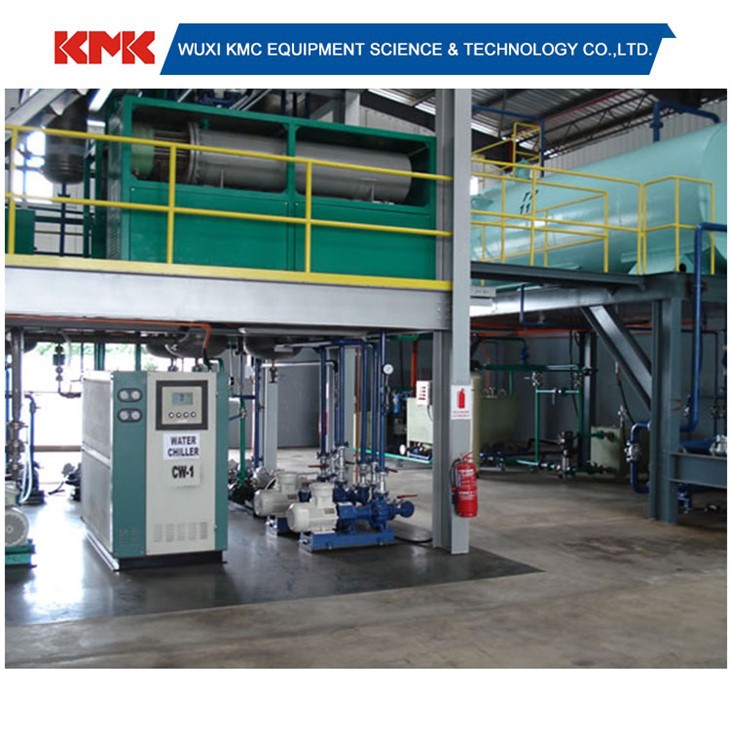
We also incorporate features such as self-cleaning mechanisms and anti-fouling coatings. Self-cleaning mechanisms can include things like rotating scrapers or brushes that continuously clean the heat transfer surfaces. Anti-fouling coatings can help to prevent the adhesion of materials to the surfaces of the evaporator.
Feed Pre-treatment
Another important strategy for preventing scaling and fouling is feed pre-treatment. This involves removing any impurities or contaminants from the feed material before it enters the evaporator. This can include things like filtering, centrifuging, or chemical treatment.
By removing these impurities, we can reduce the amount of material that can potentially cause scaling and fouling. For example, if the feed material contains a high level of salts, we can use a process such as reverse osmosis to remove the salts before the material enters the evaporator.
Operating Conditions
The operating conditions of the short path evaporator can also have a significant impact on scaling and fouling. We carefully control the temperature, pressure, and flow rate of the system to prevent the formation of scales and fouling.
For example, if the temperature is too high, it can cause the salts in the feed material to precipitate out and form scales. On the other hand, if the temperature is too low, it can lead to the accumulation of organic materials on the surfaces of the evaporator.
We also monitor the pH of the feed material and adjust it if necessary. A pH that is too high or too low can increase the likelihood of scaling and fouling.
Chemical Additives
In some cases, we may use chemical additives to prevent scaling and fouling. These additives can include things like anti-scalants, dispersants, and biocides.
Anti-scalants work by preventing the formation of scales on the heat transfer surfaces. They do this by binding to the salts in the feed material and preventing them from precipitating out. Dispersants help to keep the particles in the feed material suspended in the liquid, preventing them from settling on the surfaces of the evaporator. Biocides are used to prevent the growth of bacteria and other microorganisms in the system, which can also contribute to fouling.
Regular Maintenance
Regular maintenance is essential for preventing scaling and fouling in a short path evaporator. This includes things like cleaning the heat transfer surfaces, inspecting the pipes and valves for blockages, and replacing any worn or damaged parts.
We recommend that our customers perform regular maintenance on their short path evaporators to ensure optimal performance. This can help to extend the lifespan of the system and reduce the risk of scaling and fouling.
Conclusion
Preventing scaling and fouling in a short path evaporator is crucial for maintaining its efficiency and performance. By using a combination of design features, feed pre-treatment, operating conditions, chemical additives, and regular maintenance, we can effectively prevent scaling and fouling in our short path evaporators.
If you are interested in learning more about our short path evaporators or have any questions about preventing scaling and fouling, please feel free to contact us. We would be happy to discuss your specific needs and provide you with a customized solution.
Additional Resources
For more information on related technologies, you can visit the following links:
If you are considering purchasing a short path evaporator or have any questions about our products, please reach out to us. Our team of experts is ready to assist you in finding the best solution for your needs.