

What is the difference between thin film dryers and tray dryers?
Jul 02, 2025
Leave a message
Hey there! As a supplier of thin film dryers, I often get asked about the differences between thin film dryers and tray dryers. So, I thought I'd write this blog to break it down for you in a simple and easy - to - understand way.
Let's start with tray dryers. Tray dryers are one of the oldest and most common types of dryers out there. They work in a pretty straightforward manner. You place your material on trays, and these trays are stacked inside a chamber. Then, hot air is circulated around the trays to remove moisture from the material.
One of the biggest advantages of tray dryers is their simplicity. They're easy to operate and maintain. If you have a small - scale operation or you're just starting out, a tray dryer can be a great option. You don't need a lot of technical know - how to get it up and running. Also, they're relatively inexpensive compared to some other drying technologies.
However, tray dryers do have their limitations. First off, they're a batch - type drying system. That means you have to load the trays, run the drying cycle, and then unload them before you can start the next batch. This can be time - consuming, especially if you have a high - volume production requirement.
Another issue is the drying uniformity. In a tray dryer, the material on the top trays might dry faster than the ones on the bottom, because of differences in air circulation. This can lead to inconsistent product quality. And if you're dealing with heat - sensitive materials, the long exposure to hot air in a tray dryer can cause damage to the product.
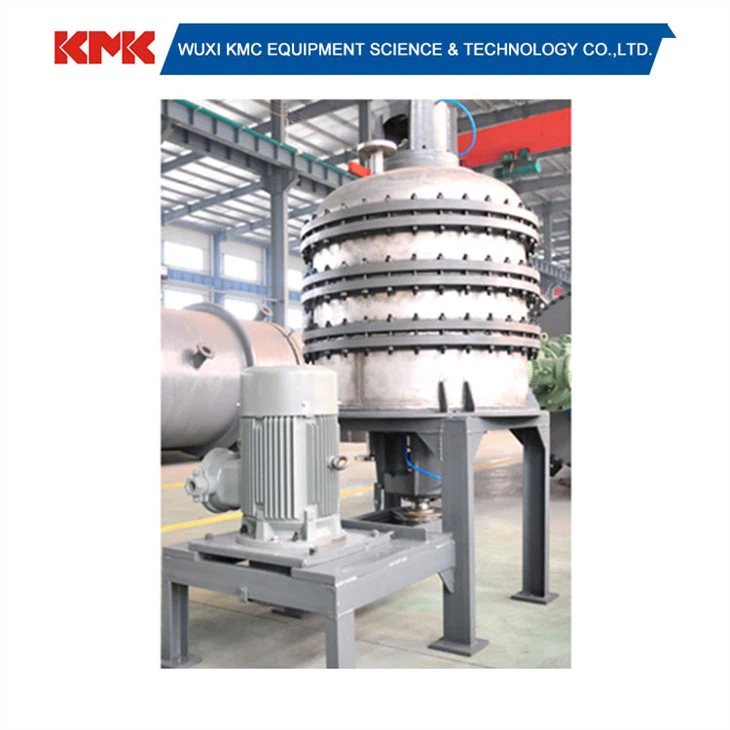
Now, let's talk about thin film dryers. Thin film dryers are a more advanced type of drying technology. In a thin film dryer, the material is spread into a thin film on a heated surface. There are different types of thin film dryers, but one of the most popular ones is the Agitated Thin Film Dryers.
The process of Agitated Thin Film Drying involves a rotor that agitates the material as it forms a thin film on the heated wall of the dryer. This agitation helps in increasing the heat transfer rate and ensures that the drying process is efficient.
One of the main advantages of thin film dryers is their continuous operation. Unlike tray dryers, thin film dryers can run non - stop, which is great for high - volume production. You can just keep feeding the material into the dryer, and it will come out dry at the other end. This not only saves time but also increases productivity.
Thin film dryers also offer excellent drying uniformity. Since the material is spread in a thin film, every part of it has equal exposure to the heat source. This results in a more consistent product quality. And because the drying process is relatively fast, thin film dryers are ideal for heat - sensitive materials. The short exposure time to heat minimizes the risk of product damage.
In terms of energy efficiency, thin film dryers have an edge over tray dryers. The high heat transfer rate in thin film dryers means that less energy is required to achieve the same level of drying. This can lead to significant cost savings in the long run.
Let's compare the two in terms of some key aspects:
1. Drying Speed
As mentioned earlier, thin film dryers are much faster than tray dryers. The thin film formation and agitation in thin film dryers increase the surface area of the material exposed to heat, allowing for rapid moisture removal. Tray dryers, on the other hand, rely on slow - moving hot air to dry the material, which takes a longer time.

2. Product Quality
Thin film dryers produce a more consistent product quality due to uniform drying. In tray dryers, the risk of uneven drying and over - drying or under - drying of the material is higher, which can affect the final product quality.
3. Production Capacity
For large - scale production, thin film dryers are the clear winner. Their continuous operation allows for a much higher throughput compared to the batch - type operation of tray dryers.
4. Energy Consumption
Thin film dryers are more energy - efficient. The efficient heat transfer mechanism reduces the amount of energy needed for drying, while tray dryers often require more energy to circulate hot air and maintain the drying temperature.
5. Space Requirement
Thin film dryers are generally more compact than tray dryers. Tray dryers need a large area to accommodate the trays and the drying chamber, while thin film dryers can be designed to fit into smaller spaces, which can be an advantage if you have limited factory space.
However, it's important to note that thin film dryers are more expensive to purchase and install compared to tray dryers. They also require a certain level of technical expertise to operate and maintain. But if you're looking for high - volume production, consistent product quality, and energy efficiency, the investment in a thin film dryer can be well worth it.
If you're considering other types of dryers, you might also look into Rotary Vacuum Dryer. Rotary vacuum dryers work under vacuum conditions, which can be beneficial for heat - sensitive materials as the lower pressure reduces the boiling point of water, allowing for drying at lower temperatures.
In conclusion, if you have a small - scale operation with low - volume production and a limited budget, a tray dryer might be a suitable option. But if you're in a high - volume production environment, need consistent product quality, and want to save on energy costs, then a thin film dryer is the way to go.
If you're interested in learning more about thin film dryers or are thinking about making a purchase, I'd be more than happy to help you. We can have a detailed discussion about your specific requirements and see which type of thin film dryer would be the best fit for your business. Just reach out, and let's start the conversation!
References
- Perry, R. H., & Green, D. W. (1997). Perry's Chemical Engineers' Handbook. McGraw - Hill.
- Mujumdar, A. S. (Ed.). (2007). Handbook of Industrial Drying. CRC Press.