

What are the applications of thin layer drying in the cosmetic industry?
Dec 25, 2025
Leave a message
In the dynamic and ever - evolving cosmetic industry, the pursuit of high - quality products with long - lasting efficacy and appealing sensory characteristics is a constant. Thin layer drying has emerged as a crucial technology that offers numerous benefits, making it an indispensable part of cosmetic manufacturing processes. As a leading supplier of thin layer drying solutions, I am excited to delve into the various applications of thin layer drying in the cosmetic industry.
1. Preservation of Active Ingredients
One of the primary concerns in the cosmetic industry is the preservation of active ingredients. Many active compounds, such as vitamins, antioxidants, and plant extracts, are sensitive to heat, oxygen, and moisture. Thin layer drying provides a gentle and efficient way to remove moisture from cosmetic formulations while minimizing the exposure of these sensitive ingredients to harsh conditions.
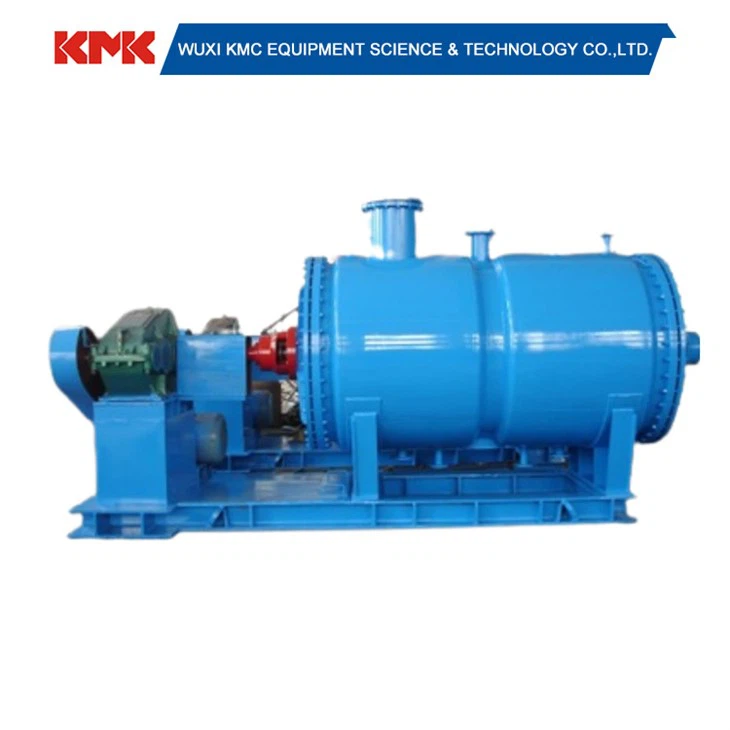
For instance, when processing plant - based extracts for skincare products, thin layer drying can be used to convert liquid extracts into dry powders. This not only extends the shelf - life of the extracts but also makes them easier to store and transport. The reduced moisture content inhibits the growth of microorganisms and slows down the oxidation process, thus maintaining the potency and stability of the active ingredients. Our Horizontal Thin Film Dryer is particularly well - suited for this application. It operates at relatively low temperatures and has a short residence time, which helps to preserve the integrity of the active compounds in the extracts.

2. Production of Powdery Cosmetics
Powdery cosmetics, such as loose powders, pressed powders, and eyeshadows, are highly popular among consumers. Thin layer drying plays a vital role in their production. By using thin layer drying techniques, manufacturers can transform liquid or semi - liquid raw materials into fine powders with uniform particle size and excellent flowability.
In the production of pressed powders, for example, the raw materials are first mixed into a slurry. Then, thin layer drying is employed to remove the solvent or water from the slurry. The resulting dry powder can be easily compressed into a solid form. Our Rotary Vacuum Dryer is a great option for this process. It can operate under vacuum conditions, which reduces the boiling point of the solvent and allows for drying at lower temperatures. This is beneficial for maintaining the quality of the powder, as it prevents the formation of agglomerates and ensures a smooth and consistent texture.
3. Encapsulation of Fragrances and Oils
Fragrances and essential oils are key components in many cosmetic products, providing them with appealing scents and additional therapeutic benefits. However, these volatile substances are prone to evaporation and degradation. Thin layer drying can be used in the encapsulation process to protect these valuable ingredients.
Encapsulation involves coating the fragrance or oil droplets with a protective shell. Thin layer drying can be used to remove the solvent from the encapsulation solution, leaving behind solid microcapsules. These microcapsules can then be incorporated into cosmetic formulations. The advantage of using thin layer drying in this process is that it allows for precise control of the drying conditions, ensuring the formation of stable and uniform microcapsules. Our Wiped Film Drying technology is ideal for encapsulation applications. It can create a thin film of the encapsulation solution on a heated surface, facilitating rapid and efficient drying.
4. Improvement of Product Texture
Texture is an important aspect of cosmetic products. Consumers often prefer products with a smooth, creamy, or lightweight texture. Thin layer drying can be used to adjust the texture of cosmetic formulations.
For example, in the production of creams and lotions, thin layer drying can be used to remove excess water or solvent, resulting in a more concentrated and viscous product. This can enhance the spreadability and adherence of the product on the skin. Additionally, by controlling the drying rate and conditions, manufacturers can achieve a desired particle size distribution in the product, which further affects its texture.
5. Hygiene and Quality Assurance
In the cosmetic industry, hygiene and quality assurance are of utmost importance. Thin layer drying can contribute to these aspects by reducing the moisture content in cosmetic products. Moisture is a breeding ground for bacteria, fungi, and other microorganisms. By removing moisture through thin layer drying, the risk of microbial contamination is significantly reduced.
Moreover, thin layer drying processes can be carried out in a closed and controlled environment, which minimizes the exposure of the product to external contaminants. This helps to ensure the consistency and quality of the cosmetic products, meeting the strict regulatory requirements of the industry.
Conclusion and Call to Action
As demonstrated above, thin layer drying has a wide range of applications in the cosmetic industry, from preserving active ingredients to improving product texture and ensuring hygiene. At our company, we are committed to providing high - quality thin layer drying solutions that meet the diverse needs of the cosmetic manufacturers.
If you are a cosmetic manufacturer looking to enhance the quality and efficiency of your production processes, we invite you to explore our range of thin layer drying equipment. Our team of experts is ready to assist you in selecting the most suitable solution for your specific requirements. Whether you need a Horizontal Thin Film Dryer, a Rotary Vacuum Dryer, or a Wiped Film Drying system, we have the knowledge and experience to help you achieve your goals. Contact us today to start a discussion about your thin layer drying needs and take your cosmetic production to the next level.
References
- Mujumdar, A. S. (Ed.). (2014). Handbook of industrial drying. CRC press.
- Barbosa - Canovas, G. V., Ortega - Rivas, E., Juliano, P., & Yan, H. (2005). Dehydration of foods. Springer.
- Brennan, J. G., Butters, J. R., Cowell, N. D., & Lilly, A. E. V. (1990). Food engineering operations. Elsevier.