

How to prevent foaming during the evaporation process in laboratory evaporators?
Jan 22, 2026
Leave a message
Foaming during the evaporation process in laboratory evaporators can be a persistent and troublesome issue that not only affects the efficiency of the operation but also might lead to inaccurate results. As a trusted Laboratory Evaporators provider, we understand the significance of overcoming these challenges. This blog will delve into the reasons behind foaming, and more importantly, offer tangible strategies to prevent it.
Understanding the Problem of Foaming
The first step in preventing foaming is to understand why it occurs. In laboratory evaporators, foaming is often a result of surface - active agents in the liquid sample. These agents lower the surface tension of the liquid, making it easier for bubbles to form and persist. When the liquid is heated during evaporation, the gas within the liquid (such as dissolved air) expands and forms bubbles. If the surface tension is low, these bubbles can accumulate and create a foam layer.
Another factor contributing to foaming is the nature of the evaporation process itself. For instance, in high - speed evaporation or when using a strong vacuum to accelerate the evaporation rate, the rapid movement of the liquid can cause turbulence. This turbulence can break the liquid into small droplets and mix air into the liquid, further promoting foam formation.
Factors Affecting Foaming
- Composition of the Sample: Samples with high concentrations of proteins, carbohydrates, or surfactants are more prone to foaming. For example, biological samples like cell cultures or protein solutions often contain a variety of surface - active compounds that can cause significant foaming during evaporation.
- Operating Conditions: The temperature, pressure, and stirring speed in the evaporator can all affect foaming. High temperatures can increase the volatility of the liquid and the formation of bubbles. When combined with a low - pressure environment, which is common in many evaporation processes, the likelihood of foaming is enhanced. Similarly, excessive stirring can introduce more air into the liquid, leading to increased foam.
Preventive Strategies
Adjusting the Operating Conditions
One of the simplest ways to prevent foaming is to adjust the operating conditions of the evaporator. Reducing the heating rate can slow down the evaporation process and give the bubbles more time to collapse before they accumulate. For instance, instead of using a high - power heating source right from the start, gradually increase the temperature to allow the liquid to reach the evaporation point more steadily.
Lowering the vacuum level can also be effective. By reducing the pressure difference across the liquid surface, the rate of gas expansion and bubble formation is decreased. This can be achieved by adjusting the vacuum pump settings to maintain a more moderate vacuum during the evaporation process.
Chemical Additives
Antifoaming agents are a popular choice for preventing foaming in laboratory evaporators. These agents work by either reducing the surface tension of the foam or by destabilizing the foam structure. Silicone - based antifoaming agents are commonly used due to their high efficiency and low toxicity. They can be added directly to the sample in small quantities, usually in the range of a few parts per million.
When using chemical additives, it is important to ensure that they do not interfere with the analysis or experiment. For example, in some cases, antifoaming agents might react with the sample components or leave residues that could affect the subsequent results. Therefore, it is advisable to test the compatibility of the antifoaming agent with the sample in a small - scale experiment before using it in a large - scale evaporation process.
Equipment Design and Selection
The design of the evaporator can also play a crucial role in preventing foaming. For example, Horizontal Thin Film Evaporators are designed to create a thin film of the liquid on the heating surface. This thin - film design reduces the residence time of the liquid in the evaporator, minimizing the exposure of the liquid to high temperatures and reducing the likelihood of foaming.
In addition, the use of a Dust Collector can help remove any solid particles or aerosols that might promote foaming. These particles can act as nucleation sites for bubble formation, so removing them can significantly reduce the foaming tendency.
Another option is to choose a Climbing Film Evaporator. In this type of evaporator, the liquid is heated as it climbs up the tubes, and the upward flow helps to break up any foam that might form. The design of the climbing film evaporator also allows for a more uniform heating of the liquid, reducing the chances of local over - heating and foam generation.
Mechanical Methods
Mechanical methods can also be employed to prevent foaming. For example, installing a defoaming device in the evaporator can physically break up the foam. These devices can be in the form of a wire mesh or a rotating impeller that disrupts the foam structure as it forms.
In some cases, simply changing the geometry of the evaporation chamber can help. For example, using a wider and shorter evaporation chamber can reduce the height of the liquid column and the pressure at the bottom of the chamber. This can prevent the accumulation of bubbles and reduce the likelihood of foaming.
Conclusion
Foaming during the evaporation process in laboratory evaporators is a complex issue, but with a comprehensive understanding of its causes and the implementation of appropriate preventive strategies, it can be effectively managed. By adjusting the operating conditions, using chemical additives, selecting the right equipment, and employing mechanical methods, laboratories can ensure a more efficient and accurate evaporation process.

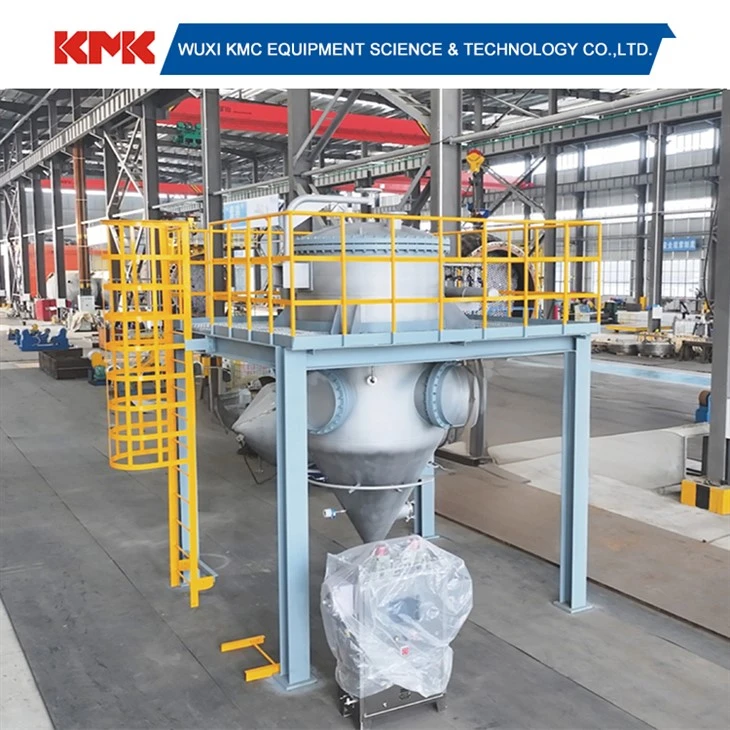
As a Laboratory Evaporators supplier, we are committed to providing high - quality equipment and solutions to meet the diverse needs of our customers. Whether you are facing foaming issues or looking to optimize your evaporation process, we have the expertise and products to assist you. If you are interested in learning more about our laboratory evaporators or need advice on preventing foaming, please do not hesitate to contact us for a procurement discussion.
References
- McCabe, W. L., Smith, J. C., & Harriot, P. (2005). Unit Operations of Chemical Engineering (7th ed.). McGraw - Hill.
- Perry, R. H., & Green, D. W. (2008). Perry's Chemical Engineers' Handbook (8th ed.). McGraw - Hill.
- Walas, S. M. (1988). Chemical Process Equipment: Selection and Design. Butterworth - Heinemann.