

Can a Fall Film Evaporator be used for continuous operation?
Jan 22, 2026
Leave a message
Can a Fall Film Evaporator be used for continuous operation?
Hey there! As a supplier of Fall Film Evaporators, I get this question a lot: Can a Fall Film Evaporator be used for continuous operation? Well, let's dive right in and find out.
First off, let's understand what a Fall Film Evaporator is. A falling film evaporator is a type of heat exchanger where the liquid to be evaporated forms a thin film on the inner surface of vertical tubes. The liquid flows downwards under the influence of gravity, and as it does so, it gets heated by steam or another heating medium on the outside of the tubes. This causes the liquid to evaporate, and the vapor is then separated from the remaining liquid.
Now, the big question - continuous operation. The short answer is yes, a Fall Film Evaporator can absolutely be used for continuous operation, and here's why.
One of the key advantages of a Fall Film Evaporator is its ability to handle large volumes of feed continuously. The design allows for a steady flow of the liquid feed into the evaporator. As the liquid enters the top of the tubes, it spreads out into a thin film and starts to flow down. Meanwhile, the heating medium provides a constant source of heat, ensuring that the evaporation process happens continuously. This means that you can keep adding more feed at a consistent rate, and the evaporator will keep producing vapor and concentrated liquid on the other end.
Another factor that makes continuous operation possible is the efficient heat transfer in a Fall Film Evaporator. The thin film of liquid has a large surface area in contact with the heating surface of the tubes. This maximizes the heat transfer rate, allowing for rapid evaporation. Since the heat transfer is so efficient, the evaporator can maintain a stable evaporation rate even when operating continuously. This is crucial for industries where a consistent output of concentrated product or vapor is required.
Let's talk about some of the industries where continuous operation of a Fall Film Evaporator is a game - changer. In the food and beverage industry, for example, many processes require the concentration of fruit juices, milk, or other liquid products. With a Fall Film Evaporator, you can continuously process large volumes of these liquids to increase their solids content. This is important for things like making fruit concentrates for use in juices, jams, and other food products. The continuous operation ensures a steady supply of high - quality concentrated products, which is essential for meeting market demand.
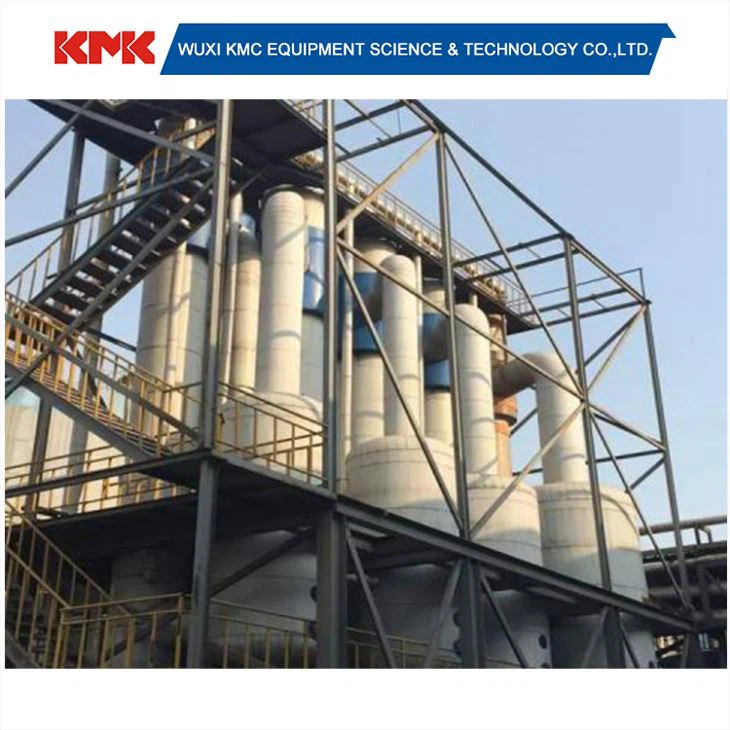

In the chemical industry, continuous evaporation is often needed for the purification and concentration of chemical solutions. For instance, in the production of polymers, the solvent needs to be removed from the polymer solution. A Fall Film Evaporator can continuously handle this task, separating the solvent from the polymer and producing a concentrated polymer solution. This helps in streamlining the production process and reducing production time.
Now, I know you might be thinking about potential challenges in continuous operation. One concern could be fouling of the tubes. Over time, some of the solids in the liquid feed can deposit on the inner surface of the tubes, which can reduce the heat transfer efficiency and clog the tubes. However, modern Fall Film Evaporators are designed with features to minimize fouling. For example, some evaporators have self - cleaning mechanisms or use special tube materials that resist fouling. Regular maintenance and cleaning schedules can also help keep the evaporator running smoothly during continuous operation.
When comparing a Fall Film Evaporator with other types of evaporators for continuous operation, it has some distinct advantages. Take the Single Effect Evaporator for example. While a single - effect evaporator can also be used for evaporation, it may not be as efficient for continuous large - scale operations. A single - effect evaporator typically has a lower evaporation rate and may require more energy per unit of evaporation compared to a Fall Film Evaporator.
On the other hand, Wiped Film Evaporators are also used for evaporation, but they are more suitable for handling high - viscosity or heat - sensitive materials. A Fall Film Evaporator, in contrast, is better for less viscous liquids and can handle continuous operation more easily in many cases. It has a simpler design and lower maintenance requirements, which makes it a great choice for continuous industrial processes.
If you're considering a Fall Film Evaporator for continuous operation, there are a few things to keep in mind. First, you need to make sure that the evaporator is sized correctly for your specific application. The capacity of the evaporator should match the volume of feed you plan to process continuously. You also need to choose the right heating medium and ensure that its flow rate and temperature can be controlled accurately. This will help maintain a stable evaporation process.
In conclusion, a Fall Film Evaporator is a great option for continuous operation. Its efficient design, high heat transfer rate, and ability to handle large volumes of feed make it suitable for a wide range of industries. Whether you're in the food, chemical, or other sectors, a Fall Film Evaporator can help you achieve a continuous and reliable evaporation process.
If you're interested in learning more about our Falling Film Evaporators or want to discuss how they can be used for your specific continuous operation needs, don't hesitate to get in touch. We're here to help you find the best solution for your evaporation requirements.
References
- Coulson, J. M., & Richardson, J. F. (1999). Chemical Engineering Volume 6: Chemical Engineering Design. Butterworth - Heinemann.
- Geankoplis, C. J. (1993). Transport Processes and Unit Operations. Prentice - Hall.