

How to improve the heat transfer efficiency of a thin layer evaporator?
Jan 22, 2026
Leave a message
Hey there! If you're in the market for a thin layer evaporator or already using one, you know how important heat transfer efficiency is. It directly impacts your production costs, product quality, and overall operational effectiveness. As a proud supplier of Wiped Scraper Thin Film Evaporator, I've seen firsthand how optimizing heat transfer can make a world of difference. In this blog, I'll share some practical tips on how to boost the heat transfer efficiency of a thin layer evaporator.
Understanding the Basics of Heat Transfer in Thin Layer Evaporators
Before diving into the ways to improve efficiency, let's quickly go over how heat transfer works in a thin layer evaporator. These machines are designed to create a thin film of the liquid to be evaporated on a heated surface. As the liquid flows down the surface, heat is transferred from the heating medium (usually steam or hot oil) through the wall of the evaporator to the liquid film. This causes the volatile components in the liquid to vaporize, leaving behind the less volatile ones.
The efficiency of this process depends on several factors, including the properties of the liquid, the design of the evaporator, and the operating conditions. By understanding these factors, you can make informed decisions on how to optimize your system.

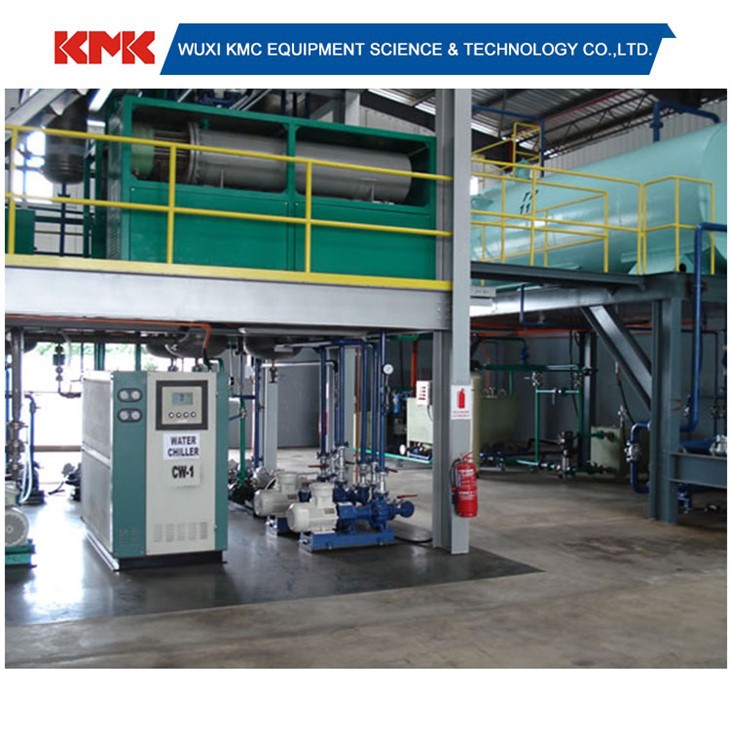
1. Choose the Right Evaporator Design
The first step in improving heat transfer efficiency is to select the appropriate thin layer evaporator design for your specific application. There are different types of thin layer evaporators available, each with its own advantages and limitations. For example, Wiped Scraper Thin Film Evaporators are great for handling high - viscosity fluids and sensitive materials. They use rotating blades to continuously wipe the liquid film on the heating surface, which helps to prevent fouling and ensures uniform heat transfer.
On the other hand, falling film evaporators are more suitable for low - viscosity liquids. They rely on gravity to spread the liquid into a thin film on the heating tubes. When choosing an evaporator, consider factors such as the viscosity, boiling point, and thermal sensitivity of your feed material. You can find more information on different evaporator designs and their applications on our Evaporative Distillation Engineering page.
2. Optimize the Liquid Film Thickness
The thickness of the liquid film has a significant impact on heat transfer efficiency. A thinner film allows for better heat transfer because there is less resistance to the flow of heat from the heating surface to the liquid. To achieve a thinner film, you can adjust the feed rate of the liquid. If the feed rate is too high, the film will be thicker, and heat transfer will be less efficient. Conversely, if the feed rate is too low, the film may not be continuous, which can also reduce efficiency.
Another way to control the film thickness is by using the right type of distribution system. In a wiped - film evaporator, the rotating blades help to spread the liquid evenly and maintain a consistent film thickness. For falling - film evaporators, a well - designed distributor can ensure that the liquid is evenly distributed over the heating tubes.
3. Enhance the Heating Medium
The quality and temperature of the heating medium play a crucial role in heat transfer. Using a high - quality heating medium with good thermal conductivity can improve heat transfer efficiency. For example, if you're using steam, make sure it is dry and at the right pressure. Wet steam contains droplets of water, which can reduce its heat transfer ability.
You can also increase the temperature difference between the heating medium and the liquid being evaporated. According to Fourier's law of heat conduction, the rate of heat transfer is directly proportional to the temperature difference. However, you need to be careful not to exceed the temperature limits of your feed material, especially if it is thermally sensitive.
4. Minimize Fouling
Fouling is one of the biggest enemies of heat transfer efficiency in thin layer evaporators. Fouling occurs when deposits build up on the heating surface over time, reducing the heat transfer coefficient. These deposits can be caused by various factors, such as the precipitation of salts, the polymerization of organic compounds, or the accumulation of debris.
To minimize fouling, you can implement regular cleaning procedures. This may involve chemical cleaning, mechanical cleaning, or a combination of both. You can also use additives in the feed material to prevent fouling. For example, some anti - scaling agents can inhibit the precipitation of salts on the heating surface.
5. Improve the Flow Pattern
The flow pattern of the liquid and the vapor inside the evaporator can also affect heat transfer efficiency. In a well - designed evaporator, the liquid should flow smoothly and evenly over the heating surface, while the vapor should be removed efficiently.
One way to improve the flow pattern is by using baffles or other flow - guiding devices. These can help to direct the flow of the liquid and vapor, ensuring that they come into better contact with the heating surface. Additionally, proper venting of the evaporator is essential to prevent the accumulation of non - condensable gases, which can impede heat transfer.
6. Monitor and Control Operating Conditions
Regular monitoring and control of the operating conditions are vital for maintaining high heat transfer efficiency. You should keep an eye on parameters such as the temperature, pressure, feed rate, and flow rate of the heating medium and the liquid. By using sensors and control systems, you can adjust these parameters in real - time to optimize the performance of the evaporator.
For example, if the temperature of the heating medium drops, you can increase the steam flow rate to maintain the desired temperature difference. Similarly, if the feed rate of the liquid changes, you can adjust the speed of the rotating blades in a wiped - film evaporator to ensure a consistent film thickness.
Why Choose Our Thin Layer Evaporators
As a leading supplier of Thin Layer Evaporators, we are committed to providing high - quality products that offer excellent heat transfer efficiency. Our evaporators are designed with the latest technology and features to ensure optimal performance in a wide range of applications.
We use advanced manufacturing techniques to produce evaporators with precise dimensions and smooth surfaces, which helps to minimize fouling and improve heat transfer. Our team of experts can also provide customized solutions based on your specific requirements, ensuring that you get the most efficient evaporator for your process.
Let's Talk!
If you're interested in improving the heat transfer efficiency of your thin layer evaporator or are looking to purchase a new one, we'd love to hear from you. We can offer you professional advice, detailed product information, and competitive pricing. Whether you're in the food and beverage industry, the chemical industry, or any other sector that requires evaporation, we have the right solution for you. Don't hesitate to reach out and start a conversation about your needs.
References
- Geankoplis, C. J. (2003). Transport Processes and Unit Operations. Prentice Hall.
- Perry, R. H., & Green, D. W. (2008). Perry's Chemical Engineers' Handbook. McGraw - Hill.
- Walas, S. M. (1988). Chemical Process Equipment: Selection and Design. Butterworth - Heinemann.