

Can wiped film drying be combined with other processes?
Mar 19, 2026
Leave a message
As a supplier of Wiped Film Drying equipment, I've often been asked whether wiped film drying can be combined with other processes. The short answer is yes, and in fact, integrating wiped film drying with other techniques can offer a range of benefits, from improving efficiency to enhancing the quality of the final product. In this blog, I'll explore the possibilities and advantages of combining wiped film drying with other processes.

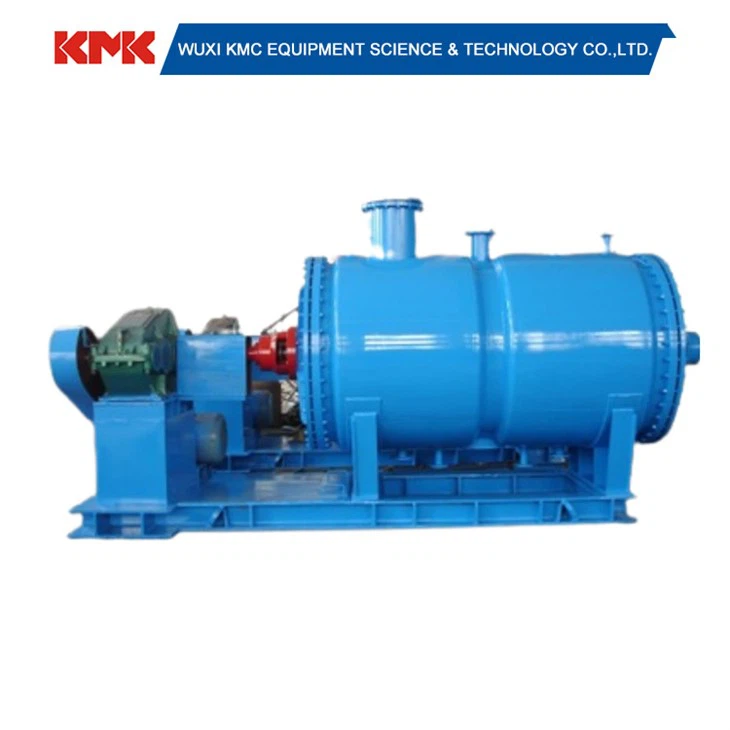
Understanding Wiped Film Drying
Before diving into the combinations, let's quickly recap what wiped film drying is. It's a continuous process that uses a rotating wiper to spread a thin film of liquid across the inner surface of a heated cylinder. This thin - film exposure maximizes the surface - area - to - volume ratio, which leads to rapid evaporation and efficient drying. It's great for heat - sensitive materials because it minimizes the product's residence time at high temperatures.
Combining Wiped Film Drying with Rotary Vacuum Drying
One process that can pair well with wiped film drying is rotary vacuum drying. A Rotary Vacuum Dryer works by placing the material in a rotating vessel under vacuum conditions. The rotation ensures uniform heating and mixing, while the vacuum lowers the boiling point of the solvent, speeding up the drying process.
When you combine these two processes, you can first use the wiped film dryer to quickly remove the majority of the volatile components. The product can then be transferred to the rotary vacuum dryer for final drying and further purification. This combination is especially useful for products that have a high initial moisture content. The wiped film dryer gets rid of the bulk of the solvent in a short time, and the rotary vacuum dryer can then fine - tune the drying to achieve a very low moisture level, ensuring the product's stability and quality.
Coupling with Vertical Thin Film Drying
A Vertical Thin Film Dryer is another interesting option for combination. Similar to the wiped film dryer, the vertical thin - film dryer also creates a thin film of the material on a heated surface. However, it operates in a vertical orientation, which can offer different flow characteristics and drying kinetics.
Combining a wiped film dryer with a vertical thin - film dryer can be advantageous for complex mixtures. For example, if you're dealing with a product that has components with different evaporation rates, the wiped film dryer can be set up to target the more volatile components first. The partially dried product can then be fed into the vertical thin - film dryer, which can be optimized to handle the remaining less - volatile components. This step - by - step approach can lead to a more selective and efficient drying process.
Merging with ZHG - II Series Vacuum Rake Drying
The ZHG - II Series Vacuum Rake Dryer is a traditional and reliable drying equipment. It uses rotating rake blades to continuously turn and mix the material while under vacuum, promoting even drying.
When combined with wiped film drying, you can start with the wiped film dryer to perform a preliminary drying. This is especially beneficial as it can reduce the load on the ZHG - II Series Vacuum Rake Dryer. After the wiped film dryer has removed a significant amount of the solvent, the product can be transferred to the rake dryer for a slower, more thorough drying process where the gentle mixing action of the rake blades can prevent caking and ensure a homogeneous final product.
Advantages of Combining Processes
There are several key advantages to combining wiped film drying with other processes. Firstly, it can improve overall efficiency. By using different processes in sequence, each process can focus on its area of strength. For example, the wiped film dryer is excellent at quickly removing large amounts of solvent, while other dryers can handle the final finishing steps more precisely.
Secondly, it can enhance product quality. As different processes can be tailored to handle specific components or drying requirements, the risk of heat damage to heat - sensitive materials is reduced. This is crucial for industries such as pharmaceuticals and food, where product quality is non - negotiable.
Another benefit is flexibility. Different products may have different drying requirements. By having a combination of processes at your disposal, you can easily adjust the drying strategy according to the nature of the product, whether it's a high - viscosity substance or a product with a complex composition.
Challenges and Considerations
Of course, combining processes is not without its challenges. One issue is the integration of equipment. Different dryers may have different temperature, pressure, and flow requirements. Ensuring seamless transfer of the product between the wiped film dryer and other equipment is essential. This may require careful engineering and optimization of the process flow.
Cost is also a factor. Investing in multiple drying processes means a higher upfront cost for equipment and installation. However, the long - term benefits in terms of efficiency and product quality can often outweigh these initial expenses.
Conclusion
In conclusion, wiped film drying can definitely be combined with other processes like rotary vacuum drying, vertical thin film drying, and ZHG - II Series Vacuum Rake Drying. These combinations offer numerous advantages in terms of efficiency, product quality, and flexibility. If you're in an industry that requires high - quality drying solutions, considering these combinations could be a game - changer for your production process.
If you're interested in learning more about how these combined drying solutions can work for your specific needs, feel free to reach out. We're here to help you find the best drying process for your products and guide you through the entire procurement process.
References
- Perry, R. H., & Green, D. W. (Eds.). (2008). Perry's Chemical Engineers' Handbook. McGraw - Hill.
- Mujumdar, A. S. (Ed.). (2007). Handbook of Industrial Drying. CRC Press.