

What is the minimum amount of wastewater that a wastewater evaporator can treat?
Jun 25, 2025
Leave a message
As a provider of wastewater evaporators, I often get asked about the minimum amount of wastewater that our equipment can treat. This is a crucial question for many industries that produce varying volumes of wastewater and need cost - effective and efficient solutions. In this blog, I'll delve into the factors that determine the minimum treatment capacity of wastewater evaporators and provide insights based on our experience in the field.
Understanding Wastewater Evaporators
Wastewater evaporators are designed to separate water from dissolved or suspended solids in wastewater through the process of evaporation. There are different types of wastewater evaporators, each with its own set of characteristics and capabilities. For instance, the Scraper Film Evaporator System is known for its high - efficiency heat transfer and is suitable for handling viscous and heat - sensitive materials. On the other hand, the Forced Circulation Evaporator and Forced Circulation Evaporation Equipment are ideal for applications where a large amount of evaporation is required, and they can handle high - solid content wastewaters.
Factors Affecting the Minimum Treatment Capacity
1. Type of Evaporator
The design and type of the evaporator play a significant role in determining the minimum amount of wastewater it can treat. Some evaporators, like the batch - type evaporators, are better suited for small - scale operations. These can be set up to treat relatively small volumes of wastewater at a time. For example, a small batch - type evaporator might be able to handle as little as 10 - 50 liters of wastewater per cycle. This is because batch evaporators operate in a cyclic manner, where a specific amount of wastewater is loaded into the system, heated, and evaporated until the desired concentration is achieved.
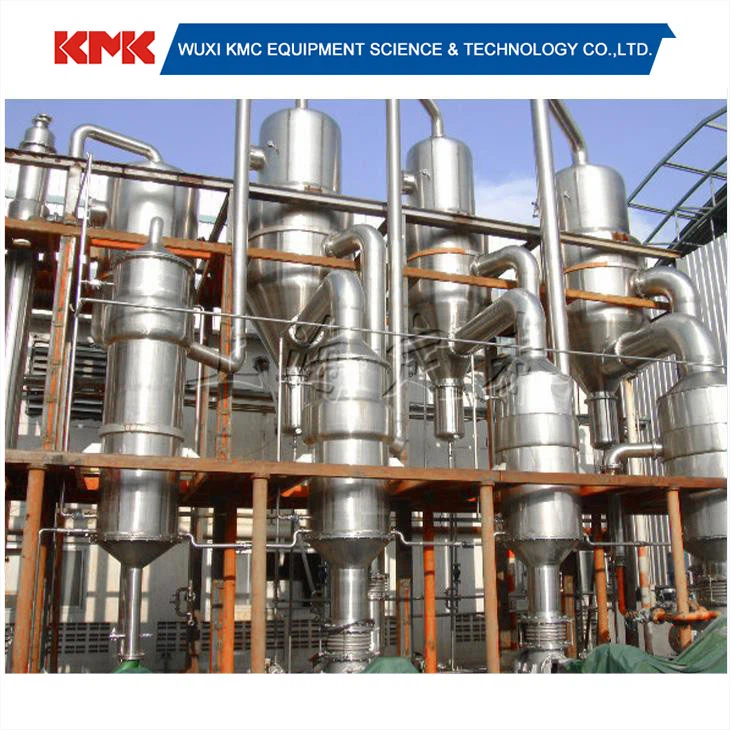

Continuous - flow evaporators, on the other hand, are designed for larger - scale operations. However, modern continuous - flow evaporators can also be configured to handle relatively small but continuous inflows of wastewater. The minimum continuous flow rate for some continuous - flow evaporators can be as low as 1 - 5 liters per hour, depending on the design and the specific application requirements.
2. Wastewater Characteristics
The properties of the wastewater itself have a major impact on the minimum treatment capacity. If the wastewater has a high concentration of solids, it can be more difficult to evaporate. The presence of scale - forming substances, such as calcium and magnesium salts, can lead to fouling of the heat transfer surfaces in the evaporator. This reduces the efficiency of the evaporation process and may require more frequent cleaning and maintenance. As a result, the evaporator may need to operate at a higher minimum capacity to overcome these challenges and ensure a consistent evaporation rate.
Wastewater with high viscosity also poses challenges. Viscous wastewaters flow more slowly through the evaporator, which can limit the rate at which evaporation can occur. For highly viscous wastewaters, the minimum treatment capacity may need to be increased to ensure that the wastewater spends enough time in the evaporator to reach the desired level of evaporation.
3. Energy Source and Availability
The energy source used to power the evaporator is another important factor. Evaporators can be powered by electricity, steam, natural gas, or other fuels. If the energy source is limited or expensive, the evaporator may need to operate at a minimum capacity to make the process economically viable. For example, if electricity is the energy source and there are peak - off - peak electricity tariffs, the evaporator may be designed to operate at a certain minimum capacity during the off - peak hours when electricity is cheaper.
In addition, the efficiency of the energy conversion in the evaporator also matters. A more energy - efficient evaporator can operate at a lower minimum capacity while still achieving the desired evaporation rate. This is because it can convert a higher percentage of the input energy into the heat required for evaporation.
4. Regulatory Requirements
Regulatory requirements can also influence the minimum treatment capacity. Some industries are subject to strict environmental regulations regarding the treatment and disposal of wastewater. These regulations may specify certain minimum treatment standards, such as the maximum allowable concentration of pollutants in the treated water. To meet these requirements, the evaporator may need to operate at a minimum capacity to ensure that the treatment process is thorough and effective.
Case Studies
Let's look at a few real - world examples to illustrate the minimum treatment capacity of wastewater evaporators in different scenarios.
Case 1: Small - scale Food Processing Plant
A small - scale food processing plant produces a limited amount of wastewater with a relatively low solid content. The plant uses a batch - type evaporator to treat its wastewater. The wastewater mainly contains food residues and cleaning agents. The evaporator is designed to handle a minimum of 20 liters of wastewater per cycle. The plant operates the evaporator a few times a day, depending on the amount of wastewater generated. This allows them to effectively treat their wastewater on - site and reduce the volume of wastewater that needs to be disposed of.
Case 2: Pharmaceutical Laboratory
A pharmaceutical laboratory generates a small but continuous stream of wastewater with a high concentration of organic solvents. The laboratory uses a continuous - flow evaporator powered by electricity. Due to the high - value nature of the operations in the laboratory and the limited space available, the evaporator is designed to operate at a minimum continuous flow rate of 2 liters per hour. This allows the laboratory to treat its wastewater in a timely and efficient manner while meeting the strict environmental regulations regarding the disposal of solvent - containing wastewaters.
Conclusion
In conclusion, the minimum amount of wastewater that a wastewater evaporator can treat varies widely depending on several factors, including the type of evaporator, wastewater characteristics, energy source, and regulatory requirements. As a wastewater evaporator provider, we understand the importance of tailoring our solutions to meet the specific needs of each customer. Whether you have a small - scale operation with limited wastewater generation or a large - scale industrial facility with high - volume wastewater, we can design and supply an evaporator with the appropriate minimum treatment capacity.
If you are interested in learning more about our wastewater evaporators and how they can meet your specific requirements, we invite you to contact us for a detailed consultation. Our team of experts will be happy to discuss your needs and provide you with a customized solution.
References
- "Wastewater Treatment Technology: Principles and Design" by Metcalf & Eddy
- "Evaporation Technology in Industrial Wastewater Treatment" by Elsevier Publications
- Industry reports on wastewater management and evaporator technology