

What is the drying mechanism of thin film dryers in detail?
Jun 23, 2025
Leave a message
As a supplier of Thin Film Dryers, I'm often asked about the drying mechanism of these remarkable machines. In this blog post, I'll delve into the details of how thin film dryers work, exploring the principles, processes, and factors that contribute to their efficiency and effectiveness.

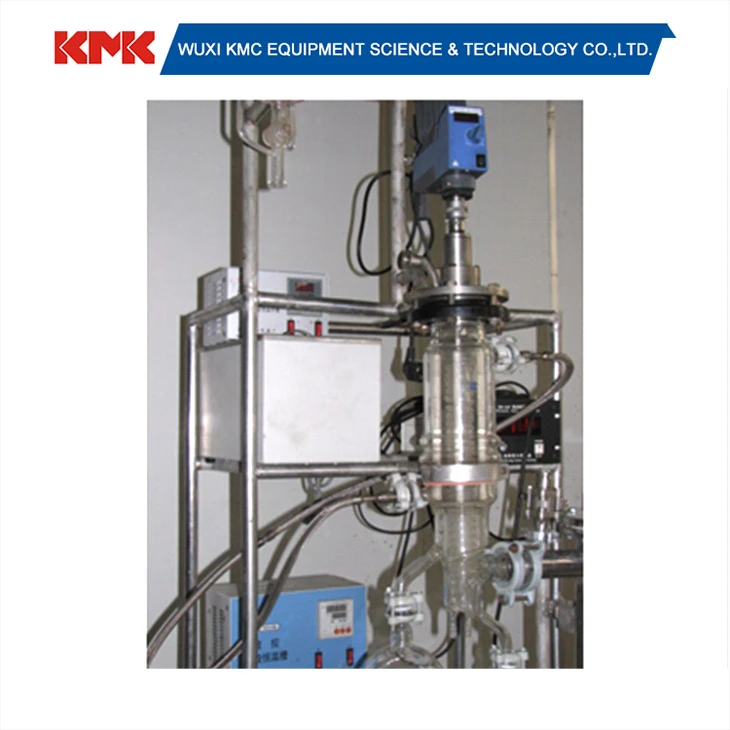
Basic Principles of Thin Film Drying
Thin film drying is a process that involves spreading a liquid or slurry into a thin film and then removing the solvent or moisture from it. The basic principle behind thin film drying is to increase the surface area of the material being dried, which allows for faster and more efficient heat transfer and mass transfer. By creating a thin film, the distance that the solvent or moisture needs to travel to reach the surface is minimized, reducing the drying time and improving the overall drying efficiency.
There are two main types of thin film dryers: agitated thin film dryers and non - agitated thin film dryers. Agitated thin film dryers use a rotating blade or paddle to create a thin film of the material on the heated surface, while non - agitated thin film dryers rely on gravity or other forces to spread the material into a thin film. In this post, we'll focus on agitated thin film dryers, which are more commonly used in industrial applications. You can learn more about Agitated Thin Film Drying on our website.
The Drying Process in Agitated Thin Film Dryers
The drying process in an agitated thin film dryer can be divided into several stages:
Feed Introduction
The first stage is the introduction of the feed material into the dryer. The feed can be a liquid, slurry, or paste, depending on the nature of the product. The feed is typically pumped into the top of the dryer and distributed evenly across the heated surface.
Film Formation
Once the feed is introduced, the rotating blades or paddles inside the dryer spread the material into a thin film on the heated surface. The blades are designed to create a uniform film thickness and to continuously agitate the material, which helps to prevent the formation of dry spots and to ensure efficient heat transfer.
Heat Transfer
As the thin film of material moves down the heated surface, heat is transferred from the heating medium (usually steam or hot oil) through the wall of the dryer to the material. The heat causes the solvent or moisture in the material to evaporate, turning it into vapor.
Mass Transfer
Simultaneously with heat transfer, mass transfer occurs. The vapor generated by the evaporation of the solvent or moisture diffuses through the thin film and into the vapor space above the film. The pressure difference between the vapor space and the condenser creates a driving force for the vapor to flow towards the condenser.
Vapor Removal
The vapor is then removed from the dryer through a vapor outlet and sent to a condenser. In the condenser, the vapor is cooled and condensed back into a liquid, which can be collected and recycled or disposed of appropriately.
Product Discharge
The dried product, which has lost most of its solvent or moisture content, is discharged from the bottom of the dryer. The final moisture content of the product can be controlled by adjusting the operating parameters of the dryer, such as the feed rate, the temperature of the heating medium, and the rotational speed of the blades.
Factors Affecting the Drying Mechanism
Several factors can affect the drying mechanism and the performance of thin film dryers:
Feed Properties
The properties of the feed material, such as its viscosity, surface tension, and solids content, can have a significant impact on the drying process. High - viscosity materials may be more difficult to spread into a thin film, while materials with high solids content may require more energy to evaporate the moisture.
Temperature
The temperature of the heating medium is a critical factor in the drying process. Higher temperatures can increase the rate of evaporation, but they may also cause thermal degradation of the product. Therefore, the temperature needs to be carefully controlled to ensure both efficient drying and product quality.
Rotational Speed
The rotational speed of the blades or paddles affects the film thickness, the degree of agitation, and the heat and mass transfer rates. A higher rotational speed can create a thinner film and more intense agitation, which generally leads to faster drying. However, too high a speed may cause excessive splashing and may not be suitable for some delicate materials.
Pressure
The pressure inside the dryer can also influence the drying process. Reducing the pressure can lower the boiling point of the solvent or moisture, allowing for evaporation at lower temperatures. This is particularly useful for heat - sensitive materials.
Advantages of Thin Film Dryers
Thin film dryers offer several advantages over other types of dryers:
High Drying Efficiency
Due to the large surface area of the thin film and the efficient heat and mass transfer, thin film dryers can achieve high drying rates and short residence times. This makes them suitable for processing heat - sensitive materials, as the product is exposed to high temperatures for a relatively short period.
Versatility
Thin film dryers can handle a wide range of feed materials, from liquids to pastes. They can also be used for drying, distillation, and solvent recovery processes. You can explore more about Thin Film Drying on our website to understand its versatility.
Compact Design
Thin film dryers have a relatively compact design, which requires less floor space compared to other types of dryers. This makes them ideal for installations where space is limited.
Continuous Operation
Thin film dryers can operate continuously, allowing for high - volume production. This is beneficial for industrial applications where large quantities of product need to be dried.
Applications of Thin Film Dryers
Thin film dryers are widely used in various industries:
Chemical Industry
In the chemical industry, thin film dryers are used for drying chemicals, polymers, and resins. They can handle both organic and inorganic materials and can be used for both batch and continuous processes.
Food Industry
In the food industry, thin film dryers are used for drying food products such as fruit juices, milk, and starch. The short residence time and low - temperature operation of thin film dryers help to preserve the nutritional value and flavor of the food products.
Pharmaceutical Industry
Thin film dryers are also commonly used in the pharmaceutical industry for drying active pharmaceutical ingredients (APIs) and other pharmaceutical products. The ability to control the drying conditions precisely makes them suitable for processing heat - sensitive and high - value products.
Conclusion
The drying mechanism of thin film dryers is a complex process that involves heat transfer, mass transfer, and the interaction of various factors. Understanding the principles and factors affecting the drying process is essential for optimizing the performance of thin film dryers and achieving high - quality dried products.
As a supplier of Thin Film Dryers, we have extensive experience in designing and manufacturing these machines to meet the specific needs of our customers. Our Horizontal Thin Film Dryer is one of our popular products, offering excellent performance and reliability.
If you are interested in our thin film dryers or have any questions about the drying process, please feel free to contact us for a detailed discussion. We are committed to providing you with the best solutions for your drying needs.
References
- Mujumdar, A. S. (Ed.). (2014). Handbook of industrial drying. CRC press.
- Perry, R. H., & Green, D. W. (Eds.). (2007). Perry's chemical engineers' handbook. McGraw - Hill.