

What are the performance evaluation indicators for a wiped film dryer?
Dec 10, 2025
Leave a message
What are the performance evaluation indicators for a wiped film dryer?
As a supplier of wiped film drying equipment, I understand the importance of having reliable performance evaluation indicators for wiped film dryers. These indicators not only help customers assess the efficiency and effectiveness of the equipment but also guide us in continuously improving our product offerings. In this blog post, I will discuss the key performance evaluation indicators for a wiped film dryer.
1. Evaporation Rate
The evaporation rate is one of the most crucial performance indicators for a wiped film dryer. It measures the amount of solvent or moisture that can be removed from the feed material per unit of time. A high evaporation rate indicates that the dryer can efficiently process large volumes of feedstock, reducing production time and increasing overall productivity.
Several factors can influence the evaporation rate, including the temperature of the heating medium, the vacuum level inside the drying chamber, the feed rate of the material, and the surface area available for evaporation. For example, a higher temperature of the heating medium can increase the vapor pressure of the solvent, leading to a faster evaporation rate. Similarly, a lower vacuum level can reduce the boiling point of the solvent, facilitating its removal from the material.
2. Product Quality
The quality of the dried product is another important performance indicator. A wiped film dryer should be able to produce a product that meets the desired specifications in terms of moisture content, particle size, and chemical composition.
Moisture content is a critical parameter, especially for products that are sensitive to moisture. The dryer should be able to reduce the moisture content of the feed material to the required level consistently. Particle size distribution is also important, as it can affect the flowability and solubility of the product. A well-designed wiped film dryer can minimize particle agglomeration and ensure a uniform particle size distribution.
In addition, the chemical composition of the product should remain unchanged during the drying process. The dryer should not cause any chemical reactions or degradation of the feed material. This requires careful selection of the materials of construction and proper control of the drying conditions.
3. Heat Transfer Efficiency
Heat transfer efficiency is a measure of how effectively the dryer transfers heat from the heating medium to the feed material. A high heat transfer efficiency means that less energy is wasted, resulting in lower operating costs.
The heat transfer efficiency of a wiped film dryer depends on several factors, such as the design of the heating surface, the thickness of the film formed on the heating surface, and the flow pattern of the feed material. A smooth and clean heating surface can enhance heat transfer by reducing the thermal resistance. A thin film of the feed material on the heating surface also promotes efficient heat transfer, as it reduces the distance for heat conduction.
4. Solvent Recovery Rate
In many applications, the solvent used in the feed material needs to be recovered for reuse or environmental reasons. The solvent recovery rate is an important performance indicator that measures the percentage of the solvent that can be successfully recovered from the drying process.
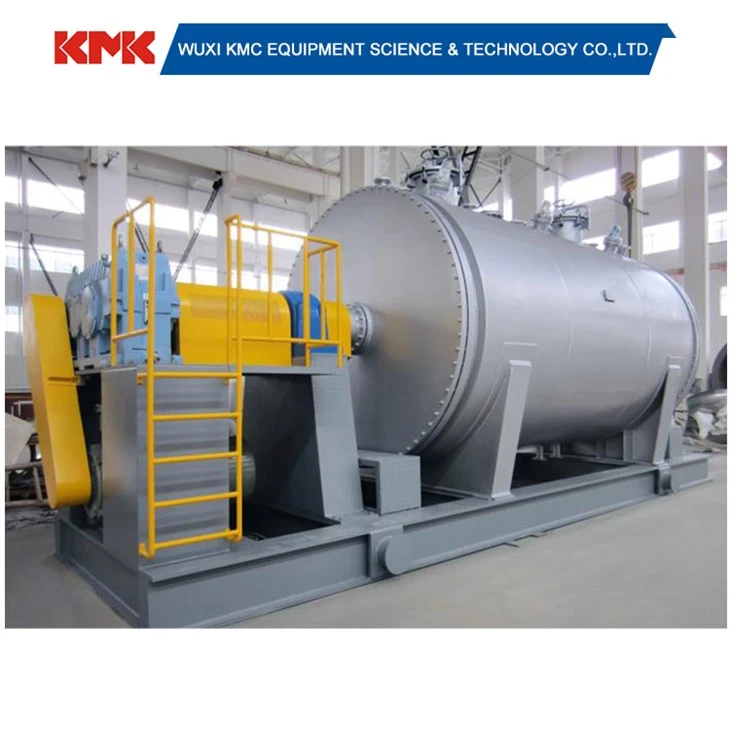

A high solvent recovery rate not only reduces the cost of raw materials but also minimizes the environmental impact of the production process. To achieve a high solvent recovery rate, the dryer should be equipped with an effective condensation system that can efficiently condense the solvent vapor and separate it from the non-condensable gases.
5. Operational Reliability
Operational reliability is crucial for any industrial equipment, including wiped film dryers. A reliable dryer should be able to operate continuously for a long period without frequent breakdowns or maintenance issues.
The operational reliability of a wiped film dryer depends on its design, construction quality, and the quality of the components used. A well-designed dryer should have a robust structure that can withstand the mechanical stresses and thermal stresses during operation. High-quality components, such as bearings, seals, and heating elements, can also improve the reliability of the dryer.
6. Flexibility and Adaptability
A wiped film dryer should be able to handle a wide range of feed materials and processing conditions. Flexibility and adaptability are important performance indicators that allow the dryer to be used in different applications and industries.
The dryer should be able to adjust to changes in the feed rate, feed composition, and desired product quality. It should also be compatible with different heating media and operating pressures. For example, some wiped film dryers can be operated under vacuum or atmospheric pressure, depending on the requirements of the application.
7. Safety Features
Safety is of utmost importance in any industrial process. A wiped film dryer should be equipped with appropriate safety features to protect the operators and the environment.
Some common safety features include temperature sensors, pressure sensors, and emergency shut-off systems. These features can detect abnormal operating conditions and automatically shut down the dryer to prevent accidents. In addition, the dryer should be designed to prevent the leakage of solvents and other hazardous materials.
In conclusion, the performance evaluation indicators for a wiped film dryer include evaporation rate, product quality, heat transfer efficiency, solvent recovery rate, operational reliability, flexibility and adaptability, and safety features. By considering these indicators, customers can choose the most suitable wiped film dryer for their specific applications. As a wiped film drying supplier, we are committed to providing high-quality equipment that meets or exceeds these performance standards.
If you are interested in our wiped film drying equipment or have any questions about the performance evaluation indicators, please feel free to contact us for further discussion and procurement negotiation. We look forward to working with you to find the best drying solution for your business.
Here are some related products from our company that you may be interested in:
References
- Perry, R. H., & Green, D. W. (Eds.). (2008). Perry's Chemical Engineers' Handbook (8th ed.). McGraw-Hill.
- Geankoplis, C. J. (2003). Transport Processes and Unit Operations (4th ed.). Prentice Hall.
- McCabe, W. L., Smith, J. C., & Harriott, P. (2001). Unit Operations of Chemical Engineering (6th ed.). McGraw-Hill.