

What are the differences between laboratory - scale and industrial - scale wiped film evaporators?
Jun 11, 2025
Leave a message
In the realm of separation and purification processes, wiped film evaporators stand out as a crucial piece of equipment. As a seasoned supplier of Wiped Film Evaporators, I've witnessed firsthand the diverse applications and unique requirements of both laboratory-scale and industrial-scale operations. In this blog post, I'll delve into the key differences between these two scales of wiped film evaporators, exploring aspects such as design, performance, and cost.
Design and Construction
Laboratory-Scale Wiped Film Evaporators
Laboratory-scale wiped film evaporators are typically compact and designed for small-scale research and development purposes. They are often constructed with high precision to ensure accurate and reproducible results. The evaporator body is usually made of high-quality glass or stainless steel, which allows for easy observation of the evaporation process.
The wiping system in laboratory-scale units is designed to be gentle and efficient, ensuring minimal shear stress on the sample. This is particularly important when dealing with heat-sensitive or viscous materials. The small size of these units also makes them easy to operate and maintain, with most components being easily accessible for cleaning and replacement.
Industrial-Scale Wiped Film Evaporators
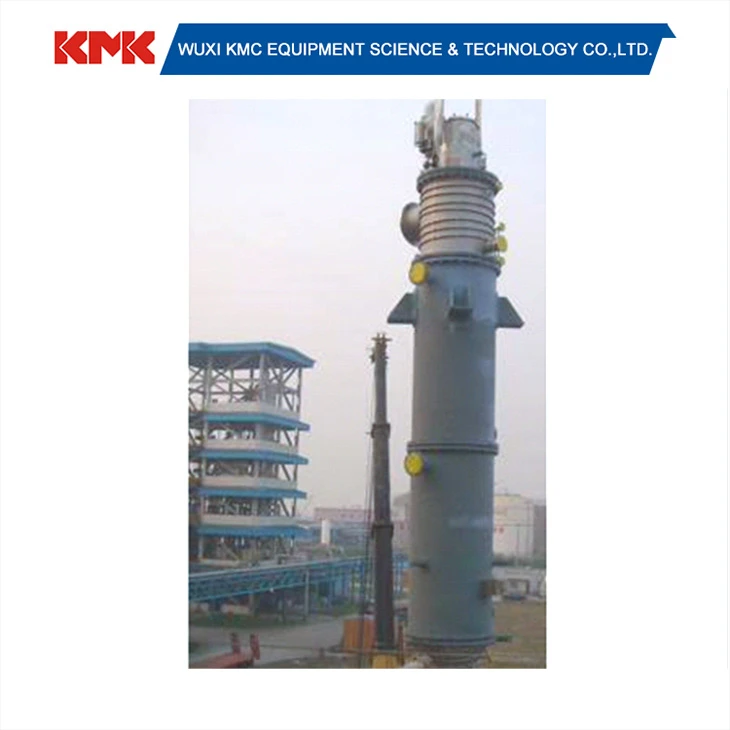
In contrast, industrial-scale wiped film evaporators are built to handle large volumes of feedstock. They are constructed with heavy-duty materials such as carbon steel or high-alloy stainless steel to withstand the harsh operating conditions and high pressures associated with industrial processes.
The design of industrial-scale units is optimized for high throughput and continuous operation. The wiping system is more robust and powerful, capable of handling viscous materials and ensuring efficient heat transfer. These units often feature larger evaporation surfaces and more complex designs to accommodate the high flow rates and production requirements of industrial applications.
Performance and Capacity
Laboratory-Scale Wiped Film Evaporators
Laboratory-scale wiped film evaporators are designed for low to medium throughput, typically ranging from a few milliliters to several liters per hour. They are ideal for small-scale experiments, product development, and quality control. These units offer high flexibility, allowing researchers to adjust operating parameters such as temperature, pressure, and feed rate to optimize the evaporation process for different materials.
Due to their small size and precise control, laboratory-scale units can achieve high levels of separation efficiency and purity. They are also well-suited for handling heat-sensitive materials, as the short residence time and low operating temperatures minimize the risk of thermal degradation.
Industrial-Scale Wiped Film Evaporators
Industrial-scale wiped film evaporators are capable of handling much larger volumes, with throughputs ranging from hundreds to thousands of liters per hour. They are designed for continuous operation, providing a reliable and efficient solution for large-scale production.
These units offer high separation efficiency and can achieve significant concentration and purification of the feedstock. They are commonly used in industries such as chemical, pharmaceutical, food, and beverage, where large-scale production and high product quality are essential.
Cost and Investment
Laboratory-Scale Wiped Film Evaporators
The initial cost of a laboratory-scale wiped film evaporator is relatively low compared to industrial-scale units. This makes them an affordable option for research institutions, universities, and small businesses. However, the cost per unit of production may be higher due to the lower throughput and higher energy consumption per unit volume.

In addition to the purchase price, there are also ongoing costs associated with maintenance, calibration, and replacement of components. These costs can add up over time, especially if the unit is used frequently.
Industrial-Scale Wiped Film Evaporators
Industrial-scale wiped film evaporators require a significant upfront investment due to their large size, complex design, and heavy-duty construction. However, the cost per unit of production is typically lower compared to laboratory-scale units, as the high throughput and continuous operation result in economies of scale.
The long-term cost of ownership also includes maintenance, repair, and energy consumption. However, these costs can be offset by the increased productivity and efficiency of the industrial-scale unit.
Applications and Industries
Laboratory-Scale Wiped Film Evaporators
Laboratory-scale wiped film evaporators are widely used in research and development laboratories, academic institutions, and small-scale manufacturing facilities. They are used for a variety of applications, including:
- Product Development: To test and optimize new formulations and processes.
- Quality Control: To analyze and verify the purity and quality of raw materials and finished products.
- Sample Preparation: To concentrate and purify small samples for further analysis.
Industrial-Scale Wiped Film Evaporators
Industrial-scale wiped film evaporators are used in a wide range of industries, including:
- Chemical Industry: For the purification of chemicals, solvents, and polymers.
- Pharmaceutical Industry: For the production of active pharmaceutical ingredients (APIs) and the purification of pharmaceutical intermediates.
- Food and Beverage Industry: For the concentration and purification of food products, such as fruit juices, dairy products, and flavorings.
- Environmental Industry: For the treatment of industrial wastewater and the recovery of valuable resources.
Conclusion
In conclusion, laboratory-scale and industrial-scale wiped film evaporators have distinct differences in design, performance, cost, and applications. Laboratory-scale units are ideal for small-scale research and development, offering high flexibility and precision. Industrial-scale units, on the other hand, are built for large-scale production, providing high throughput and efficiency.
As a supplier of Wiped Film Evaporators, we understand the unique requirements of both laboratory and industrial customers. We offer a wide range of wiped film evaporators to meet the diverse needs of our clients, from small-scale laboratory units to large-scale industrial systems.
If you're considering investing in a wiped film evaporator for your research or production needs, we encourage you to contact us for more information. Our team of experts can help you select the right unit for your application and provide you with comprehensive support and after-sales service. Whether you're looking for a Falling Film Evaporator or a Three Effect Falling Film Evaporator, we have the expertise and experience to meet your requirements.
References
- Perry, R. H., & Green, D. W. (Eds.). (2008). Perry's Chemical Engineers' Handbook. McGraw-Hill.
- Walas, S. M. (1988). Chemical Process Equipment: Selection and Design. Butterworth-Heinemann.
- McCabe, W. L., Smith, J. C., & Harriott, P. (2005). Unit Operations of Chemical Engineering. McGraw-Hill.