

What are the main types of laboratory evaporators?
Jun 11, 2025
Leave a message
In the realm of scientific research and industrial production, laboratory evaporators play a crucial role in separating solvents from samples. As a leading supplier of laboratory evaporators, we understand the diverse needs of our customers and are committed to providing high - quality equipment that meets various requirements. In this blog, we will explore the main types of laboratory evaporators, shedding light on their features, applications, and advantages.

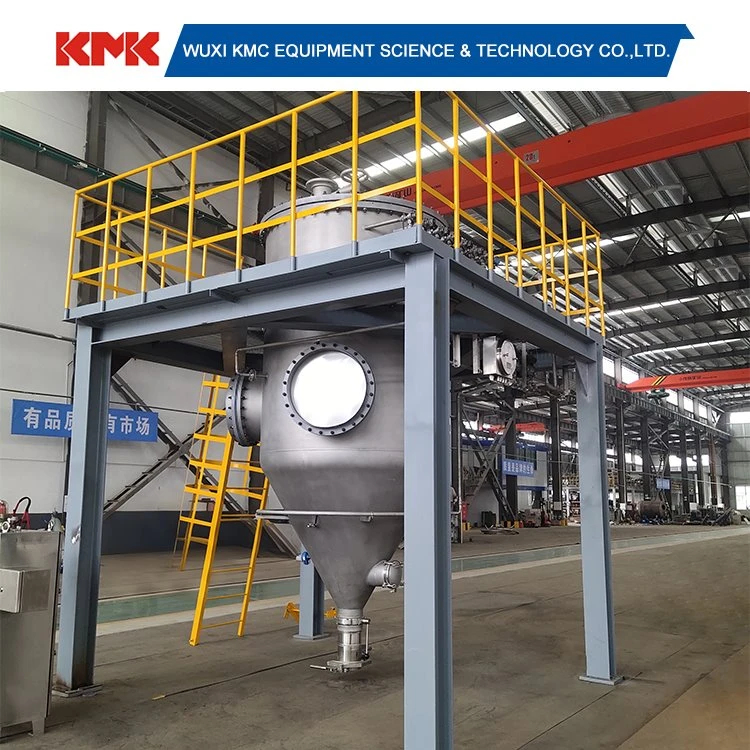
Rotary Evaporators
Rotary evaporators are perhaps the most well - known type of laboratory evaporators. They operate by rotating a flask containing the sample under reduced pressure. This rotation increases the surface area of the liquid, facilitating faster evaporation. The reduced pressure lowers the boiling point of the solvent, allowing for evaporation at lower temperatures, which is particularly useful for heat - sensitive samples.
The basic components of a rotary evaporator include a rotating flask, a heating bath, a condenser, and a vacuum system. The sample is placed in the rotating flask, which is immersed in the heating bath. As the flask rotates, the solvent evaporates and rises to the condenser, where it is cooled and condensed back into a liquid, which can then be collected in a separate receiver.
One of the key advantages of rotary evaporators is their versatility. They can be used for a wide range of applications, such as concentrating solutions, purifying compounds, and removing solvents from reaction mixtures. They are commonly used in chemistry, biochemistry, and pharmaceutical research laboratories.
Centrifugal Evaporators
Centrifugal evaporators use centrifugal force to enhance the evaporation process. In these evaporators, samples are placed in small tubes or vials, which are then spun at high speeds in a centrifuge rotor. At the same time, a vacuum is applied to lower the boiling point of the solvent.
The high - speed rotation creates a thin film of the sample on the inner walls of the tube, increasing the surface area for evaporation. This, combined with the reduced pressure, allows for rapid and efficient solvent removal. Centrifugal evaporators are especially useful for small - volume samples and for samples that are prone to foaming.
They are often used in proteomics, genomics, and mass spectrometry sample preparation. Since they can handle multiple samples simultaneously, they are ideal for high - throughput applications in research and quality control laboratories.
Thin - Film Evaporators
Thin - film evaporators are designed to create a thin film of the sample on a heated surface. This thin film allows for efficient heat transfer and rapid evaporation. There are different types of thin - film evaporators, including falling - film evaporators and rising - film evaporators.
In falling - film evaporators, the liquid sample is introduced at the top of a vertical tube or column. Gravity causes the liquid to flow down the inner walls of the tube, forming a thin film. As the film flows down, it is heated by the surrounding heat source, and the solvent evaporates. The vapor is then separated from the remaining liquid and collected.
Rising - film evaporators work in a similar way, but the liquid is introduced at the bottom of the tube. The vapor generated by heating the liquid causes the liquid to rise up the tube, forming a thin film on the inner walls.
Thin - film evaporators are suitable for processing heat - sensitive materials, viscous liquids, and solutions with high solids content. They are commonly used in the food, beverage, and chemical industries for concentrating and purifying products.
Multiple Effect Evaporators
Multiple effect evaporators are a type of evaporator system that uses the vapor from one evaporation stage to heat the next stage. This design allows for significant energy savings compared to single - effect evaporators.
In a multiple - effect evaporator, the first effect operates at a relatively high pressure and temperature. The vapor generated in this effect is then used as the heating medium for the second effect, which operates at a lower pressure and temperature. This process can be repeated for multiple effects, with each subsequent effect operating at a lower pressure and temperature.
Multiple effect evaporators are widely used in large - scale industrial applications, such as sugar refining, desalination, and wastewater treatment. They are capable of handling large volumes of liquid and are very efficient in terms of energy consumption.
Scraping Film Evaporator
Scraping film evaporators are a specialized type of thin - film evaporator. They are equipped with a rotating blade or wiper that continuously scrapes the liquid film on the heated surface. This scraping action helps to prevent fouling and coking of the surface, ensuring efficient heat transfer and evaporation.
The scraping blade also helps to mix the liquid, which is beneficial for processing viscous and heat - sensitive materials. Scraping film evaporators can operate at high temperatures and under high vacuum conditions, making them suitable for a variety of applications, including the concentration of polymers, the purification of high - boiling - point compounds, and the treatment of heat - sensitive products.
Dust Collector
Although not strictly an evaporator, a dust collector is an important accessory in some laboratory evaporation processes. When evaporating samples that contain solid particles or when the evaporation process generates dust, a dust collector can be used to remove these particles from the vapor stream.
Dust collectors work by using filters or electrostatic precipitators to capture the dust particles. This helps to protect the environment, the evaporator equipment, and the quality of the collected solvent. They are commonly used in industries such as mining, cement production, and chemical manufacturing, as well as in some laboratory settings where dust generation is a concern.
As a supplier of laboratory evaporators, we offer a wide range of high - quality products to meet the diverse needs of our customers. Whether you are a research scientist looking for a reliable evaporator for your experiments or an industrial manufacturer in need of a large - scale evaporation solution, we have the expertise and the products to assist you.
If you are interested in learning more about our laboratory evaporators or if you have specific requirements for your application, we encourage you to contact us for a detailed discussion. Our team of experts is ready to provide you with professional advice and help you select the most suitable evaporator for your needs. We look forward to working with you to achieve your scientific and industrial goals.
References
- Perry, R. H., & Green, D. W. (1997). Perry's Chemical Engineers' Handbook. McGraw - Hill.
- Wankat, P. C. (2012). Separation Process Engineering: Includes Mass Transfer Analysis. Prentice Hall.
- Geankoplis, C. J. (2003). Transport Processes and Separation Process Principles (Includes Unit Operations). Prentice Hall.