

How does the evaporation temperature affect the quality of the evaporated product in a Circulation Evaporator?
Jun 24, 2025
Leave a message
Evaporation is a crucial process in various industries, including chemical, pharmaceutical, food, and beverage. A circulation evaporator is a widely used equipment in these sectors due to its efficiency and reliability. The evaporation temperature plays a significant role in determining the quality of the evaporated product. As a leading circulation evaporator supplier, I have witnessed firsthand how the right evaporation temperature can make a substantial difference in the final product. In this blog, I will delve into how the evaporation temperature affects the quality of the evaporated product in a circulation evaporator.
Understanding the Circulation Evaporator
Before we discuss the impact of evaporation temperature, it's essential to understand how a circulation evaporator works. A circulation evaporator operates by continuously circulating the liquid to be evaporated through a heating element. This circulation ensures uniform heating and efficient evaporation. The heated liquid rises to the surface, where the vapor is separated from the remaining liquid. The vapor is then condensed and collected, while the concentrated liquid may be recirculated for further evaporation or sent for further processing.
There are different types of circulation evaporators, such as natural circulation evaporators and forced circulation evaporators. Natural circulation evaporators rely on the density difference between the heated and unheated liquid to create a natural flow. Forced circulation evaporators, on the other hand, use a pump to circulate the liquid, providing more control over the flow rate and evaporation process.
Impact of Evaporation Temperature on Product Quality
Chemical Composition
The evaporation temperature can significantly affect the chemical composition of the evaporated product. In many cases, high temperatures can cause chemical reactions to occur within the liquid being evaporated. For example, in the food industry, high evaporation temperatures can lead to the Maillard reaction, which is a chemical reaction between amino acids and reducing sugars. This reaction can result in the formation of new compounds, changing the flavor, color, and nutritional value of the product. In some cases, these changes may be desirable, such as in the production of caramelized products. However, in other cases, they can lead to the degradation of valuable components, reducing the quality of the product.
On the other hand, low evaporation temperatures may not provide enough energy to drive the evaporation process efficiently, leaving behind impurities or unevaporated components in the product. This can also affect the chemical composition and quality of the final product. Therefore, it's crucial to find the optimal evaporation temperature that balances the need for efficient evaporation and the preservation of the product's chemical integrity.
Physical Properties
The evaporation temperature can also have a significant impact on the physical properties of the evaporated product. For example, in the production of polymers, high evaporation temperatures can cause the polymer chains to break down, leading to a decrease in molecular weight and changes in the polymer's physical properties, such as viscosity and mechanical strength. In the pharmaceutical industry, high temperatures can affect the solubility and stability of drugs, reducing their effectiveness.
Low evaporation temperatures, on the other hand, may result in the formation of crystals or solids in the product, which can affect its appearance, texture, and handling properties. For example, in the production of fruit juices, low evaporation temperatures can cause the formation of pulp or sediment, which may be undesirable for consumers. Therefore, the evaporation temperature needs to be carefully controlled to ensure that the product has the desired physical properties.
Purity
The purity of the evaporated product is another important quality parameter that can be affected by the evaporation temperature. High temperatures can cause the evaporation of volatile impurities along with the desired product, reducing its purity. In addition, high temperatures can also cause the decomposition of some components in the liquid, leading to the formation of new impurities.
Low evaporation temperatures may not be sufficient to remove all the impurities from the product. For example, in the purification of solvents, low evaporation temperatures may leave behind some low-boiling-point impurities. Therefore, the evaporation temperature needs to be optimized to ensure that the product has the highest possible purity.
Controlling the Evaporation Temperature
As a circulation evaporator supplier, I understand the importance of providing our customers with equipment that allows for precise control of the evaporation temperature. Our circulation evaporators are equipped with advanced temperature control systems that can maintain a stable evaporation temperature within a narrow range. This ensures that the product quality is consistent and meets the desired specifications.

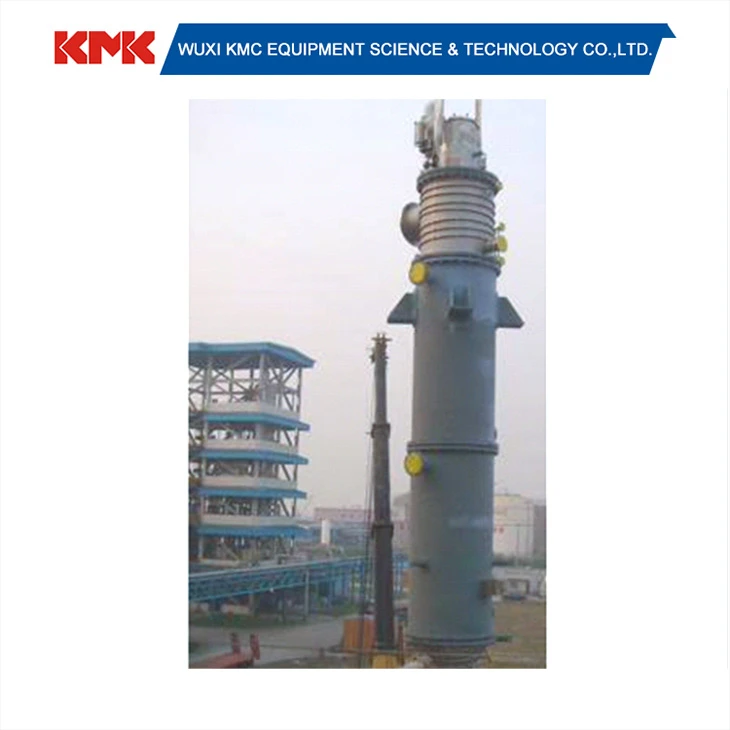
In addition to the equipment, we also provide our customers with technical support and advice on how to optimize the evaporation process. We work closely with our customers to understand their specific requirements and develop customized solutions that meet their needs. For example, we may recommend the use of a Wiped Film Evaporator for applications where high evaporation rates and low residence times are required, or a Rising Film Evaporator for applications where the product is heat-sensitive.
Case Studies
To illustrate the impact of evaporation temperature on product quality, let's look at some real-world case studies.
Case Study 1: Food Industry
A food company was using a circulation evaporator to concentrate fruit juices. They initially set the evaporation temperature too high, which resulted in the formation of a burnt flavor and a dark color in the concentrated juice. After consulting with us, we recommended lowering the evaporation temperature and adjusting the flow rate to ensure more efficient evaporation. The company implemented our recommendations, and the quality of the concentrated juice improved significantly. The juice had a more natural flavor and color, and the customers were more satisfied with the product.
Case Study 2: Chemical Industry
A chemical company was using a circulation evaporator to purify a solvent. They were experiencing problems with the purity of the solvent, as high evaporation temperatures were causing the evaporation of some volatile impurities along with the solvent. We recommended using a Centrifugal Film Evaporator with a lower evaporation temperature and a shorter residence time. The company adopted our suggestion, and the purity of the solvent increased from 95% to 99%. This not only improved the quality of their final product but also reduced their production costs by eliminating the need for additional purification steps.
Conclusion
In conclusion, the evaporation temperature plays a crucial role in determining the quality of the evaporated product in a circulation evaporator. It can affect the chemical composition, physical properties, and purity of the product. Therefore, it's essential to carefully control the evaporation temperature to ensure that the product meets the desired quality standards.
As a circulation evaporator supplier, we are committed to providing our customers with high-quality equipment and technical support to help them optimize their evaporation processes. If you are interested in learning more about our circulation evaporators or need assistance with your evaporation process, please contact us for a consultation. We look forward to working with you to achieve the best possible product quality.
References
- Mujumdar, A. S. (Ed.). (2014). Handbook of industrial drying. CRC press.
- Perry, R. H., & Green, D. W. (Eds.). (2007). Perry's chemical engineers' handbook. McGraw-Hill.
- Geankoplis, C. J. (2003). Transport processes and unit operations. Prentice Hall.