

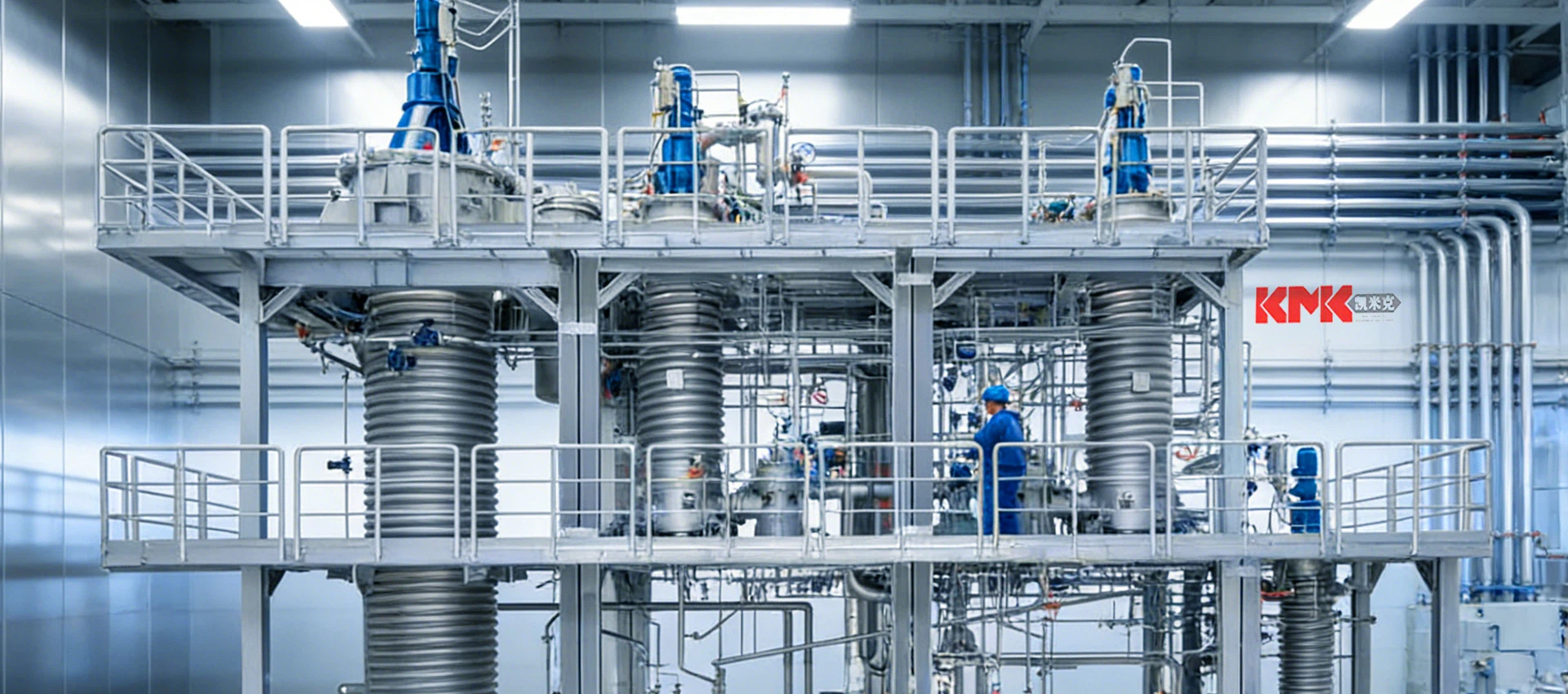
Four fractionation steps of the molecular distiller
Apr 15, 2019
Leave a message
The process of molecular distillation can be divided into four steps:
1.Diffusion of molecules from liquid to evaporation surface
In general,the liquid phase diffusion rate is a major factor in controlling the rate of molecular distillation,so the thickness of the liquid layer should be reduced to enhance the flow of the liquid layer.
2.Free evaporation of molecules on the surface of the liquid layer
The evaporation rate increases with increasing temperature,but the separation factor sometimes decreases with increasing temperature.Therefore,an economically reasonable distillation temperature should be selected depending on the thermal stability of the processed material.
3.The molecules fly from the evaporation surface to the condensation surface.
The vapor molecules may collide with each other during evaporation to the condensing surface and may collide with air molecules remaining on both sides.Because vaporized molecules are much heavier than air molecules,and most of them have the same direction of motion,their own collisions have little effect on the direction of flight and the rate of evaporation.The residual molecules are in chaotic motion on both sides,so the number of residual molecules is the main factor affecting the direction and speed of evaporation.
4.The molecules condense on the surface of the condensation.
As long as there is enough temperature difference between the hot and cold sides(generally 70 ~ 100 °C),the condensing surface is reasonable and smooth,it can be considered that the condensation step can be completed in an instant,so it is very important to choose a reasonable form.