

What is the weight of a typical wastewater evaporator?
Dec 23, 2025
Leave a message
When discussing wastewater treatment, wastewater evaporators play a pivotal role. They are essential equipment for industries aiming to reduce the volume of wastewater and recover valuable resources. One common question that often arises is: What is the weight of a typical wastewater evaporator? To answer this question comprehensively, we need to delve into various aspects, including different types of evaporators, their components, and the factors that influence their weight.
Types of Wastewater Evaporators and Their General Characteristics
There are several types of wastewater evaporators, each with unique features and applications. The most common types include heat exchanger evaporators, wiped scraper thin film evaporators, and forced circulation evaporation equipment.
Heat Exchanger Evaporator
The Heat Exchanger Evaporator is widely used in various industries due to its simple structure and high efficiency. It transfers heat from a hot fluid to the wastewater, causing the water to evaporate. The weight of a heat exchanger evaporator depends largely on its size and the materials used in construction. For small - scale heat exchanger evaporators used in laboratories or small industries, the weight can range from a few hundred kilograms to a couple of tons. These are usually made of lightweight materials like stainless steel or aluminum alloys to enhance corrosion resistance and reduce overall weight.
On the other hand, large - scale industrial heat exchanger evaporators can be extremely heavy. In heavy - duty industries such as chemical manufacturing or power plants, where large volumes of wastewater need to be treated, the weight can exceed tens of tons. These industrial - grade evaporators are built with thick - walled pipes and large heat exchange surfaces, which contribute significantly to their mass.
Wiped Scraper Thin Film Evaporator
The Wiped Scraper Thin Film Evaporator is designed to handle high - viscosity and heat - sensitive materials. It uses a rotating wiper blade to spread the wastewater into a thin film on the heating surface, facilitating rapid evaporation. The weight of this type of evaporator is also closely related to its size and the complexity of its internal structure.
Small - sized wiped scraper thin film evaporators for research or pilot - scale applications may weigh around 1 - 5 tons. These are relatively compact and are often used for small - batch processing. Larger industrial versions, which can have diameters of several meters and high - capacity throughput, can weigh anywhere from 5 to 20 tons or more. The heavy - duty construction of the rotating wiper mechanism, the heating jacket, and the large - scale casing all contribute to the increased weight.
Forced Circulation Evaporation Equipment
The Forced Circulation Evaporation Equipment is suitable for applications where high - salt or high - solid - content wastewater needs to be treated. It uses a pump to force the wastewater through the heating elements, ensuring efficient heat transfer and evaporation.
In terms of weight, small - forced circulation evaporation systems may weigh 2 - 10 tons. They are commonly used in small food processing plants or light - industrial settings. The main components that add to the weight include the circulation pump, the heat exchanger, and the evaporation chamber. Large - scale forced circulation evaporation equipment, which is used in major chemical plants or large - scale desalination projects, can have weights well over 50 tons. These massive systems require robust construction to withstand high pressures and continuous operation.

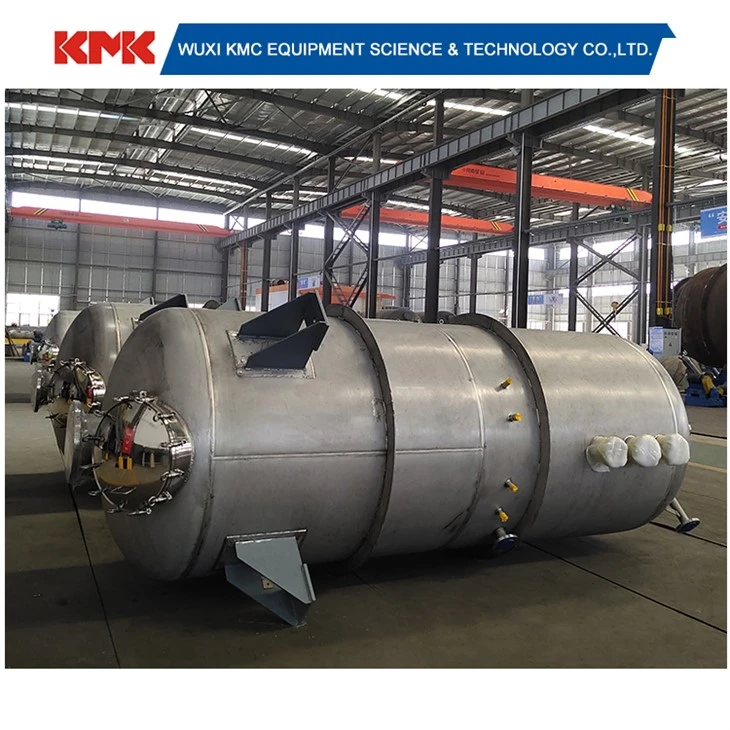
Factors Influencing the Weight of Wastewater Evaporators
Apart from the type of evaporator, several other factors influence the weight of a wastewater evaporator.
Material of Construction
The choice of materials is a significant factor. Stainless steel is a popular choice due to its corrosion resistance, strength, and durability. However, stainless - steel evaporators are generally heavier than those made from other materials. For instance, an evaporator made of carbon steel may be slightly lighter, but it may require additional coatings to prevent corrosion. Some high - performance applications may use exotic materials like titanium, which are very strong but also relatively heavy.
Size and Capacity
The size and capacity of the evaporator are directly proportional to its weight. A larger evaporator with a higher evaporation capacity will have a greater volume and more components, resulting in increased weight. For example, an evaporator designed to handle 100 cubic meters of wastewater per day will weigh significantly more than one designed for 10 cubic meters per day.
Additional Components
Many wastewater evaporators come with additional components such as pumps, valves, control systems, and insulation. These components add to the overall weight of the system. For example, a high - pressure pump used in a forced circulation evaporator can weigh several hundred kilograms, and advanced control systems with multiple sensors and actuators also contribute to the mass.
Importance of Knowing the Weight
Understanding the weight of a wastewater evaporator is crucial for several reasons. First, it affects the installation process. Heavy evaporators require special lifting equipment and a sturdy foundation. If the weight is underestimated, it can lead to installation problems, such as structural damage to the building or improper alignment of the equipment.
Second, the weight impacts transportation. Shipping heavy evaporators requires appropriate trucks, trailers, and handling equipment. It also affects the transportation cost, as heavier loads may incur higher freight charges.
Finally, the weight can influence the long - term operation of the evaporator. A heavier evaporator may require more energy to operate, especially if it involves moving parts or circulation systems. This can increase the operating cost over time.
Conclusion and Call to Action
In conclusion, the weight of a typical wastewater evaporator varies widely depending on its type, size, material of construction, and additional components. Heat exchanger evaporators, wiped scraper thin film evaporators, and forced circulation evaporation equipment each have their own weight ranges, from a few hundred kilograms for small - scale units to over 50 tons for large - scale industrial systems.
As a leading wastewater evaporator supplier, we understand the importance of providing accurate information about our products, including their weight. Our team of experts can help you choose the right evaporator based on your specific requirements, taking into account factors such as installation space, transportation capabilities, and operating costs.
If you are in the market for a wastewater evaporator, or if you have any questions about our products, we encourage you to reach out to us for a consultation. We are ready to work with you to develop the most suitable wastewater treatment solution for your business.
References
- Perry, R. H., & Green, D. W. (2007). Perry's Chemical Engineers' Handbook. McGraw - Hill.
- Sinnott, R. K. (2005). Coulson and Richardson's Chemical Engineering, Volume 6: Chemical Engineering Design. Butterworth - Heinemann.