

What is the temperature range in thin film drying?
Dec 18, 2025
Leave a message
Thin film drying is a highly efficient and widely - used process in various industries, such as chemical, pharmaceutical, and food processing. As a thin film drying supplier, understanding the temperature range in thin film drying is crucial for both us and our customers. This blog will delve into the factors that influence the temperature range, typical temperature ranges in different applications, and how these temperatures impact the drying process.
Factors Influencing the Temperature Range in Thin Film Drying
Properties of the Feed Material
The most significant factor determining the temperature range is the nature of the feed material. Different substances have distinct thermal stability, volatility, and moisture - binding characteristics. For example, thermally - sensitive materials like certain pharmaceuticals or biological products require a low - temperature drying process to prevent degradation. Elevated temperatures could cause the breakdown of active ingredients, leading to a loss of product quality. In contrast, robust materials such as common salts or some polymers can withstand higher temperatures during the drying process.
Desired Moisture Content
The target moisture content also affects the temperature range. If a very low moisture content is required, it may be necessary to increase the drying temperature to drive off the remaining water molecules effectively. However, this must be balanced against the risk of damaging the material. For instance, in the production of dried milk powder, a specific moisture level needs to be reached to ensure long - term shelf - life. The temperature is carefully adjusted to achieve this while maintaining the nutritional value and flavor of the product.
The Type of Thin Film Drying Equipment
There are different types of thin film drying technologies available, such as Thin Layer Drying, Wiped Film Dryer, and Wiped Film Drying. Each technology has its own optimal temperature range based on its design and operating principles. For example, a wiped film dryer can operate under relatively high - vacuum conditions, allowing lower - temperature drying compared to some other thin film drying methods. This is because the reduced pressure lowers the boiling point of the solvent or moisture, enabling the removal of water at a lower temperature.
Typical Temperature Ranges in Different Applications
Chemical Industry
In the chemical industry, the temperature range in thin film drying can vary widely depending on the specific chemicals being processed. For simple inorganic salts, temperatures can range from 100°C to 200°C. At these temperatures, the water of crystallization can be removed efficiently. For more complex organic chemicals, especially those with low - boiling - point solvents, the temperature may be kept between 40°C and 100°C to prevent solvent loss and chemical reactions. For instance, in the production of a fine chemical where a volatile organic solvent needs to be removed, a temperature around 60°C - 80°C in a wiped film dryer under vacuum conditions is often used.
Pharmaceutical Industry
Due to the high - value and sensitivity of pharmaceutical products, the temperature range in thin film drying is generally kept within a narrow and low - temperature bracket. Temperatures typically range from 20°C to 60°C. This low - temperature range helps preserve the biological activity of active pharmaceutical ingredients (APIs) and ensures the stability of the final product. For example, when drying a protein - based API, a temperature close to 20°C - 30°C is preferred to avoid denaturation of the protein molecules.
Food Industry
In the food industry, the temperature range also depends on the type of food product. For heat - stable food ingredients like starches, temperatures can go up to 120°C - 150°C to achieve rapid drying. However, for heat - sensitive food products such as fruits and vegetables, the temperature is usually maintained between 40°C and 80°C. Drying fruits at a low temperature helps preserve their color, flavor, and nutritional content. For example, in the production of dried mango slices, a temperature of about 50°C - 60°C is commonly used in a thin film drying process.
Impact of Temperature on the Drying Process
Drying Rate
The temperature has a significant impact on the drying rate. In general, as the temperature increases, the drying rate also increases. This is because higher temperatures provide more energy to the water molecules, allowing them to evaporate more quickly. However, this relationship is not always linear. At very high temperatures, the surface of the material may become over - dried and form a crust, which can impede the further diffusion of moisture from the interior of the material to the surface, thus reducing the overall drying efficiency.
Product Quality
Temperature can greatly affect the quality of the final product. As mentioned earlier, high temperatures can cause thermal degradation, color changes, and loss of flavor in heat - sensitive materials. In addition, the physical properties of the product, such as particle size and shape, can also be influenced by the drying temperature. For example, in the production of powders, high - temperature drying may lead to agglomeration of particles, which can affect the flowability and solubility of the powder.

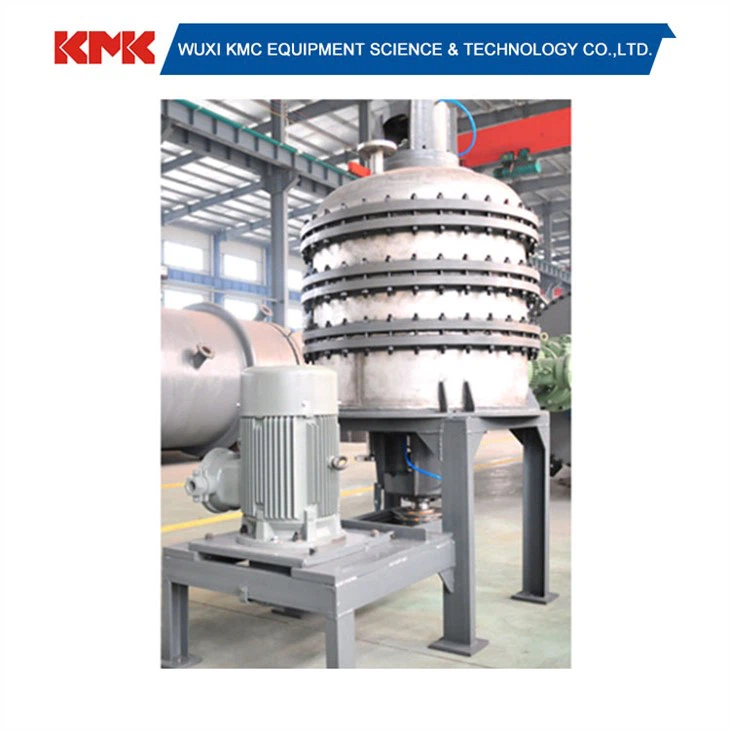
Controlling the Temperature in Thin Film Drying
To ensure optimal drying results, it is essential to control the temperature accurately. This can be achieved through several means. Firstly, using advanced temperature sensors and control systems in the thin film drying equipment allows for real - time monitoring and adjustment of the temperature. Secondly, adjusting the operating parameters of the equipment, such as the feed rate, the rotation speed of the wiping blades in a wiped film dryer, and the vacuum level, can also help control the temperature and the drying process.
In conclusion, the temperature range in thin film drying is a critical parameter that is influenced by multiple factors, including the properties of the feed material, the desired moisture content, and the type of drying equipment. Different industries have different temperature requirements based on the nature of their products. As a thin film drying supplier, we are committed to providing our customers with equipment and solutions that can precisely control the temperature within the appropriate range to achieve high - quality drying results.
If you are interested in our thin film drying products and solutions, or if you have any questions about the temperature range and its application in your specific process, we welcome you to contact us for a detailed discussion. We look forward to the opportunity to work with you and help you optimize your drying process.
References
- Perry, R. H., & Green, D. W. (1997). Perry's Chemical Engineers' Handbook. McGraw - Hill.
- Mujumdar, A. S. (2007). Handbook of Industrial Drying. CRC Press.