

What is the evaporation capacity of a Short Path Evaporator?
Jun 20, 2025
Leave a message
Hey there! As a supplier of Short Path Evaporators, I often get asked about the evaporation capacity of these nifty machines. So, I thought I'd take the time to break it down for you in this blog post.
First off, let's talk about what a Short Path Evaporator actually is. It's a type of distillation equipment that's designed to separate and purify different components of a liquid mixture. It works by heating the mixture under vacuum conditions, which reduces the boiling point of the substances and allows them to vaporize at lower temperatures. The vapor then travels a short distance to a condenser, where it's cooled and condensed back into a liquid. This short path minimizes the time the substances spend in the heated zone, reducing the risk of thermal degradation and making it ideal for heat-sensitive materials.
Now, onto the big question: what's the evaporation capacity of a Short Path Evaporator? Well, it's not a one-size-fits-all answer. The evaporation capacity can vary widely depending on several factors.
Factors Affecting Evaporation Capacity
1. Heating Surface Area
The larger the heating surface area of the evaporator, the more liquid can be heated and vaporized at once. Think of it like a stovetop. If you have a big frying pan, you can cook more food at the same time compared to a small one. In a Short Path Evaporator, a larger heating surface allows for more contact between the liquid and the heat source, facilitating faster evaporation.
2. Vacuum Level
The vacuum level plays a crucial role. A higher vacuum reduces the boiling point of the liquid, which means it can vaporize more easily and quickly. When you lower the pressure inside the evaporator, the molecules of the liquid need less energy to break free and turn into vapor. So, the better the vacuum system of the Short Path Evaporator, the higher its evaporation capacity is likely to be.
3. Feed Rate
The rate at which the liquid mixture is fed into the evaporator also affects the evaporation capacity. If you pour in too much liquid too quickly, the evaporator might not be able to heat and vaporize it all efficiently. On the other hand, if the feed rate is too slow, you're not making the most of the evaporator's potential. Finding the right balance is key.
4. Properties of the Feed Liquid
The nature of the liquid being evaporated matters a lot. For example, liquids with lower viscosities flow more easily over the heating surface, allowing for better heat transfer and faster evaporation. Also, liquids with lower boiling points will vaporize more readily than those with high boiling points.
Measuring Evaporation Capacity
Evaporation capacity is usually measured in terms of the amount of liquid that can be evaporated per unit of time, typically kilograms per hour (kg/h) or liters per hour (L/h). But keep in mind that the rated evaporation capacity of a Short Path Evaporator is often determined under specific test conditions. These conditions might include a certain type of feed liquid, a particular vacuum level, and a set feed rate.
In real-world applications, the actual evaporation capacity might be different from the rated capacity. For instance, if you're using a different feed liquid with different properties or if the operating conditions deviate from the test conditions, the evaporation rate will change.
Comparing with Other Evaporators
It's interesting to compare the evaporation capacity of Short Path Evaporators with other types of evaporators. For example, the Forced Circulation Evaporator and Forced Circulation Evaporation Equipment work by forcing the liquid to circulate through the heating element. These types of evaporators are great for handling high-viscosity liquids and can have high evaporation capacities, especially when dealing with large volumes.
On the other hand, Short Path Evaporators are more focused on gentle and efficient distillation of heat-sensitive materials. While their evaporation capacity might not be as high as some other large-scale evaporators in terms of sheer volume, they excel in producing high-quality, pure products.
Applications and Evaporation Capacity Requirements
Different applications have different requirements for evaporation capacity. In the pharmaceutical industry, where small batches of high-value, heat-sensitive compounds are often processed, a Short Path Evaporator with a relatively lower evaporation capacity might be sufficient. These evaporators can ensure that the active ingredients in the drugs are not damaged during the distillation process.
In the food and beverage industry, larger evaporation capacities might be needed. For example, when concentrating fruit juices or separating flavors from extracts, a Short Path Evaporator with a higher evaporation capacity can increase production efficiency.

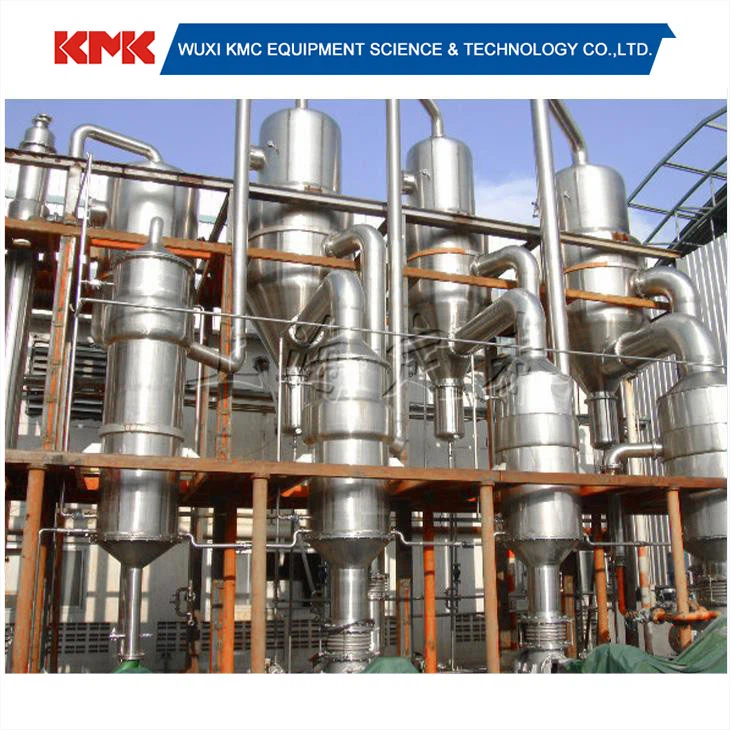
Customizing Evaporation Capacity
As a supplier, we understand that every customer's needs are unique. That's why we offer the option to customize the evaporation capacity of our Short Path Evaporators. Whether you need a small-scale unit for research and development or a large-scale production machine, we can design and build an evaporator that meets your specific requirements.
If you're looking into Evaporative Distillation Engineering, our team of experts can work with you to optimize the evaporation capacity based on your feed liquid, production volume, and other factors. We'll take into account all the variables we've discussed here to ensure that you get the most efficient and effective Short Path Evaporator for your business.
Conclusion
So, in a nutshell, the evaporation capacity of a Short Path Evaporator is influenced by multiple factors such as heating surface area, vacuum level, feed rate, and the properties of the feed liquid. It's not a fixed value, and it can be customized to suit different applications.
If you're in the market for a Short Path Evaporator and want to learn more about how we can help you achieve the right evaporation capacity for your needs, don't hesitate to get in touch. We're here to answer all your questions and guide you through the purchasing process. Let's work together to find the perfect solution for your distillation requirements.
References
- Perry, R. H., & Green, D. W. (Eds.). (1997). Perry's Chemical Engineers' Handbook. McGraw-Hill.
- Walas, S. M. (1985). Chemical Process Equipment: Selection and Design. Butterworth-Heinemann.