

What is the effect of the relative humidity of the incoming air on the drying in a thin layer dryer?
Nov 26, 2025
Leave a message
The drying process is a critical operation in various industries, including food, pharmaceuticals, and chemicals. Among the different types of dryers available, thin layer dryers are widely used due to their efficiency and ability to provide uniform drying. One of the key factors that can significantly influence the drying performance in a thin layer dryer is the relative humidity of the incoming air. In this blog post, we will explore the effects of the relative humidity of the incoming air on the drying process in a thin layer dryer, and as a thin layer dryer supplier, we will also discuss how understanding these effects can help in optimizing the drying operation.
Understanding Thin Layer Drying
Before delving into the impact of relative humidity, it is essential to understand the concept of thin layer drying. Thin Layer Drying involves spreading the material to be dried in a thin layer, allowing for efficient heat and mass transfer between the material and the drying air. This method is particularly effective for materials that are sensitive to high temperatures or require a uniform drying process.
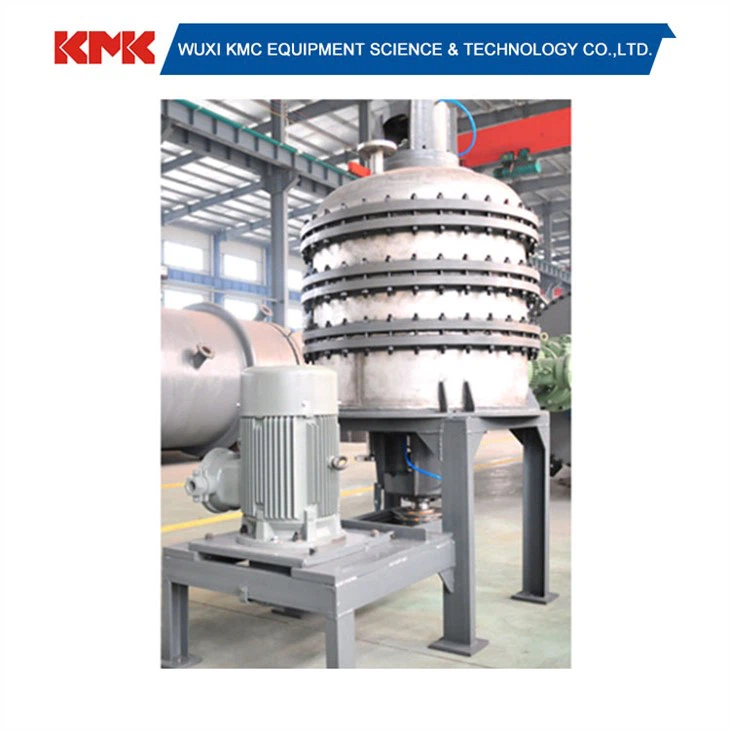
Thin layer dryers come in different types, such as Horizontal Thin Film Dryer and Wiped Film Dryer. These dryers use different mechanisms to ensure that the material forms a thin layer, facilitating the drying process. For example, a wiped film dryer uses a rotating wiper blade to spread the material into a thin film on the heated surface, while a horizontal thin film dryer relies on gravity and the flow of the material to create a thin layer.
The Role of Relative Humidity in Drying
Relative humidity is defined as the ratio of the amount of water vapor present in the air to the maximum amount of water vapor the air can hold at a given temperature. It plays a crucial role in the drying process because it determines the driving force for moisture removal from the material.

When the relative humidity of the incoming air is low, the air has a high capacity to absorb moisture. This creates a large difference in the moisture content between the material and the air, which drives the moisture to move from the material to the air. As a result, the drying rate is high, and the material can be dried more quickly.
Conversely, when the relative humidity of the incoming air is high, the air is already close to its saturation point and has a limited capacity to absorb more moisture. This reduces the driving force for moisture removal, slowing down the drying process. In some cases, if the relative humidity is too high, the drying process may even come to a halt, as the moisture content in the air is similar to that in the material.
Effects of Relative Humidity on Drying Kinetics
The relative humidity of the incoming air can have a significant impact on the drying kinetics, which refers to the rate at which moisture is removed from the material. The drying process typically consists of two main stages: the constant rate period and the falling rate period.
Constant Rate Period
During the constant rate period, the surface of the material is wet, and the rate of moisture evaporation is constant. The drying rate during this period is mainly determined by the external conditions, such as the temperature, velocity, and relative humidity of the incoming air.
A low relative humidity of the incoming air increases the evaporation rate during the constant rate period. This is because the low humidity creates a large vapor pressure difference between the wet surface of the material and the air, allowing for rapid moisture transfer. As a result, the material can lose moisture at a faster rate, reducing the overall drying time.
On the other hand, a high relative humidity of the incoming air reduces the evaporation rate during the constant rate period. The high humidity decreases the vapor pressure difference, slowing down the moisture transfer from the material to the air. This can lead to a longer constant rate period and a slower overall drying process.
Falling Rate Period
The falling rate period begins when the surface of the material starts to dry, and the moisture has to diffuse from the interior of the material to the surface before it can be evaporated. The drying rate during this period is mainly determined by the internal properties of the material, such as its porosity, density, and moisture diffusion coefficient.
However, the relative humidity of the incoming air can still have an impact on the falling rate period. A low relative humidity can help to maintain a higher driving force for moisture diffusion within the material, allowing for a faster drying rate. In contrast, a high relative humidity can reduce the driving force for moisture diffusion, further slowing down the drying process.
Effects of Relative Humidity on Product Quality
In addition to affecting the drying kinetics, the relative humidity of the incoming air can also have an impact on the quality of the dried product.
Shrinkage and Cracking
During the drying process, the material can undergo shrinkage as it loses moisture. A high relative humidity of the incoming air can slow down the drying process, leading to uneven shrinkage and potentially causing cracking in the product. This is because the slow drying rate allows for more time for the material to deform, increasing the risk of cracking.
On the other hand, a low relative humidity can result in a more rapid drying process, which can minimize shrinkage and cracking. However, if the drying rate is too high, it can also cause surface hardening and case hardening, which can affect the quality of the product.
Nutritional and Sensory Properties
In the food and pharmaceutical industries, the relative humidity of the incoming air can also affect the nutritional and sensory properties of the dried product. A high relative humidity can promote the growth of microorganisms and the occurrence of chemical reactions, such as oxidation and browning, which can reduce the nutritional value and sensory quality of the product.
A low relative humidity can help to preserve the nutritional and sensory properties of the product by reducing the growth of microorganisms and the occurrence of chemical reactions. However, it is important to control the drying conditions carefully to avoid over-drying, which can also lead to a loss of quality.
Controlling Relative Humidity for Optimal Drying
As a thin layer dryer supplier, we understand the importance of controlling the relative humidity of the incoming air to achieve optimal drying results. There are several methods that can be used to control the relative humidity, including:
Dehumidification
Dehumidification is a common method used to reduce the relative humidity of the incoming air. This can be achieved using a dehumidifier, which removes moisture from the air by cooling it below its dew point and condensing the water vapor. Dehumidification can be particularly effective in humid environments or when drying materials that are sensitive to high humidity.
Preheating
Preheating the incoming air can also help to reduce the relative humidity. By increasing the temperature of the air, its capacity to hold moisture increases, while the actual amount of moisture in the air remains the same. This results in a lower relative humidity, which can improve the drying efficiency.
Air Recirculation
Air recirculation can be used to control the relative humidity by mixing the incoming air with the exhaust air from the dryer. This can help to maintain a more stable relative humidity within the dryer and reduce the energy consumption.
Conclusion
The relative humidity of the incoming air is a critical factor that can significantly influence the drying process in a thin layer dryer. A low relative humidity can increase the drying rate, improve the drying kinetics, and enhance the quality of the dried product. Conversely, a high relative humidity can slow down the drying process, reduce the drying rate, and potentially affect the product quality.
As a thin layer dryer supplier, we recommend carefully controlling the relative humidity of the incoming air to optimize the drying operation. By understanding the effects of relative humidity and using appropriate control methods, such as dehumidification, preheating, and air recirculation, you can achieve efficient and high-quality drying results.
If you are interested in learning more about thin layer dryers or need assistance in optimizing your drying process, please feel free to contact us. We have a team of experts who can provide you with customized solutions based on your specific requirements.
References
- Mujumdar, A. S. (Ed.). (2014). Handbook of industrial drying. CRC press.
- Keey, R. B. (1972). Drying principles and practice. Pergamon Press.
- Singh, R. P., & Heldman, D. R. (2014). Introduction to food engineering. Academic press.