

What is the difference between thin film dryers and drum dryers?
Dec 30, 2025
Leave a message
In the broad landscape of industrial drying equipment, thin film dryers and drum dryers stand out as two prominent options, each with its unique features, advantages, and applications. As a supplier of thin film dryers, I have in - depth knowledge of these technologies and am excited to share the differences between these two types of dryers to help you make more informed decisions in your industrial processes.
Principle of Operation
At the heart of the disparity between thin film dryers and drum dryers lies their operational principles.

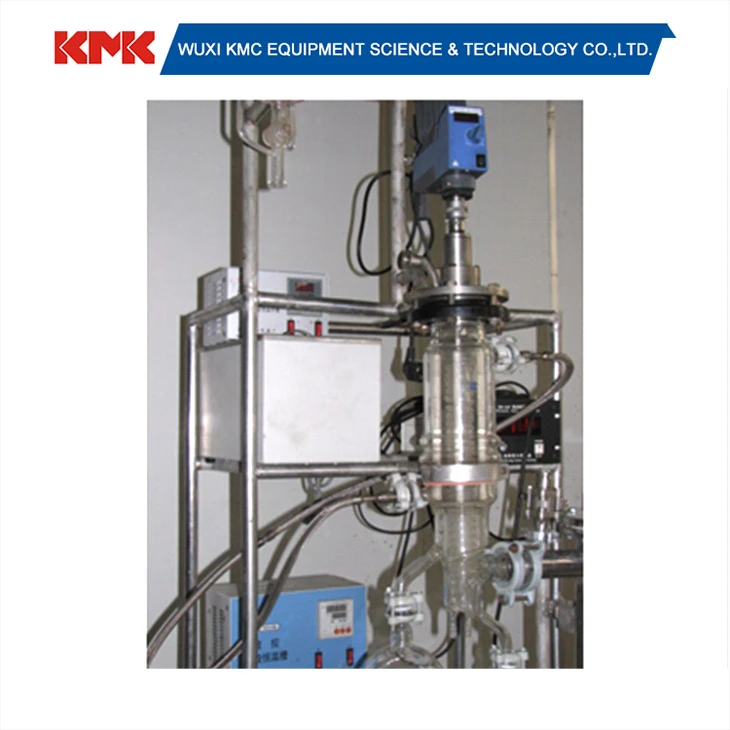
Thin film dryers operate on the concept of creating a thin film of the material to be dried on a heated surface. The feed material is introduced into the dryer, where it is spread into a thin film on the inner wall of the drying chamber. A high - speed rotating scraper ensures a continuous and uniform film distribution. Heat is transferred through the wall of the drying chamber to the thin film of the material, causing the moisture to evaporate rapidly. This process is covered in more detail on our Thin Film Drying page.
Conversely, drum dryers use a large, rotating drum. The material is usually applied to the outer surface of the drum, which is heated either internally or externally. As the drum rotates, the material adheres to its surface. The heat from the drum causes the water in the material to evaporate while it is being carried around the drum's circumference. Once it has passed a certain arc of rotation and the drying is complete, the dried product is scraped off the drum surface.
Heat Transfer Efficiency
Heat transfer efficiency is a crucial factor in industrial drying, as it directly impacts the drying time, energy consumption, and ultimately, the cost of production.
Thin film dryers excel in heat transfer efficiency. The thin film of the material provides a large surface - to - volume ratio, which significantly enhances the heat transfer rate. The high - speed rotating scraper also promotes turbulence in the thin film, further improving heat transfer. This allows for rapid drying even at relatively low temperatures, which is beneficial for heat - sensitive materials. Our Vertical Thin Film Dryer is a prime example of a thin film dryer with excellent heat transfer characteristics.
Drum dryers, on the other hand, have a more traditional heat transfer mechanism. The drying occurs over the outer surface of the drum, and the heat transfer is mainly through conduction. While they can achieve good drying results, the heat transfer efficiency may be lower compared to thin film dryers, especially for materials that are difficult to spread evenly on the drum or for highly viscous materials.
Product Quality
The quality of the dried product is another area where these two types of dryers show notable differences.
Thin film dryers are gentle on the product. Since the drying process can be carried out at low temperatures and in a relatively short time, there is less risk of thermal degradation for heat - sensitive materials. This results in a high - quality dried product that retains its original properties, such as flavor, color, and nutritional value. The rapid drying also helps prevent the formation of lumps or agglomerates, ensuring a uniform particle size distribution in the dried product.
Drum dryers can sometimes subject the product to higher temperatures for a longer period, which may cause thermal damage to heat - sensitive substances. Additionally, if the material handling on the drum is not well - controlled, there may be variations in the drying degree, leading to an uneven product quality.
Throughput and Capacity
When it comes to throughput and capacity, both types of dryers have their own scalability, but they offer different profiles.
Thin film dryers are known for their high - throughput capabilities. The efficient heat transfer mechanism allows for fast evaporation of moisture, enabling a large amount of material to be dried in a relatively short time. They can be designed with different diameters and lengths to meet various production requirements. For continuous - flow production lines, thin film dryers can be integrated seamlessly to provide a consistent drying process.
Drum dryers also have a wide range of capacities, but they may be more limited in terms of the maximum throughput compared to thin film dryers. The drying process on the drum surface is somewhat slower, and the size of the drum restricts the amount of material that can be dried per unit time. However, for small - to - medium - scale production, drum dryers can be a cost - effective solution.
Maintenance and Cleaning
Maintenance and cleaning requirements are important considerations for industrial equipment, as they affect the uptime and overall operating costs.
Thin film dryers are generally easier to maintain. The internal components are relatively simple, and the design allows for easy access to the drying chamber and the scraper. Regular cleaning can be carried out efficiently to prevent the build - up of dried material, which could otherwise affect the performance of the dryer. Our ZHG - I Series Vacuum Rake Dryer is designed with user - friendly maintenance features.
Drum dryers, on the other hand, may require more extensive maintenance. The large rotating drum and the various components involved in the material application and scraping processes need to be regularly inspected and maintained. Cleaning the drum surface, especially if there has been a build - up of sticky or hard - to - remove materials, can be a time - consuming process.
Applications
The differences in their characteristics lead to different application preferences for thin film dryers and drum dryers.
Thin film dryers are widely used in industries where heat - sensitive materials need to be dried. This includes the pharmaceutical, food, and biochemical industries. They are also suitable for drying highly viscous materials, such as polymers, pastes, and slurries, because the high - speed scraper can evenly distribute these materials on the heated surface.
Drum dryers are commonly used for drying materials that are not overly heat - sensitive and can be easily spread on the drum surface. They are often found in industries such as paper, textiles, and some chemical processes. For example, they are used to dry paper pulp to a certain moisture content during the paper - making process.
Conclusion
In conclusion, the differences between thin film dryers and drum dryers are multifaceted, spanning from their operational principles, heat transfer efficiency, product quality, throughput, maintenance requirements, to their applications.
As a professional thin film dryer supplier, we understand the unique needs of different industries and are committed to providing high - quality thin film drying solutions. Whether you are dealing with heat - sensitive materials, high - viscosity substances, or require high - throughput drying, our thin film dryers can offer the performance and reliability you need.
If you are interested in learning more about our thin film dryers or are considering a purchase for your industrial drying processes, we encourage you to contact us for a detailed discussion. Our team of experts is ready to assist you in selecting the most suitable dryer for your specific requirements and to provide you with comprehensive technical support.
References
- Perry, R. H., & Green, D. W. (1997). Perry's Chemical Engineers' Handbook. McGraw - Hill.
- Mujumdar, A. S. (Ed.). (2007). Handbook of industrial drying. CRC press.