

What is the appropriate film thickness in a film evaporator?
Jan 06, 2026
Leave a message
What is the appropriate film thickness in a film evaporator?
As a supplier of film evaporators, I often encounter questions from customers about the appropriate film thickness in a film evaporator. This parameter is crucial as it significantly impacts the performance and efficiency of the evaporation process. In this blog, I will delve into the factors that determine the appropriate film thickness and its implications for different types of film evaporators.
Understanding Film Evaporators
Before discussing film thickness, it's essential to have a basic understanding of film evaporators. Film evaporators are widely used in various industries, including chemical, pharmaceutical, food, and environmental protection. They work by creating a thin film of the liquid to be evaporated on a heated surface. This thin - film configuration allows for efficient heat transfer and rapid evaporation.
There are different types of film evaporators, such as the Scraper Thin Film Evaporator, Industrial Wastewater Evaporator, and Fall Film Evaporator. Each type has its own unique characteristics and is suitable for different applications.
Factors Affecting the Appropriate Film Thickness
Viscosity of the Liquid
The viscosity of the liquid being evaporated is one of the most important factors influencing the appropriate film thickness. High - viscosity liquids tend to form thicker films. For example, in the processing of heavy oils or polymers, the liquid's high internal resistance to flow makes it difficult to spread into a very thin film. In such cases, a relatively thicker film may be more appropriate. However, if the film is too thick, the heat transfer rate will decrease because the heat has to penetrate a greater distance through the liquid layer. On the other hand, low - viscosity liquids, like water or certain solvents, can form thinner films more easily. A thinner film allows for faster heat transfer and more efficient evaporation.
Heat Transfer Requirements
The heat transfer coefficient is directly related to the film thickness. A thinner film generally results in a higher heat transfer coefficient because the thermal resistance across the film is lower. When a high heat transfer rate is required, such as in applications where rapid evaporation is necessary to meet production targets, a thinner film is preferred. For instance, in the production of high - value pharmaceutical products, where time is of the essence, a thinner film in the evaporator can ensure that the active ingredients are not degraded by prolonged exposure to heat.
Flow Rate of the Liquid
The flow rate of the liquid through the evaporator also affects the film thickness. A higher flow rate can lead to a thicker film as more liquid is being fed onto the heated surface in a given time. However, if the flow rate is too high, it may cause uneven film distribution and splashing, which can reduce the efficiency of the evaporation process. Conversely, a very low flow rate may result in an unstable or discontinuous film, which is also detrimental to the evaporation performance.
Evaporation Temperature and Pressure
The evaporation temperature and pressure conditions play a role in determining the appropriate film thickness. At higher temperatures and lower pressures, the liquid evaporates more readily. In such cases, a thinner film can be maintained as the driving force for evaporation is strong. For example, in vacuum evaporation processes, where the pressure is significantly reduced, the liquid can evaporate at lower temperatures. A thinner film allows for more efficient use of the available heat and faster evaporation.
Appropriate Film Thickness for Different Types of Film Evaporators
Scraper Thin Film Evaporator
In a Scraper Thin Film Evaporator, the rotating blades or scrapers continuously agitate the liquid film on the heated surface. This type of evaporator is suitable for handling high - viscosity liquids and liquids with suspended solids. The appropriate film thickness in a scraper thin - film evaporator typically ranges from 0.5 to 3 mm. The scrapers help to maintain a relatively uniform film thickness and prevent the formation of thick, stagnant layers that could impede heat transfer.
Fall Film Evaporator
A Fall Film Evaporator relies on gravity to form a falling film of the liquid on the inner surface of a vertical tube. This type of evaporator is commonly used for low - to medium - viscosity liquids. The appropriate film thickness in a fall - film evaporator is usually in the range of 0.1 to 1 mm. A thinner film in a fall - film evaporator ensures good wetting of the tube surface and efficient heat transfer.
Industrial Wastewater Evaporator
Industrial Wastewater Evaporator is designed to treat various types of industrial wastewater. The composition of the wastewater, which can include different levels of dissolved solids, oils, and other contaminants, affects the appropriate film thickness. For relatively clean wastewater with low viscosity, a thinner film (around 0.2 - 0.5 mm) can be used to achieve efficient evaporation and separation of water from the contaminants. However, if the wastewater contains high - viscosity substances or a large amount of suspended solids, a thicker film (up to 2 mm) may be necessary to prevent clogging and ensure stable operation.
Implications of Incorrect Film Thickness
If the film thickness is too thick, several problems can occur. The heat transfer rate will be reduced, leading to longer evaporation times and higher energy consumption. There may also be a risk of product degradation, especially for heat - sensitive materials. Additionally, a thick film can cause uneven evaporation, resulting in inconsistent product quality.
On the other hand, if the film thickness is too thin, the film may not be continuous, leading to dry spots on the heated surface. This can cause overheating and scaling, which can damage the evaporator and reduce its lifespan. Moreover, a very thin film may not be able to carry the liquid effectively, leading to poor evaporation performance.
Conclusion
Determining the appropriate film thickness in a film evaporator is a complex process that requires careful consideration of multiple factors, including the viscosity of the liquid, heat transfer requirements, flow rate, and evaporation conditions. Different types of film evaporators have different optimal film thickness ranges based on their design and intended applications.
As a film evaporator supplier, we understand the importance of getting the film thickness right for our customers. Our team of experts can work with you to analyze your specific requirements and recommend the most suitable film evaporator and the appropriate film thickness for your process. Whether you are dealing with high - viscosity polymers, heat - sensitive pharmaceutical products, or industrial wastewater, we have the solutions to meet your needs.

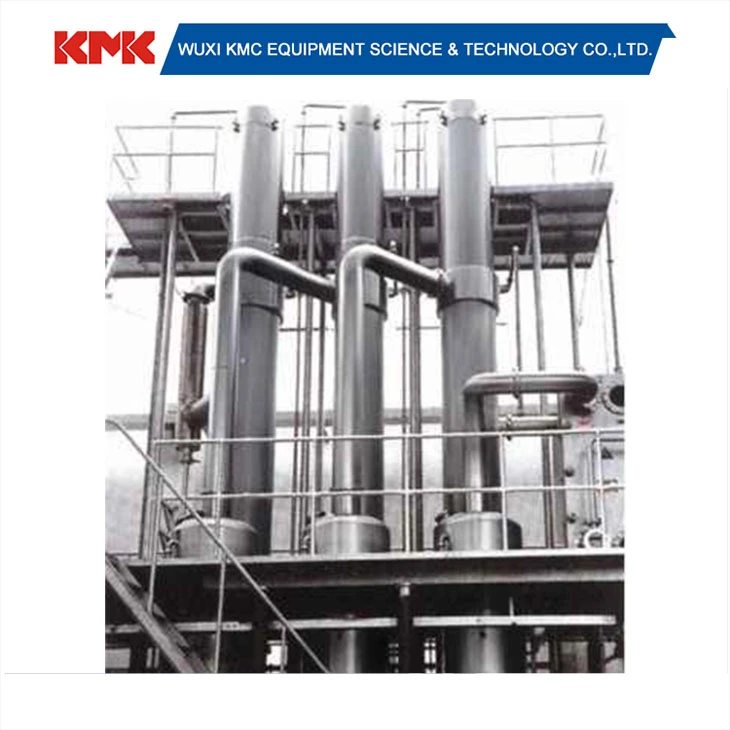
If you are interested in learning more about our film evaporators or would like to discuss your specific application, we encourage you to reach out to us for a detailed consultation. Our experienced sales team is ready to assist you in finding the best film evaporator solution for your business.
References
- Perry, R. H., & Green, D. W. (1997). Perry's Chemical Engineers' Handbook. McGraw - Hill.
- Walas, S. M. (1985). Chemical Process Equipment: Selection and Design. Butterworth - Heinemann.