

How to adjust the concentration of the material for thin film drying?
May 29, 2025
Leave a message
In the field of industrial processing, thin film drying is a crucial technique widely applied across various sectors, including chemical, pharmaceutical, and food industries. As a reputable supplier of thin film drying equipment, we understand the significance of adjusting the concentration of materials for thin film drying. This process directly impacts the efficiency, quality, and overall success of the drying operation. In this blog post, we will delve into the methods and considerations for adjusting the material concentration in thin film drying.
Understanding the Importance of Material Concentration in Thin Film Drying
The concentration of the material being dried plays a pivotal role in thin film drying. A proper concentration ensures that the material forms a uniform thin film on the drying surface, which is essential for efficient heat transfer and mass transfer. If the concentration is too low, the film may be too thin, leading to excessive evaporation and potential over - drying. On the other hand, if the concentration is too high, the film may be too thick, hindering heat and mass transfer and resulting in incomplete drying.
Factors Affecting Material Concentration
Viscosity
The viscosity of the material is closely related to its concentration. As the concentration increases, the viscosity generally rises. High - viscosity materials can be challenging to spread into a thin film. For example, in the production of some polymer solutions, a high - concentration solution may be too viscous to flow smoothly on the drying surface of a Horizontal Thin Film Dryer. This can lead to uneven film formation and reduced drying efficiency.
Solubility
The solubility of the solute in the solvent also affects the achievable concentration. Some substances have limited solubility in certain solvents. When approaching the saturation point, further increasing the concentration becomes difficult. In pharmaceutical applications, the solubility of active ingredients in a liquid carrier needs to be carefully considered. If the concentration exceeds the solubility limit, precipitation may occur during the drying process, affecting the quality of the final product.
Evaporation Rate
The evaporation rate of the solvent is another important factor. A solvent with a high evaporation rate can cause rapid changes in concentration during the initial stages of drying. This can lead to crust formation on the surface of the thin film, which may impede further drying. For instance, in the drying of ethanol - based solutions, the high volatility of ethanol requires careful control of the drying conditions to prevent crusting and ensure uniform drying.
Methods for Adjusting Material Concentration
Dilution
Dilution is a straightforward method for reducing the concentration of a material. By adding a suitable solvent, the overall concentration of the solute in the solution decreases. This is often used when the initial concentration is too high for thin film drying. For example, if a thick slurry needs to be dried in an Agitated Drying Machine, adding a small amount of water can lower its viscosity and make it easier to form a thin film. However, it is important to note that excessive dilution may increase the drying time and energy consumption.
Concentration by Evaporation
Conversely, if the concentration is too low, evaporation can be used to increase it. This can be achieved by heating the solution under controlled conditions to evaporate a portion of the solvent. In industrial settings, specialized evaporators can be used for this purpose. For example, in the production of fruit juices, evaporation is commonly used to concentrate the juice before thin film drying to produce fruit powder.
Mixing with Other Solutions
Mixing the material with other solutions of different concentrations can also be an effective way to adjust the overall concentration. This method allows for more precise control of the final concentration. For example, in the chemical industry, a solution with a high concentration of a particular compound can be mixed with a low - concentration solution of the same or a compatible compound to achieve the desired concentration for thin film drying.

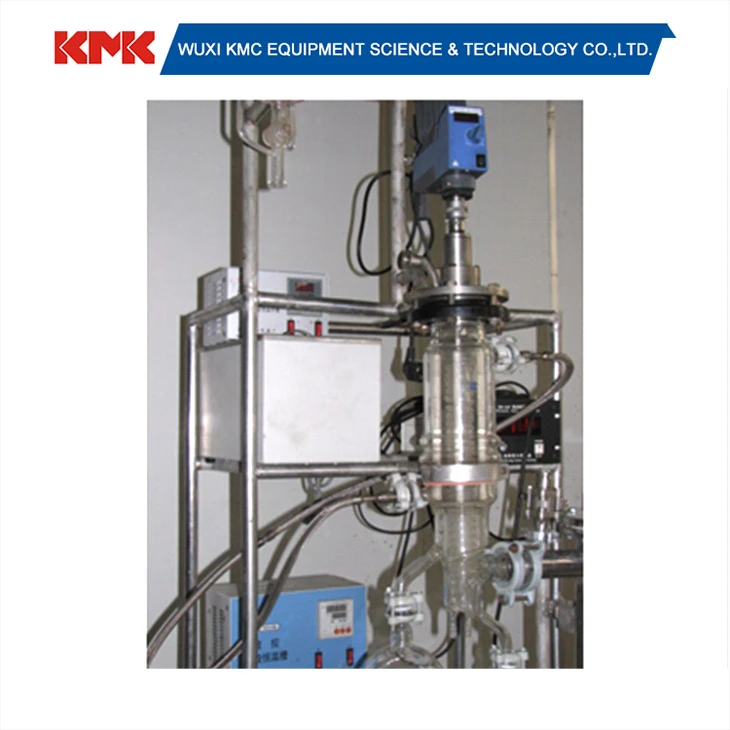
Considerations for Different Types of Thin Film Drying Equipment
Horizontal Thin Film Dryer
In a Horizontal Thin Film Dryer, the material is fed onto a horizontally rotating drum or belt. The concentration of the material needs to be adjusted to ensure that it can form a continuous and uniform thin film on the surface. If the concentration is too high, the material may not spread evenly, leading to uneven drying and potential blockages. On the other hand, if the concentration is too low, the film may be too thin and prone to being blown off by the air flow in the dryer.
Agitated Drying Machine
An Agitated Drying Machine uses mechanical agitation to mix and spread the material. The agitation helps to break up any clumps and ensure uniform film formation. However, the concentration of the material still needs to be within a suitable range. A high - concentration material may require more intense agitation, which can increase the energy consumption and wear on the equipment. A low - concentration material may require longer agitation times to achieve a uniform film.
Quality Control and Monitoring during Concentration Adjustment
During the process of adjusting the material concentration, it is essential to have proper quality control and monitoring measures in place. This includes regularly measuring the concentration of the material using appropriate analytical techniques such as refractometry, titration, or spectroscopy. These methods can provide accurate and real - time information about the concentration, allowing for timely adjustments.
In addition, visual inspection of the thin film formation can also provide valuable insights. A uniform and smooth thin film indicates that the concentration is within an appropriate range. Any signs of unevenness, such as streaks or blobs, may suggest that the concentration needs to be adjusted.
Case Studies
Let's take a look at some real - world case studies to illustrate the importance of adjusting material concentration in thin film drying.
Case 1: Pharmaceutical Industry
In a pharmaceutical company, they were drying a drug solution using a thin film dryer. Initially, the concentration of the drug in the solution was too high, which led to the formation of a thick and uneven film on the drying surface. This resulted in incomplete drying and a lower - quality final product. By diluting the solution with a suitable solvent, they were able to achieve a more uniform thin film and improve the drying efficiency and product quality.
Case 2: Food Industry
A food processing company was producing fruit powder using thin film drying. The initial fruit juice had a relatively low concentration, which made it difficult to form a stable thin film. They used evaporation to increase the concentration of the juice before feeding it into the thin film dryer. This allowed for better film formation and more efficient drying, resulting in a higher - quality fruit powder with improved flavor and nutritional value.
Conclusion
Adjusting the concentration of the material for thin film drying is a critical step in ensuring the efficiency and quality of the drying process. By understanding the factors affecting material concentration, choosing the appropriate adjustment methods, and considering the characteristics of different types of thin film drying equipment, manufacturers can optimize their thin film drying operations.
As a leading supplier of Thin Film Drying equipment, we are committed to providing our customers with the best solutions for their thin film drying needs. If you are interested in learning more about our products or need assistance in adjusting the material concentration for your thin film drying process, we encourage you to contact us for a detailed discussion. Our team of experts is ready to help you achieve the best results in your thin film drying operations.
References
- Perry, R. H., & Green, D. W. (Eds.). (2008). Perry's Chemical Engineers' Handbook. McGraw - Hill.
- Mujumdar, A. S. (Ed.). (2014). Handbook of Industrial Drying. CRC Press.
- Strumillo, C., & Kudra, T. (1986). Drying: Principles, Applications, and Design. Gordon and Breach Science Publishers.