

How does the drying rate vary with different stages of thin layer drying?
May 15, 2025
Leave a message
The thin layer drying process is a crucial technique in various industries, including food processing, pharmaceuticals, and chemical engineering. Understanding how the drying rate varies with different stages of thin layer drying is essential for optimizing the drying process, improving product quality, and reducing energy consumption. As a supplier of [Thin Layer Drying] equipment, I have witnessed firsthand the significance of this knowledge in helping our customers achieve efficient and effective drying operations.
Initial Stage of Thin Layer Drying
At the beginning of the thin layer drying process, the material has a high moisture content. The drying rate is primarily determined by the external conditions, such as the temperature, humidity, and air velocity of the drying medium. During this stage, the surface moisture of the material evaporates rapidly, and the drying rate is relatively high.
The driving force for moisture evaporation at the initial stage is the difference in vapor pressure between the wet surface of the material and the surrounding air. As the hot air passes over the material, it provides the necessary heat to convert the liquid water on the surface into vapor. The higher the temperature and the lower the humidity of the air, the greater the vapor pressure difference, and the faster the drying rate.
For example, in the food industry, when drying fruits or vegetables, the initial stage of thin layer drying can quickly remove the surface moisture, preventing microbial growth and extending the shelf - life of the products. Our [Thin Layer Drying] systems are designed to provide precise control over the temperature and air velocity during this stage, ensuring a rapid and uniform initial drying process.
Constant - Rate Drying Stage
Following the initial stage, the drying process enters the constant - rate drying stage. In this stage, the rate of moisture evaporation remains relatively constant as long as there is a continuous supply of free water on the surface of the material. The drying rate is mainly controlled by the external mass transfer conditions, such as the air velocity and the convective heat transfer coefficient.
The constant - rate drying stage is characterized by a linear relationship between the moisture content of the material and the drying time. The heat supplied to the material is used solely for the evaporation of water, and the temperature of the material remains approximately constant at the wet - bulb temperature of the drying air.
To illustrate, in the pharmaceutical industry, when drying powders or granules, the constant - rate drying stage helps to maintain a stable drying environment, ensuring the quality and consistency of the final products. Our [Vertical Thin Film Dryer] is specifically designed to enhance the convective heat and mass transfer during this stage, allowing for a more efficient constant - rate drying process.
Falling - Rate Drying Stage
As the free water on the surface of the material is depleted, the drying process enters the falling - rate drying stage. During this stage, the drying rate decreases continuously as the moisture has to migrate from the interior of the material to the surface before it can be evaporated.
The falling - rate drying stage can be further divided into two sub - stages: the first falling - rate stage and the second falling - rate stage. In the first falling - rate stage, the moisture migration is mainly due to capillary action. As the moisture content decreases, the capillary forces become weaker, and the rate of moisture migration slows down.
In the second falling - rate stage, the moisture migration is mainly driven by diffusion. The diffusion of moisture through the solid matrix of the material is a much slower process compared to capillary action. At this stage, the drying rate is highly dependent on the internal structure and properties of the material, such as porosity, density, and moisture diffusivity.
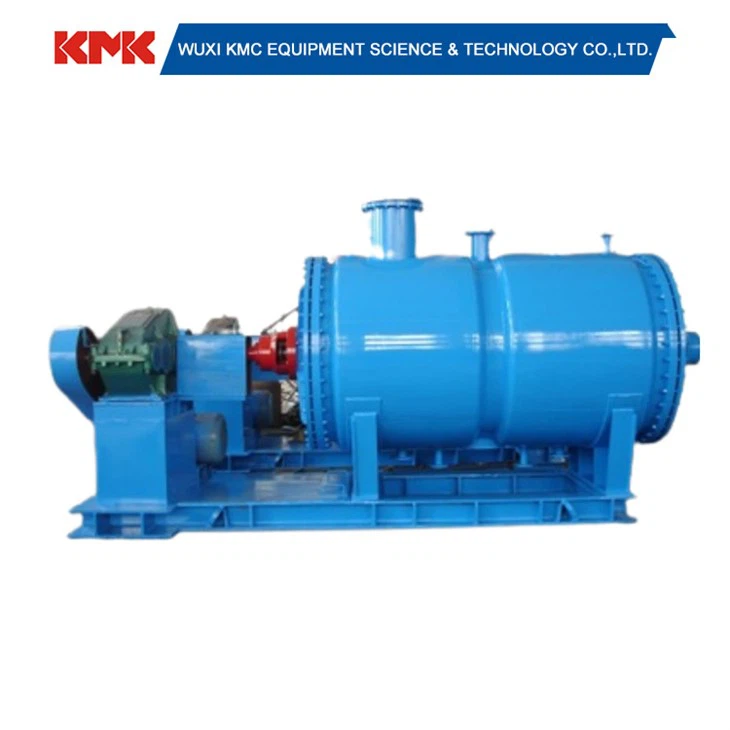
For instance, in the chemical industry, when drying polymers or resins, the falling - rate drying stage requires a more gentle drying approach to avoid over - drying or damage to the material. Our [Rotary Vacuum Dryer] is an excellent choice for this stage, as it can provide a low - temperature and low - pressure drying environment, facilitating the slow diffusion of moisture from the interior of the material.
Factors Affecting the Drying Rate at Different Stages
Several factors can influence the drying rate at different stages of thin layer drying. These factors include the properties of the material, the drying conditions, and the design of the drying equipment.
The properties of the material, such as its initial moisture content, particle size, shape, and porosity, play a significant role in determining the drying rate. Materials with a high initial moisture content will take longer to dry, while materials with a larger surface area (e.g., smaller particle size) will have a higher drying rate due to increased mass transfer.

The drying conditions, including temperature, humidity, air velocity, and pressure, also have a profound impact on the drying rate. Higher temperatures generally increase the drying rate, but excessive temperatures can cause damage to the material. Lower humidity and higher air velocity can enhance the convective mass transfer, resulting in a faster drying rate. In some cases, operating under vacuum conditions can reduce the boiling point of water, allowing for drying at lower temperatures.
The design of the drying equipment is another crucial factor. Our company offers a wide range of [Thin Layer Drying] equipment, each designed to meet the specific requirements of different materials and drying processes. For example, the [Vertical Thin Film Dryer] is suitable for high - viscosity materials, while the [Rotary Vacuum Dryer] is ideal for heat - sensitive materials.
Importance of Understanding Drying Rate Variation
Understanding how the drying rate varies with different stages of thin layer drying is of great importance for several reasons. Firstly, it allows for the optimization of the drying process. By adjusting the drying conditions at different stages, we can achieve the desired moisture content in the shortest possible time, reducing energy consumption and production costs.
Secondly, it helps to improve the quality of the final products. Different materials have different sensitivities to drying conditions. By controlling the drying rate at each stage, we can prevent over - drying, cracking, or other quality issues.
Finally, it enables the selection of the most appropriate drying equipment. Different drying equipment has different capabilities and limitations. By understanding the drying rate variation, we can choose the equipment that best suits the material and the drying process, ensuring efficient and effective drying operations.
Contact for Purchase and Consultation
If you are interested in our [Thin Layer Drying] equipment or need more information about the thin layer drying process, please feel free to contact us. Our team of experts is ready to provide you with professional advice and customized solutions to meet your specific needs. We are committed to helping you achieve the best drying results and improving your production efficiency.
References
- Mujumdar, A. S. (2014). Handbook of Industrial Drying. CRC Press.
- Barbosa - Canovas, G. V., Ortega - Rivas, E., Juliano, P., & Yan, H. (2005). Food Preservation by Drying. Springer.
- Karathanos, V. T., & Belessiotis, V. (1999). Thin - layer drying models for foods. Drying Technology, 17(1 - 2), 269 - 285.