

Can thin film evaporation be used for the purification of solvents?
Dec 12, 2025
Leave a message
Can thin film evaporation be used for the purification of solvents?
Hey there! As a supplier of thin film evaporation systems, I get this question a lot - can thin film evaporation be used for the purification of solvents? Well, let me break it down for you.
First off, let's talk about what thin film evaporation is. In a nutshell, it's a process where a liquid is spread out into a thin film over a heated surface. This creates a large surface area for evaporation to occur, which is super efficient. Solvents are substances that can dissolve other materials, and purifying them means getting rid of impurities to make them more useful.
Now, the big question - can thin film evaporation work for solvent purification? The answer is a resounding yes! There are several reasons why thin film evaporation is a great option for this task.
One major advantage is its speed. Since the liquid forms a thin film, the evaporation happens much faster compared to other methods. This means you can purify solvents quickly, saving you a lot of time. And in the world of industrial processes, time is money!
Another benefit is the low residence time. The liquid doesn't stay in the evaporation chamber for long, which reduces the chance of the solvent degrading or reacting with other substances. This is crucial when you're trying to purify delicate solvents that can be easily damaged by heat or long exposure.
Thin film evaporation also offers high efficiency in terms of energy use. The large surface area allows for better heat transfer, so you don't need to use as much energy to heat up the liquid and make it evaporate. This is not only good for the environment but also helps to cut down on operating costs.
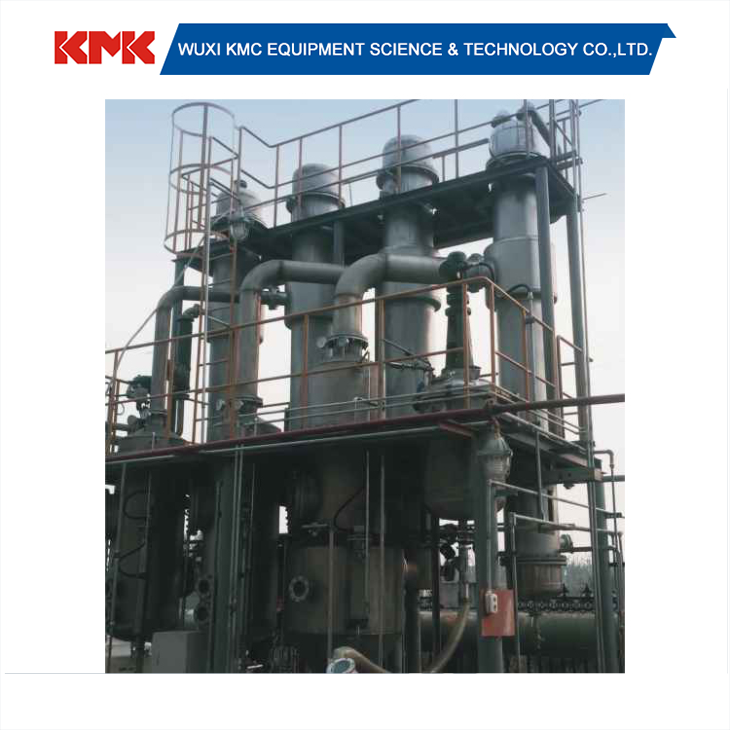
There are different types of thin film evaporation systems that can be used for solvent purification. For example, the Heat Exchanger Evaporator is designed to transfer heat efficiently between the hot source and the solvent, making the evaporation process smooth and effective.
The Three Effect Falling Film Evaporator takes things a step further. It uses a multi - stage process where the vapor from one stage is used to heat the next stage. This significantly reduces the energy consumption and makes the purification process even more cost - effective.
The Multi Effect Falling Film Evaporator is also a great choice. It can handle large volumes of solvents and purify them with high precision. The multi - effect design allows for better control of the evaporation process and can separate different components of the solvent mixture more accurately.
In real - world applications, thin film evaporation has been used in various industries for solvent purification. In the pharmaceutical industry, for example, it's used to purify solvents that are used in the production of drugs. The purity of these solvents is crucial to ensure the quality and safety of the final product.
In the chemical industry, thin film evaporation helps to purify solvents used in different chemical reactions. By removing impurities, the solvents can perform better and lead to more efficient and reliable chemical processes.
However, like any technology, thin film evaporation for solvent purification also has some challenges. One of the main issues is fouling. Over time, impurities in the solvent can build up on the heated surface, reducing the efficiency of the evaporation process. But don't worry, there are ways to deal with this. Regular cleaning and maintenance of the evaporation system can help to prevent fouling and keep everything running smoothly.
Another challenge is the initial cost of setting up a thin film evaporation system. It can be quite expensive to purchase and install the equipment, especially for small - scale operations. But when you consider the long - term benefits, such as reduced energy costs, faster production, and higher - quality purified solvents, the investment is often worth it.
So, to sum it all up, thin film evaporation is definitely a viable option for the purification of solvents. It offers speed, efficiency, and the ability to handle a wide range of solvents and impurities. Whether you're in a large - scale industrial operation or a smaller research lab, thin film evaporation can help you get the pure solvents you need.
If you're interested in using thin film evaporation for solvent purification in your business, don't hesitate to reach out. We're here to help you choose the right system for your specific needs and provide you with all the support you need for a successful implementation. Let's talk about how we can work together to improve your solvent purification process!

References
- Smith, A. (2020). Advances in Thin Film Evaporation Technology. Journal of Industrial Processes, 15(2), 34 - 42.
- Johnson, B. & Lee, C. (2019). Application of Thin Film Evaporation in Solvent Purification. Chemical Engineering Magazine, 20(3), 55 - 62.