

Can thin film evaporation be used for heat - sensitive materials?
May 19, 2025
Leave a message
Thin film evaporation is a well - known and widely used technology in the field of separation and concentration processes. As a thin film evaporation supplier, I am often asked whether thin film evaporation can be used for heat - sensitive materials. In this blog, I will explore this question in detail, considering the principles, advantages, and limitations of thin film evaporation when dealing with heat - sensitive substances.
Principles of Thin Film Evaporation
Thin film evaporation involves the creation of a thin liquid film on a heated surface. There are several types of thin film evaporators, each with its own unique way of forming and handling the thin film.
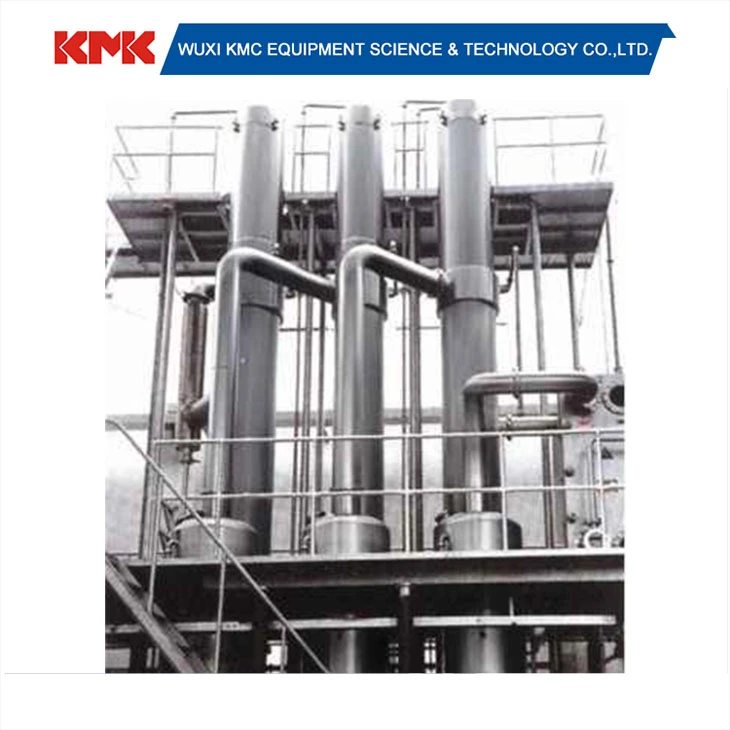
The Centrifugal Thin Film Evaporator uses centrifugal force to spread the liquid feed into a thin film on a rotating heated surface. This high - speed rotation ensures a very thin and uniform film, which in turn allows for efficient heat transfer and rapid evaporation. The Agitated Film Evaporator has a set of blades or paddles that agitate the liquid film on the heated surface. This agitation helps to prevent the formation of stagnant layers and enhances heat transfer. The Fall Film Evaporator relies on gravity to allow the liquid to flow down as a thin film on the inner surface of a vertical tube.
Why Heat - Sensitive Materials Need Special Treatment
Heat - sensitive materials are substances that can undergo chemical or physical changes when exposed to high temperatures. These changes can include degradation, decomposition, polymerization, or loss of biological activity. For example, many pharmaceutical compounds, essential oils, and food products are heat - sensitive. In the pharmaceutical industry, the active ingredients in drugs may lose their efficacy if over - heated. In the food industry, vitamins and flavor compounds can be destroyed, leading to a loss of nutritional value and taste.
Advantages of Thin Film Evaporation for Heat - Sensitive Materials
Short Residence Time
One of the most significant advantages of thin film evaporation is the short residence time of the material on the heated surface. Since the liquid forms a thin film, the heat transfer is very efficient, and the evaporation occurs rapidly. This means that the material is exposed to high temperatures for only a brief period, minimizing the risk of thermal degradation. For instance, in a centrifugal thin film evaporator, the high - speed rotation ensures that the liquid moves quickly across the heated surface, reducing the time it spends at elevated temperatures.
Low Operating Temperatures
Thin film evaporators can often operate at relatively low temperatures compared to other evaporation methods. This is because the thin film provides a large surface area for evaporation, which allows for efficient mass transfer even at lower temperatures. By operating at lower temperatures, the risk of thermal damage to heat - sensitive materials is further reduced. Additionally, the use of vacuum in thin film evaporation can lower the boiling point of the liquid, enabling evaporation to occur at even lower temperatures.
High Evaporation Rates
The large surface area of the thin film and the efficient heat transfer mechanisms in thin film evaporators result in high evaporation rates. This means that the separation or concentration process can be completed quickly, reducing the overall exposure time of the heat - sensitive material to heat. For example, in an agitated film evaporator, the agitation helps to continuously renew the liquid surface, enhancing the evaporation rate.
Case Studies
Let's look at some real - world examples of using thin film evaporation for heat - sensitive materials.

In the pharmaceutical industry, a company was trying to concentrate a heat - sensitive antibiotic solution. They initially used a traditional batch evaporation method, but they found that a significant amount of the antibiotic was degraded due to the long exposure to high temperatures. After switching to a centrifugal thin film evaporator, they were able to achieve the desired concentration with minimal degradation. The short residence time and low operating temperature of the centrifugal thin film evaporator protected the antibiotic from thermal damage.
In the essential oil industry, a manufacturer was extracting and concentrating essential oils from plant materials. Essential oils are highly heat - sensitive, and traditional evaporation methods often led to a loss of their characteristic flavors and aromas. By using a fall film evaporator under vacuum conditions, they were able to evaporate the solvent and concentrate the essential oils without significant loss of quality. The large surface area of the falling film and the low - temperature operation ensured that the delicate flavor and aroma compounds were preserved.
Limitations and Considerations
While thin film evaporation offers many advantages for heat - sensitive materials, there are also some limitations and considerations.
Fouling and Scaling
Heat - sensitive materials may contain impurities or components that can cause fouling or scaling on the heated surface of the thin film evaporator. Fouling can reduce the heat transfer efficiency and increase the residence time of the material, which may lead to thermal degradation. Regular cleaning and maintenance of the evaporator are required to prevent fouling.
Initial Investment and Operating Costs
Thin film evaporators can be more expensive to purchase and operate compared to some traditional evaporation methods. The equipment itself is often more complex, and it may require specialized training for operation and maintenance. Additionally, the energy consumption and the cost of vacuum systems (if used) can add to the operating costs.
Compatibility with the Material
Not all heat - sensitive materials are suitable for thin film evaporation. Some materials may have very high viscosities or may form gels or solids during the evaporation process, which can interfere with the formation of a thin film. It is important to conduct preliminary tests to determine the compatibility of the material with the thin film evaporation process.
Conclusion
In conclusion, thin film evaporation can be an effective method for processing heat - sensitive materials. The short residence time, low operating temperatures, and high evaporation rates make it well - suited for protecting heat - sensitive substances from thermal damage. However, it is important to be aware of the limitations and considerations, such as fouling, high costs, and material compatibility.
As a thin film evaporation supplier, we have a wide range of thin film evaporators, including Centrifugal Thin Film Evaporator, Agitated Film Evaporator, and Fall Film Evaporator, which can be tailored to meet the specific needs of different heat - sensitive materials. If you are interested in learning more about how thin film evaporation can benefit your heat - sensitive material processing, or if you have any questions regarding our products, we encourage you to reach out to us for a procurement discussion.
References
- Mujumdar, A. S. (Ed.). (2014). Handbook of industrial drying. CRC press.
- Walas, S. M. (1985). Chemical process equipment: selection and design. Butterworth - Heinemann.
- Singh, R. P., & Heldman, D. R. (2014). Introduction to food engineering. Academic press.