

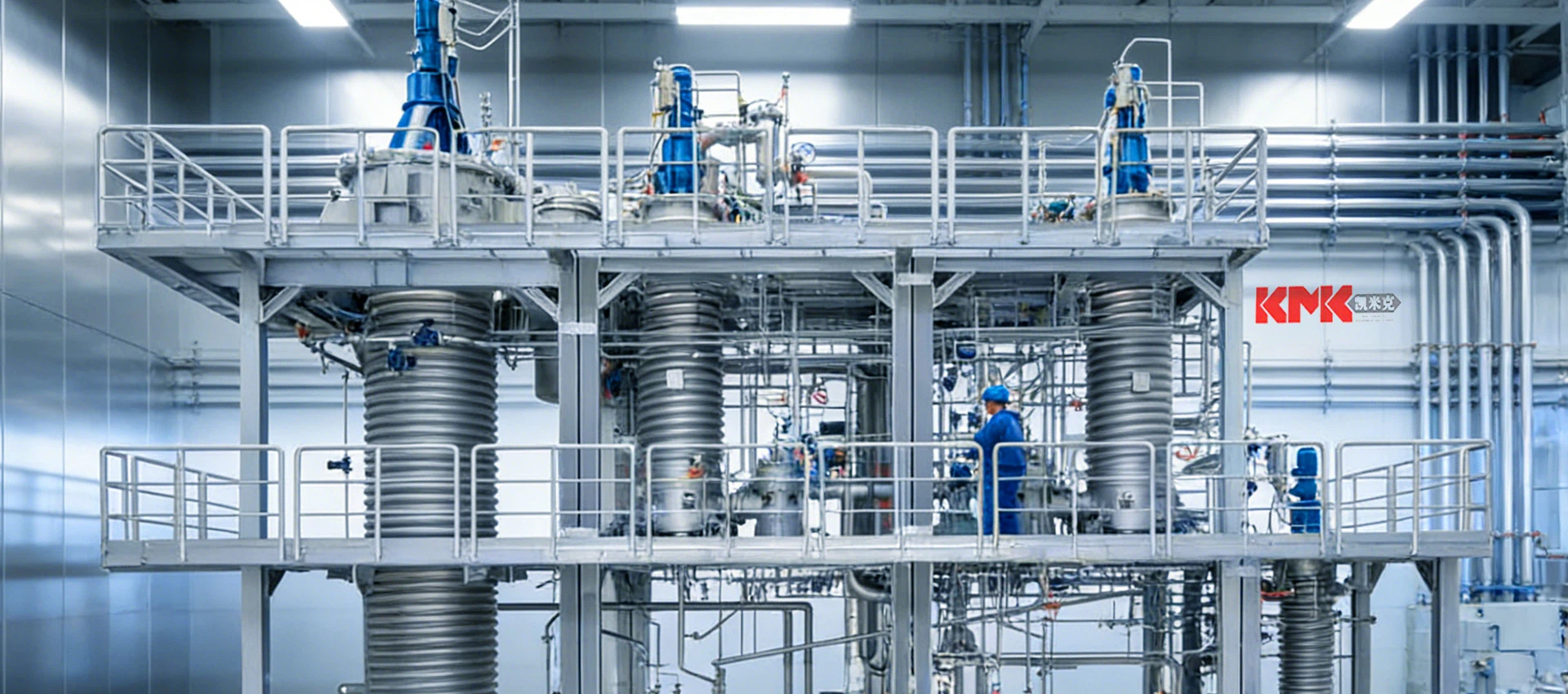
Tube (Shell) Heat Exchanger
May 29, 2023
Leave a message
1. Product Introduction
The shell-and-tube heat exchanger is a partitioned wall heat exchanger, which uses the wall of the heat exchange tube enclosed in the shell as the heat transfer surface. This kind of heat exchanger has the characteristics of simple structure, firmness, wide range of material selection, large processing capacity, ability to withstand high temperature and high pressure, strong adaptability, reliable operation, good heat transfer effect, and strong adaptability, so it is widely used in production. The widest range of heat exchange equipment.
At present, in the heat exchange equipment used in chemical production at home and abroad, the shell-and-tube heat exchanger still dominates. Under the condition of medium pressure, the shell-and-tube heat exchanger is the most suitable. Especially when the liquid flow rate is large, it is difficult to use other types of heat exchangers. Under high pressure, a U-shaped tube heat exchanger can generally be used, which is also a shell-and-tube heat exchanger.
2. Structure of shell and tube heat exchanger
It consists of shell, heat transfer tube bundle, tube sheet, baffle (baffle) and tube box and other components. The shell is mostly cylindrical, with a tube bundle inside, and the two ends of the tube bundle are fixed on the tube sheet. There are two kinds of hot and cold fluids for heat exchange, one flows inside the tube and is called the tube-side fluid; the other flows outside the tube and is called the shell-side fluid. In order to improve the heat transfer partial coefficient of the fluid outside the tube, several baffles are usually installed in the shell. The baffle can increase the velocity of the shell-side fluid, forcing the fluid to pass through the tube bundle multiple times according to the specified path, and enhance the degree of fluid turbulence. The heat exchange tubes can be arranged in equilateral triangles or squares on the tube sheet. The arrangement of equilateral triangles is more compact, the degree of turbulence of the fluid outside the tube is high, and the heat transfer coefficient is large; the arrangement of squares is convenient for cleaning outside the tube, and it is suitable for fluids that are prone to fouling.
Every time the fluid passes through the tube bundle is called a tube pass; every time the fluid passes through the shell is called a shell pass. The picture shows the simplest single-shell-side single-tube heat exchanger, referred to as 1-1 type heat exchanger. In order to increase the fluid velocity in the pipe, partitions can be installed in the pipe boxes at both ends to divide all the pipes into several groups. In this way, the fluid only passes through part of the tubes at a time, so it goes back and forth multiple times in the tube bundle, which is called multi-tube pass. Similarly, in order to increase the flow velocity outside the tube, longitudinal baffles can also be installed in the shell to force the fluid to pass through the shell space multiple times, which is called multi-shell pass. Multi-tube and multi-shell can be used together.
3. The shell and tube heat exchangers produced by our company mainly include the following types:
1. Fixed tube-sheet heat exchanger The tube sheets at both ends of the tube bundle are integrated with the shell. The structure is simple, but it is only suitable for heat exchange operations when the temperature difference between the hot and cold fluids is not large and the shell side does not need mechanical cleaning. When the temperature difference is slightly large and the shell side pressure is not too high, an elastic compensation ring can be installed on the shell to reduce thermal stress.
2. Floating head heat exchanger The tube sheet at one end of the tube bundle can float freely, completely eliminating thermal stress; and the whole tube bundle can be pulled out from the shell, which is convenient for mechanical cleaning and maintenance. Floating head heat exchangers are widely used, but the structure is more complicated and the cost is higher.
3. U-shaped tube heat exchanger Each heat exchange tube is bent into a U shape, and the two ends are respectively fixed on the upper and lower areas of the same tube plate. This kind of heat exchanger completely eliminates thermal stress, and its structure is simpler than that of the floating head type, but the tube side is not easy to clean.
Because the temperature of the fluid inside and outside the tube is different, the temperature of the shell of the heat exchanger and the tube bundle are also different. If there is a large difference between the two temperatures, a large thermal stress will be generated in the heat exchanger, causing the tube to bend, break, or pull off the tube sheet. Therefore, when the temperature difference between the tube bundle and the shell exceeds 50°C, appropriate compensation measures should be taken to eliminate or reduce thermal stress.