

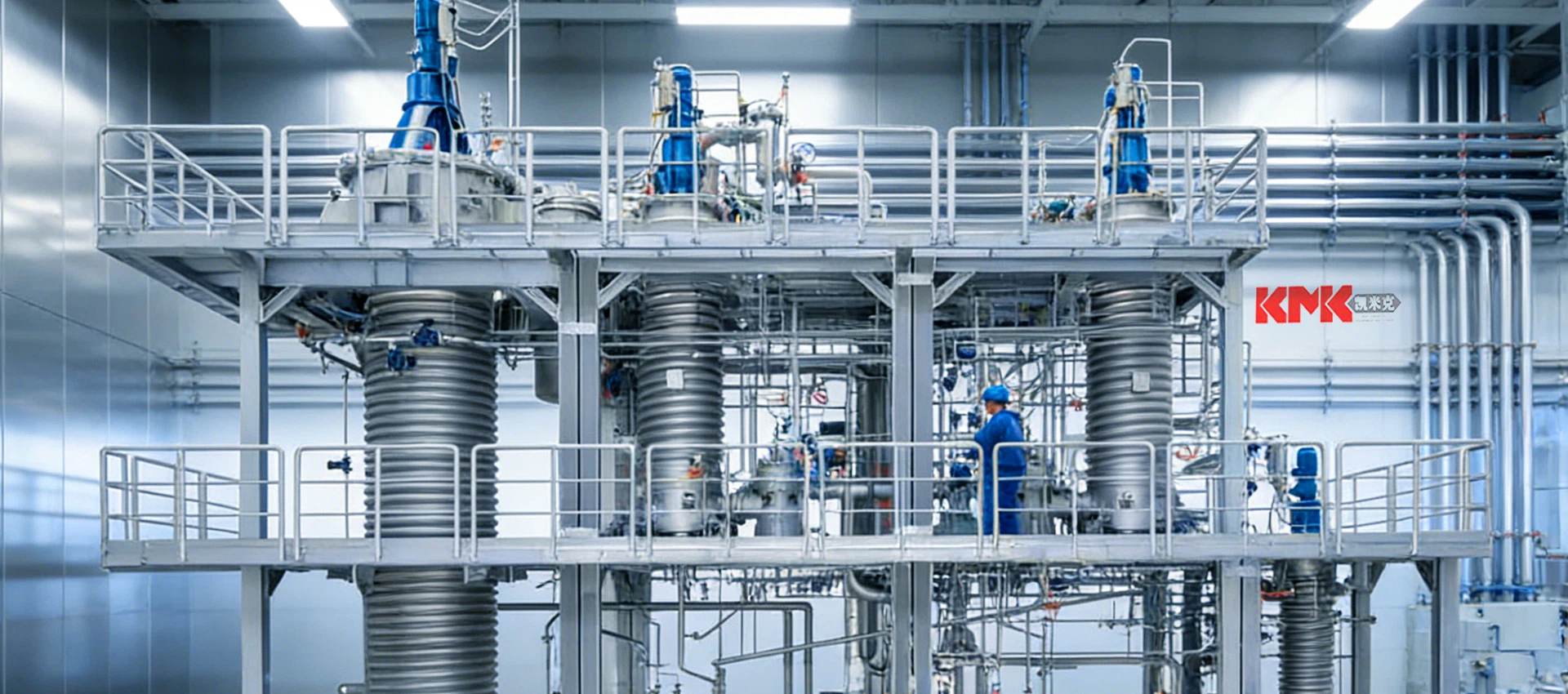
Selection of multi-effect evaporation process
Sep 14, 2019
Leave a message
The multi-effect evaporation operation process can be divided into four types: cocurrent flow, counter current flow, advection flow and cross flow according to the flow direction of the heated steam and the feed liquid.
(1) Cocurrent method The solution flows in the same direction as the steam, and flows from the first effect sequence to the final effect. Advantages of the co-current method: the solution flows from the evaporator with higher pressure and temperature to the evaporator with lower pressure and temperature, so the solution between the solutions can use the pressure difference between the effects without pumping. At the same time, when the current one-effect solution flows into the lower temperature and the lower pressure, self-evaporation (flashing) occurs, so that a part of the secondary steam can be generated. In addition, the method is simple in operation and stable in process conditions. As the solution proceeds from the previous effect to the latter, its concentration increases, and the temperature decreases, causing the viscosity of the solution to increase and the heat transfer coefficient of the evaporator to decrease. Therefore, the cocurrent flow operation is generally applicable to the evaporation of the liquid solution whose viscosity does not change greatly with the concentration.
(2) Countercurrent method The flow direction of the solution is opposite to the flow direction of the steam, that is, the heating steam enters from the first effect, and the raw material liquid enters from the last effect, and is discharged by the first effect. The advantage of the countercurrent method is that as the concentration of the solution increases along the flow direction, the temperature also increases. Therefore, the effect of viscosity increase due to the increase in concentration is substantially offset by the effect of viscosity increase, so the viscosity of each effect solution is relatively close, and the heat transfer coefficient of each effect is also substantially the same, which is suitable for the viscosity of the solution to vary greatly with concentration. Evaporation of the liquid. Disadvantages of the countercurrent method: the flow between the solution is from low pressure to high pressure, from low temperature to high temperature, and must be pumped, so the energy consumption is large, and it is not suitable for the liquid which is easy to decompose when the concentrated liquid is at high temperature.
(3) Advection method The advection method refers to the parallel addition of raw materials to each effect, and the completion liquid is also discharged from each effect. The flow of steam is still from the first effect to the end. This procedure is suitable for treating solutions that have crystallized during evaporation.
(4) Cross-flow method Also known as the mixed flow method, it is a combination of parallel and countercurrent. Its characteristic is that it has the advantages of both parallel and countercurrent and avoids its shortcomings, but the operation process is complicated, the control is difficult, and the application is not much. According to the above characteristics, the design adopts the parallel flow mode.https://www.heczb.com/