

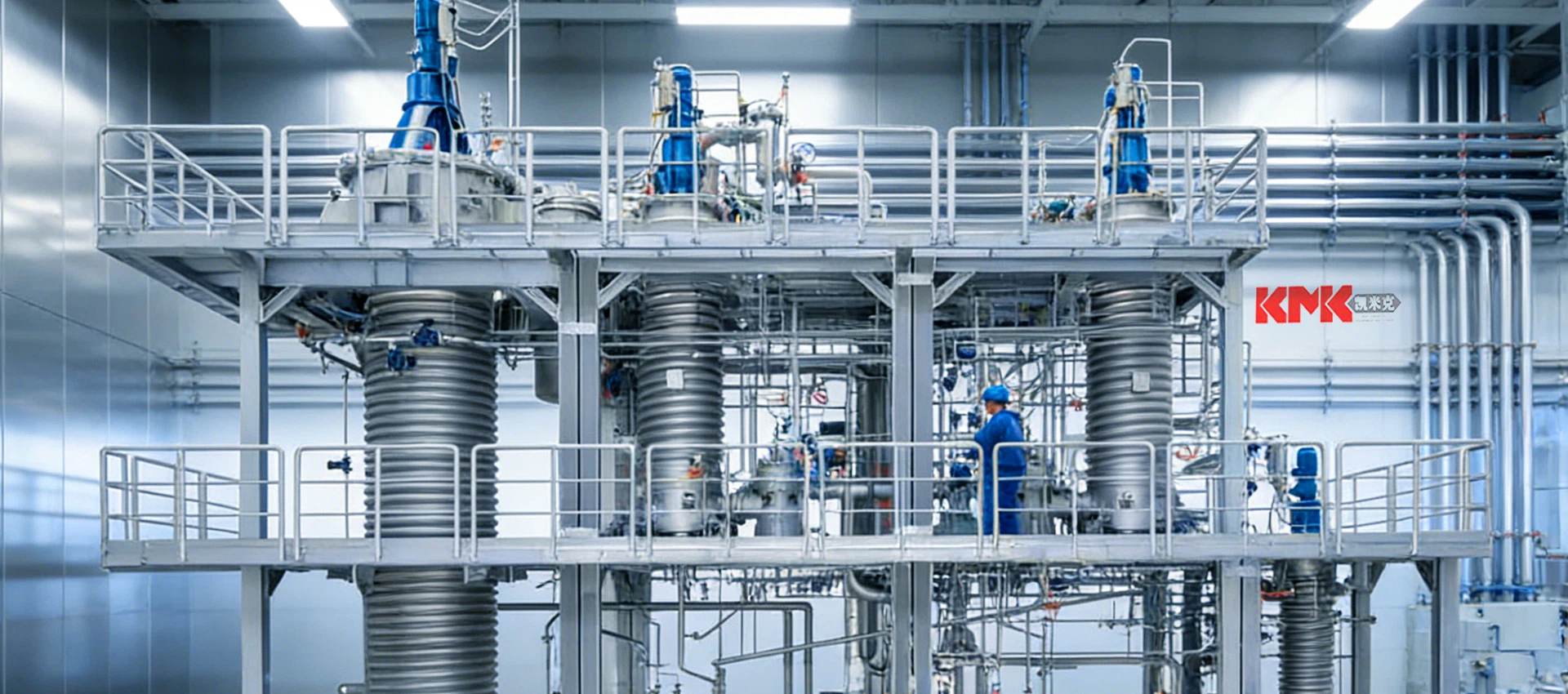
Laboratory distillation unit operation
Aug 20, 2019
Leave a message
The laboratory distillation unit operation is a commonly used experimental technique in chemical experiments, and is generally applied to the following aspects:
(1) Separating the liquid mixture to achieve a more effective separation only when there is a large difference in the boiling points of the components in the mixture;
(2) determining the boiling point of the pure compound;
(3) Purification, by purifying the substance containing a small amount of impurities, to improve its purity;
(4) The solvent is recovered, or a part of the solvent is distilled off to concentrate the solution.
Feeding: Carefully pour the liquid to be distilled into the distillation flask through a glass funnel, taking care not to allow liquid to flow out of the branch pipe. Add a few boil-offs and set up the thermometer. The thermometer should be installed at the side of the side that leads to the condenser. Once again, check that the parts of the instrument are tightly connected and properly connected.
Heating: When condensing the water with water, the cold water is slowly introduced from the lower end of the condensing pipe, and the water is discharged from the upper port to the water tank, and then heating is started. When heated, it can be seen that the liquid in the distillation flask gradually boils and the vapor gradually rises. The reading of the thermometer also increased slightly. When the tip of the vapor reaches the mercury ball of the thermometer, the thermometer reading rises sharply. At this time, the flame of the small gas lamp should be adjusted appropriately or the voltage of the heating electric furnace or the electric heating sleeve should be lowered, so that the heating speed is slightly slowed down, the steam tip stays in the original place, the upper part of the bottle neck and the thermometer are heated, and the temperature of the droplets and the vapor on the mercury ball are balanced. . Then slightly increase the flame and carry out the distillation. The heating temperature is controlled, and the distillation speed is adjusted, usually 1 to 2 drops per second. During the entire distillation process, the thermometer mercury spheres should always have condensed droplets. The temperature at this time is the temperature at which the liquid and the vapor are in equilibrium, and the reading of the thermometer is the boiling point of the liquid (distillate). The flame heated during distillation should not be too large, otherwise it will cause overheating in the neck of the distillation bottle, so that a part of the liquid vapor is directly subjected to the heat of the flame, so that the boiling point read by the thermometer will be higher; on the other hand, the distillation is also It cannot be carried out too slowly, otherwise the mercury ball of the thermometer cannot be sufficiently wetted by the distillate vapor to make the boiling point read on the thermometer low or irregular.
Observe the boiling point and collect the distillate: Prepare at least two receiving bottles before distilling. Because the liquid with a lower boiling point is first distilled out before reaching the boiling point of the desired material. This part of the distillate is called "front fraction" or "distillate". After the distillation of the former fraction is completed and the temperature tends to be stable, the purer material is distilled off. At this time, a clean and dry receiving bottle should be replaced. Record the reading of the thermometer when the liquid begins to distill and the last drop. It is the boiling range (boiling point range) of this fraction. Generally, the liquid contains more or less high-boiling impurities. After the required fraction is distilled out, if the heating temperature is further increased, the reading of the thermometer will rise significantly. If the original heating temperature is maintained, it will not be repeated. When the distillate is distilled off, the temperature will suddenly drop. At this point, the distillation should be stopped. Even if the amount of impurities is extremely small, do not evaporate to avoid rupture of the distillation bottle and other accidents.
After the distillation is completed, the heating should be stopped first, then the water is stopped and the instrument is removed. The order in which the instruments are removed is reversed to the order of assembly. First remove the receiver, then remove the tail pipe, condenser, distillation head, and distillation flask.