

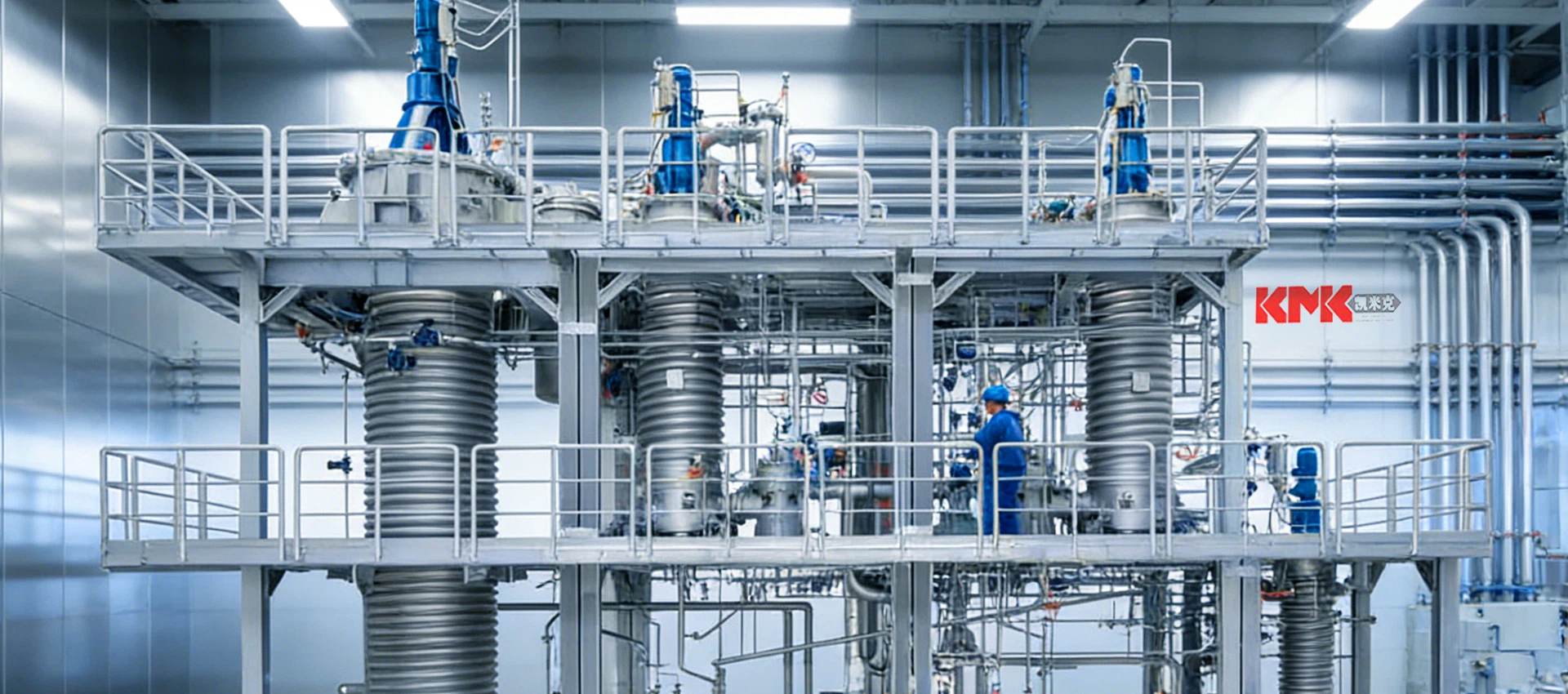
Industrial Wastewater MVR Evaporator: The Energy Myth of Secondary Steam
Mar 11, 2020
Leave a message
The industrial wastewater MVR evaporator uses energy-saving technology that reuses the energy of the secondary steam it generates, thereby reducing the need for external energy. Commonly used in chemical, food, paper, medicine, seawater desalination and sewage treatment. As early as the 1960s, Germany and France have successfully used this technology in chemical, food, paper, pharmaceutical, desalination, and wastewater treatment. Maybe everyone is curious whether the capacity of secondary steam generation is really spicy?
Take boiler steam as an example
The heat of one ton of steam is between 2.7 and 3.0 gigajoules, and accurate calculations need to know the steam parameters. Converted to a value of about 600,000 kcal. The heat of one ton of steam of a steam boiler is stated according to the standard;
1 ton of steam = 0.7 MW = 2.5 million bananas = 600,000 kcal.
1 ton of steam is equivalent to 600,000 kcal
1 ton of steam is equivalent to 64 boiler horsepower
1 boiler horsepower is equivalent to 8440 kcal heat.
The amount of 700,000 kcal / H is equivalent to 1.17 tons of boiler.
Seeing the conversion of these units, it is estimated that many of the parents have stunned their head shells. Let me make a simple comparison. The energy of the boiler steam is far beyond your imagination. It is similar to the volcanic eruption. Of energy, this is just an analogy. But science is very rigorous. Let ’s take an example. For example, the largest volcanic eruption in history occurred in northern Sumbawa, east of Java, Indonesia. There is a Tambora volcano that erupted in 1 815. At that time, the energy released was equivalent to 62,000 times the power of the atomic bomb blast of the little boy that the United States dropped on Hiroshima, Japan, at the end of the Second World War. Everyone now understands that the heat and energy generated during a volcanic eruption is very scary.
https://www.heczb.com