

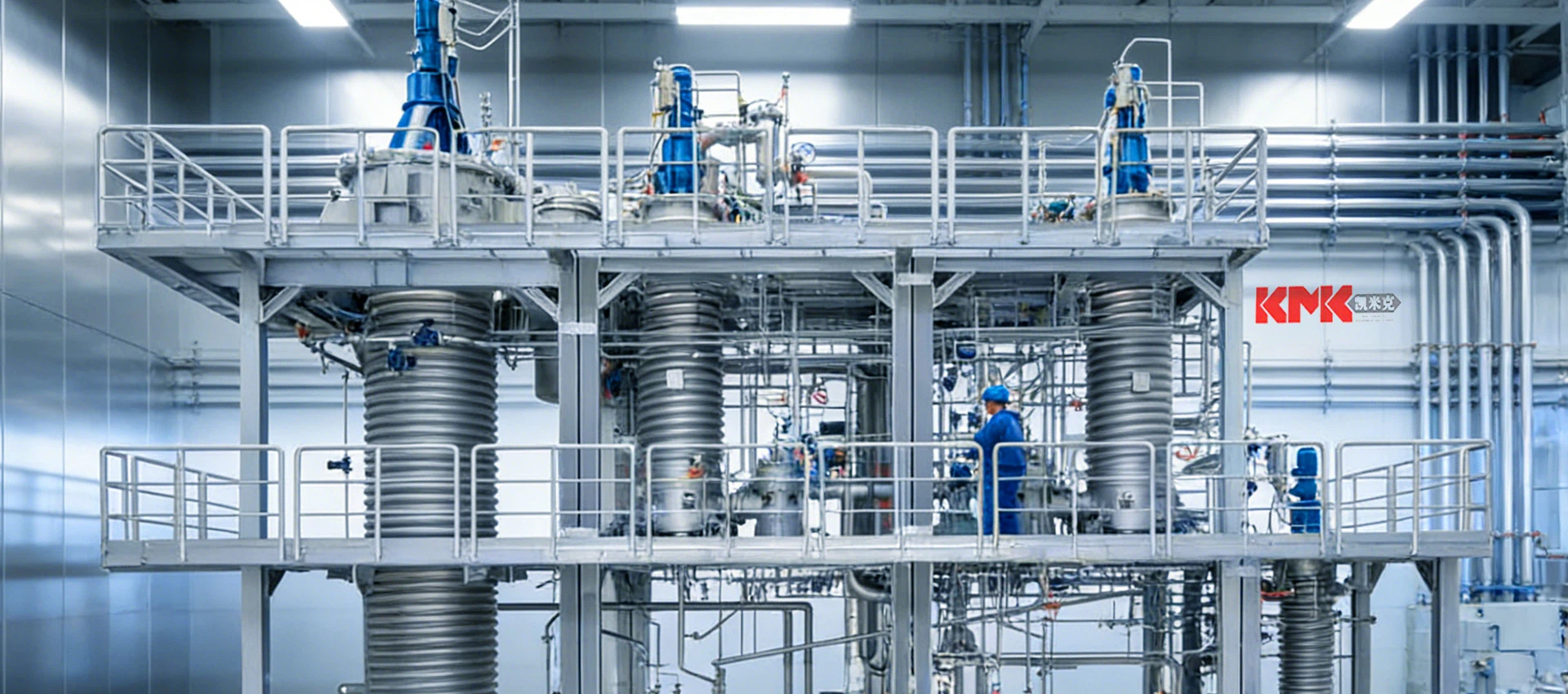
Improved process explanation of scraper film evaporator assembly
Mar 03, 2020
Leave a message
In the scraper evaporator, there is a class of products called thin film evaporators and mechanical stirrer type thin film evaporators. It is a new type of evaporation equipment that uses a rotor to drive a thin-walled scraper to rotate and concentrate materials. In the design of the evaporator, the flexible rotor shaft and the main shaft sleeve often wear, which greatly reduces the use rate of the scraper film evaporator. In response to this situation, the structure uses a centrifugal sliding groove rotor, which not only avoids The problem of serious equipment loss also effectively increased the evaporation by 40% -69%. Other product processes have also been improved. Let's take a look at the details of the product:
Improvement of scraper structure:
The friction between the squeegee and the barrel arm often requires replacement. The replacement cycle is generally one month, so the structure of the squeegee has been changed for the convenience of replacement. In the original structure, two bolts pass through two holes of the scraper to fix the scraper in the scraper groove, and the bolts must be removed when replacing. For easy replacement, we changed the fixed form of the scraper to a hanging type. There are two L-shaped grooves corresponding to the original holes on the scraper. When installing the scraper, you only need to push the scraper into the scraper slot and hang it on the bolt that fixes the scraper slot. Disassembly is also more convenient. Greatly reduces the difficulty of maintenance. At the same time, we changed the material of the scraper from polytetrafluoroethylene to polypropylene, which reduced the cost and increased the service life to about four months.
Improvement of the structure of the stress part of the swing arm:
In the original structure, the main bearing surface is the end face of the upper and lower small tubes, that is, an annular surface with an inner diameter of 25 and an outer diameter of 32 mm. During the operation, the weight of the scraper and the scraper frame act on this end surface Due to the small end surface area, a large friction force is generated on this end surface, and the end surface wears quickly. After running for less than a month, the swing arm cannot swing normally. In order to increase its load-bearing surface, we have added a tin-phosphor bronze sleeve and a stainless steel sleeve to the upper and lower small tubes. Through the modification, the life of the swing arm is extended to one year while the evaporator barrel is protected and the barrel is protected. Life expectancy has been extended from the original eight months to about two years.
Improvement of the plain bearing of the shaft head:
The graphite-impregnated PTFE material was changed to tin-phosphor bronze material. Although graphite-impregnated PTFE bearings are alkali resistant, they are soft in material, slow in heat transfer, and easy to wear. After the bearing is worn, the main shaft is prone to swing, causing the machine seal on the top of the evaporator to leak air. At the same time, it causes uneven wear of the cylinder and reduces the life of the cylinder. The tin-phosphor bronze material is both alkali and abrasion resistant, and has fast heat transfer. At the same time, this material is softer than the stainless steel material of the shaft head, which is also beneficial to protect the shaft head from being worn. After the bearing is changed to tin-phosphor bronze material, the service life has been increased from the original one month to about eighteen months, which has well protected the evaporator and promoted production.
Improvement of settling time:
Increasing the sedimentation time improved the quality of 42% caustic soda. 42% caustic soda has a large viscosity and fine salt. It takes a long time to settle the salt. After the output increases, we have added two sedimentation tanks accordingly and prolonged the sedimentation time. The quality of 42% caustic soda has improved significantly. The main rate of caustic soda increased from 55.6% to 77%.
Improvement of preheating device:
The process of producing 30% caustic soda directly affects the yield and quality of 42% caustic soda. We have used 30% caustic soda without cooling and desalting. The temperature is about 80 ° C, but the problem is that the output contains too much salt, which is not Conducive to the subsequent alkali preparation work, so the use of 30% caustic soda after cooling, sedimentation and desalting, the salt content of 42% caustic soda decreased, but the output also decreased accordingly, unable to meet market demand. In this case, we organized relevant technical personnel to calculate the production heat balance. In combination with the actual situation, a spiral plate preheater was selected to preheat 30% caustic soda. After preheating, the temperature can be increased from about 40 ° C to 65-70 ° C, and the production capacity has been increased by 30%.
The functional design of a product will directly affect its use effect and work efficiency. Only continuous improvement can make a product more suitable for use.
https://www.heczb.com