

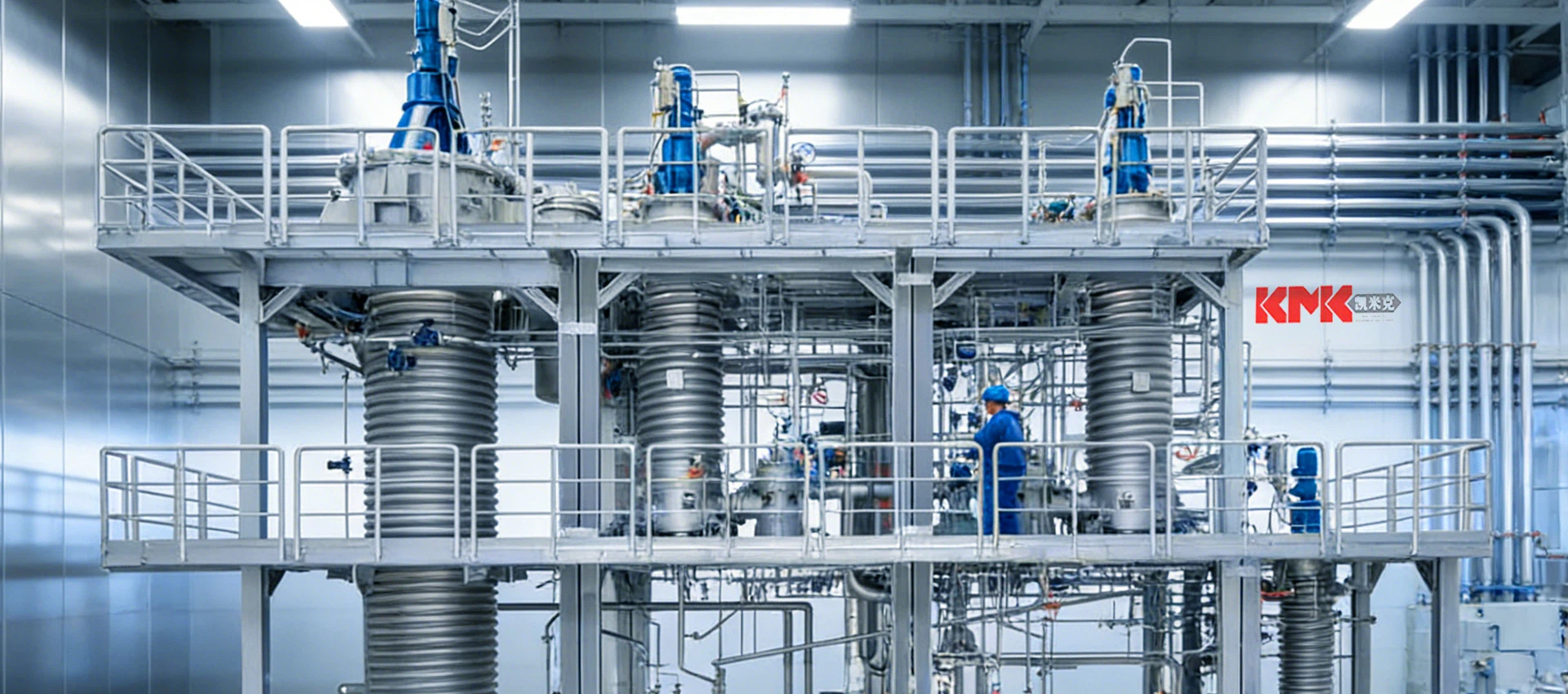
Heat exchange efficiency of Spiral Tube Heat Exchanger
Mar 15, 2025
Leave a message
Structural factors
Spiral tube parameters: The diameter, pitch and spiral angle of the spiral tube have a significant impact on the heat transfer efficiency. A smaller pipe diameter can increase the flow rate of the fluid and enhance convective heat transfer, but if it is too small, it will increase the flow resistance. The appropriate pitch can make the fluid outside the tube evenly distributed and improve the heat exchange effect outside the tube; if the pitch is too small, the fluid flow will not be smooth and the thermal resistance will increase; if the pitch is too large, the fluid disturbance outside the tube will be insufficient. The spiral angle determines the magnitude of the centrifugal force, affects the strength of the secondary flow, and further affects the heat transfer efficiency in the tube. The optimal spiral angle needs to be selected based on the fluid characteristics and operating conditions.
Heat exchange area: The compact structure of the spiral tube heat exchanger makes its heat exchange area per unit volume large. The larger the heat exchange area, the more heat is transferred and the higher the heat exchange efficiency. During design, reasonably increasing the length and number of layers of the spiral tube can effectively expand the heat exchange area, but the equipment volume and cost must be taken into consideration.
Fluid properties
Thermal conductivity of fluid: Fluids with high thermal conductivity transfer heat quickly and can improve heat exchange efficiency. For example, in the cooling process, using a coolant with high thermal conductivity can quickly take away heat and enhance the heat exchange effect.
Viscosity of the fluid: Viscosity affects the flow state and flow rate of the fluid. High-viscosity fluids have slow flow rates and low heat transfer coefficients; low-viscosity fluids have fast flow rates and can enhance convective heat transfer. When handling high-viscosity fluids, appropriate heating can be used to reduce viscosity and improve heat transfer efficiency.
Operating conditions
Fluid flow rate: The flow rate of the fluid inside and outside the tube has a significant impact on the heat transfer efficiency. Increasing the flow rate can enhance fluid disturbance, reduce the thickness of the boundary layer, reduce thermal resistance, and improve the heat transfer coefficient. However, if the flow rate is too high, it will increase flow resistance and energy consumption, so comprehensive consideration is required to determine the optimal flow rate.
Temperature difference between hot and cold fluids: Temperature difference is the driving force of heat transfer. The greater the temperature difference, the more heat transfer and the higher the heat exchange efficiency. In practical applications, reasonably adjusting the temperature of hot and cold fluids and maintaining a large temperature difference can improve heat exchange efficiency.
If you have any questions or need more details about Spiral Tube Heat Exchanger , feel free to contact us, we will be happy to serve you!
