

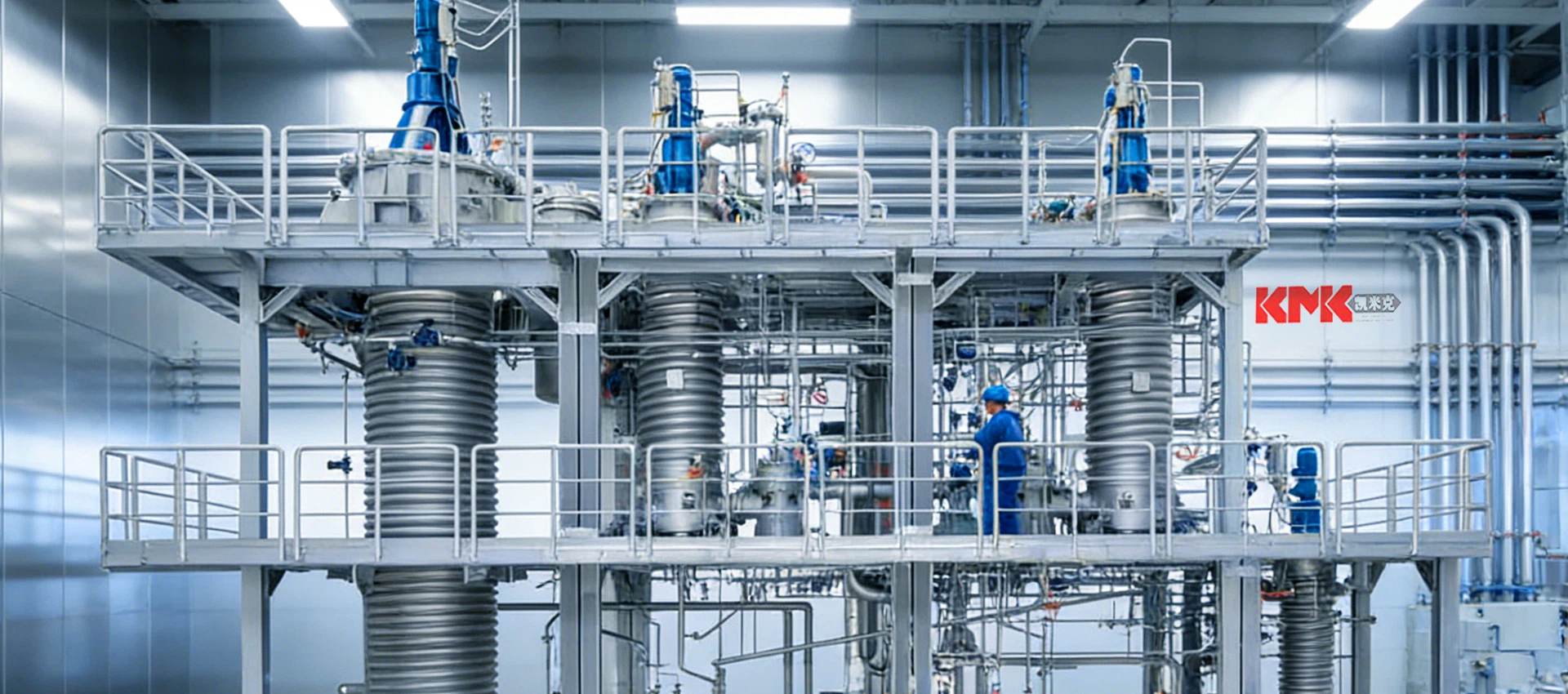
Evaporation operation mode of thin film evaporator
Jan 31, 2020
Leave a message
The thin film evaporator can be divided into normal pressure, pressure and reduced pressure evaporation operations. Obviously, for heat-sensitive materials, such as solutions and juices, it should be carried out under reduced pressure; while high-viscosity materials should be heated by pressurized high-temperature heat sources for evaporation, such as thermal oil, molten salts, and so on. The thin film evaporator is directly heated by a heat source. It is an evaporation process in which fuel and air are mixed, and the high-temperature flame and smoke generated by combustion are sprayed directly into the evaporated solution through a nozzle to heat the solution and vaporize the solvent. The whole process is simple, efficient and can bring a series of benefits. During normal operation of the cold storage refrigeration system, the surface temperature of the heat transfer oil, molten salt, etc. is much lower than the dew point temperature of the air, and moisture in food and air will precipitate and condense on the tube wall. If the tube wall temperature is lower than 0 °, water dew will condense into frost. Frosting is also the result of normal operation of the refrigeration system, so a small amount of frost on the evaporator surface is allowed. Because the thermal conductivity of frost is too small, it is one hundredth, or even a few hundredths of the metal, so the frost layer forms a large thermal resistance. Especially when the frost layer is thick, it is like heat insulation, so that the cold amount in the evaporator is not easy to radiate, which affects the cooling effect such as heat transfer oil, molten salt, etc., and makes the cold storage not reach the required temperature. At the same time, the evaporation of the refrigerant in the evaporator should also be weakened, and the incompletely evaporated ammonia liquid may be sucked into the compressor and cause a liquid hammer accident. Zh
https://www.heczb.com