

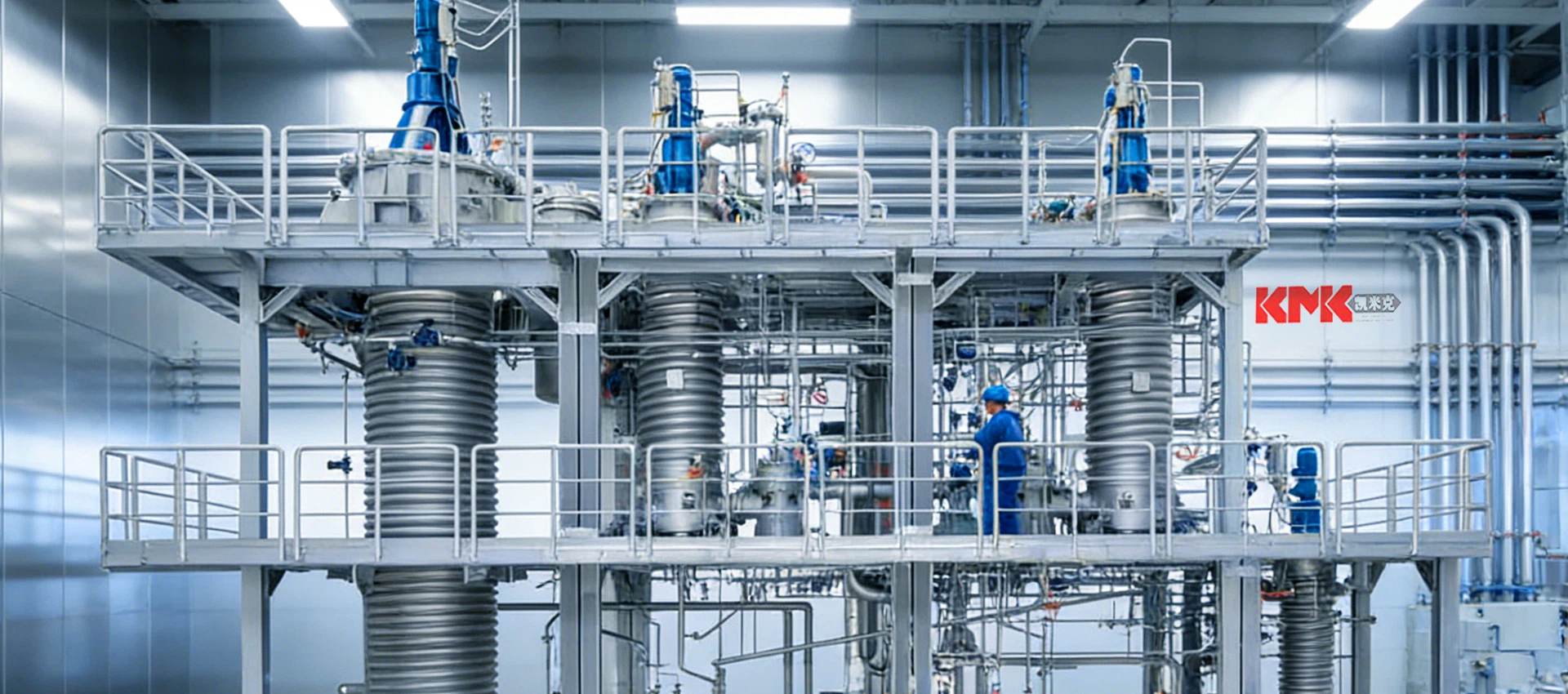
Application of MVR evaporator in wastewater treatment of pharmaceutical industry
Mar 23, 2020
Leave a message
The principle of high COD and high salinity pharmaceutical wastewater MVR evaporation treatment technology mainly includes three parts:
The first part is front-end processing, that is, reverse osmosis membrane processing. The pharmaceutical industry wastewater is heated and concentrated by a preheater, heated to the temperature required in the MVR evaporator, and the concentration is controlled by a concentration monitor. At the same time, the elevated temperature difference and concentration are determined based on the physical and chemical properties of the pharmaceutical industry wastewater and are automatically controlled by the PLC system;
The second part is intermediate processing, which is MVR processing. The pharmaceutical industry waste water heated and concentrated by the preheater is introduced into the MVR evaporator through a pump. In the heat exchanger, the pharmaceutical industry waste water is cyclically heated, evaporated, and concentrated. The distilled water obtained is returned to the preheating. It is used for preheating the original liquid; the obtained concentrated liquid and steam enter the liquid-gas separator, and through the liquid-gas separator, the separated steam enters the compressor, and the separated concentrated liquid is directly returned to the The useful substances in the collection tank can be recovered by processing the concentrated liquid;
The third part is the back-end processing, that is, solid-liquid separation processing. When the saturated concentrated liquid evaporated by MVR satisfies certain conditions (saturation, viscosity, etc.), the PLC control system will issue instructions to the solid-liquid separator, the valve will automatically open, and the concentrated liquid will flow into the constant temperature crystallizer. The saturated concentrated liquid is processed by a constant temperature crystallizer to precipitate a solid, so as to separate the solid from the liquid.
In the end, by recycling the compressed, heated, and boosted secondary steam, the recycling and utilization of useful substances in the wastewater of the pharmaceutical industry and the "zero discharge" of the wastewater of the pharmaceutical industry are achieved.
https://www.heczb.com