

What is the heat transfer coefficient of a Rising Film Evaporator?
Jun 30, 2025
Leave a message
As a supplier of Rising Film Evaporators, I often get asked about the heat transfer coefficient of these nifty machines. So, I thought I'd take a few minutes to break it down for you.
First off, let's talk about what a Rising Film Evaporator is. It's a type of evaporator that uses the principle of film evaporation. In simple terms, the liquid to be evaporated is fed into a vertical tube. As the liquid moves up the tube, it forms a thin film on the inner surface of the tube. Heat is then applied to the outside of the tube, causing the liquid in the film to evaporate. The vapor then rises up the tube and is collected at the top.
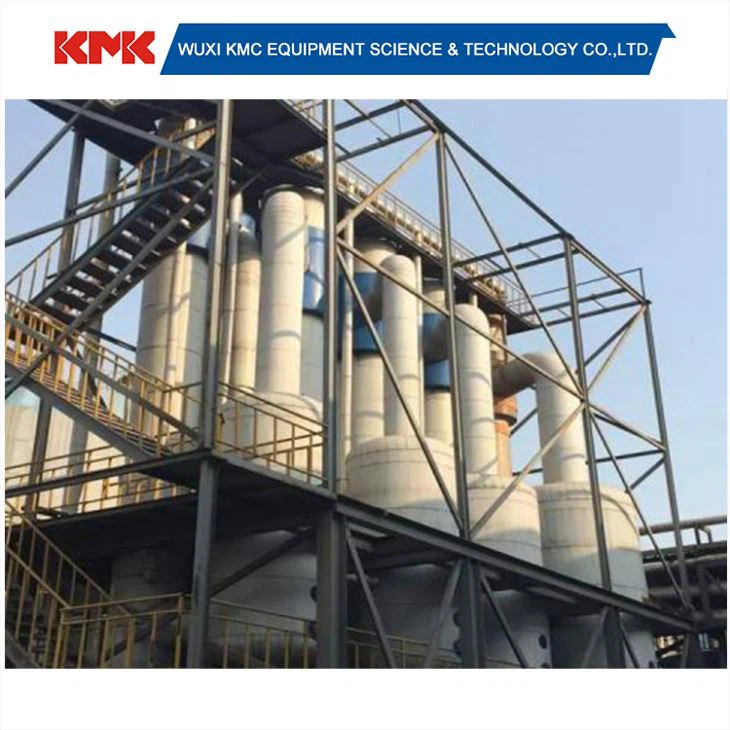

Now, the heat transfer coefficient is a measure of how well heat is transferred from the heating medium (usually steam) to the liquid being evaporated. It's an important parameter because it determines the efficiency of the evaporator. A higher heat transfer coefficient means that more heat can be transferred in a given amount of time, which in turn means that the evaporator can operate more efficiently.
So, what affects the heat transfer coefficient in a Rising Film Evaporator? Well, there are several factors:
Fluid Properties
The properties of the liquid being evaporated play a big role. Things like viscosity, density, and thermal conductivity all impact how well heat can be transferred. For example, a more viscous liquid will have a lower heat transfer coefficient because it's harder for the heat to penetrate through the thick fluid.
Flow Rate
The flow rate of the liquid through the tube is also crucial. If the flow rate is too low, the liquid film may become too thick, which can reduce the heat transfer coefficient. On the other hand, if the flow rate is too high, the liquid may not have enough time to form a proper film, also leading to a decrease in the heat transfer coefficient. There's an optimal flow rate for each specific application that maximizes the heat transfer.
Tube Diameter and Length
The diameter and length of the tubes in the evaporator matter too. A smaller tube diameter generally leads to a higher heat transfer coefficient because the liquid film is thinner, allowing for better heat transfer. However, if the tubes are too small, the pressure drop across the tubes can become too high, which can cause operational problems. The length of the tubes also affects the heat transfer. Longer tubes give the liquid more time to evaporate, but they also increase the pressure drop.
Heating Medium Temperature
The temperature of the heating medium (steam) is another key factor. A higher steam temperature will increase the temperature difference between the heating medium and the liquid, which in turn increases the driving force for heat transfer. However, there are limits to how high the steam temperature can be. Too high a temperature can cause thermal degradation of the liquid being evaporated, especially if it contains heat - sensitive components.
Surface Conditions
The condition of the inner surface of the tubes can impact the heat transfer coefficient. A smooth surface allows for better film formation and heat transfer. Any fouling or scaling on the tube surface can act as an insulator, reducing the heat transfer coefficient. Regular cleaning and maintenance of the tubes are essential to keep the heat transfer coefficient at an optimal level.
Calculating the exact heat transfer coefficient for a Rising Film Evaporator can be quite complex. It usually involves using empirical correlations based on experimental data. These correlations take into account all the factors I mentioned above.
In our experience as a Rising Film Evaporator supplier, we've found that for most common applications, the heat transfer coefficient can range from around 500 to 3000 W/(m²·K). But this is just a rough estimate. For more specialized applications, like those involving highly viscous or heat - sensitive fluids, the heat transfer coefficient can be significantly different.
Now, if you're in the market for an evaporator, you might also be interested in some other types of evaporators we offer. We have Wiped Film Evaporators, which are great for handling high - viscosity fluids and heat - sensitive materials. The wiping action helps to create a thin, well - mixed film, enhancing the heat transfer.
We also have Wastewater Evaporators, which are designed to treat industrial wastewater. These evaporators can help you reduce your wastewater volume and recover valuable components from the wastewater.
And then there are Scraping Film Evaporator, which are similar to wiped film evaporators but use a scraping mechanism to continuously remove the film from the tube surface. This is useful for applications where fouling is a major concern.
If you're considering purchasing a Rising Film Evaporator or any of our other evaporator products, we'd love to have a chat with you. Every application is unique, and we can work with you to determine the best evaporator solution for your specific needs. Whether you're in the food, chemical, pharmaceutical, or any other industry, we have the expertise to help you select the right equipment with the optimal heat transfer coefficient for your process.
Contact us to start the conversation about your evaporator requirements. We'll be happy to provide you with detailed technical information, quotes, and answer any questions you might have. Let's work together to find the perfect evaporator for your business!
References
- Incropera, F. P., & DeWitt, D. P. (2002). Fundamentals of Heat and Mass Transfer. Wiley.
- Kern, D. Q. (1950). Process Heat Transfer. McGraw - Hill.