

What are the benefits of automating a film evaporator?
May 26, 2025
Leave a message
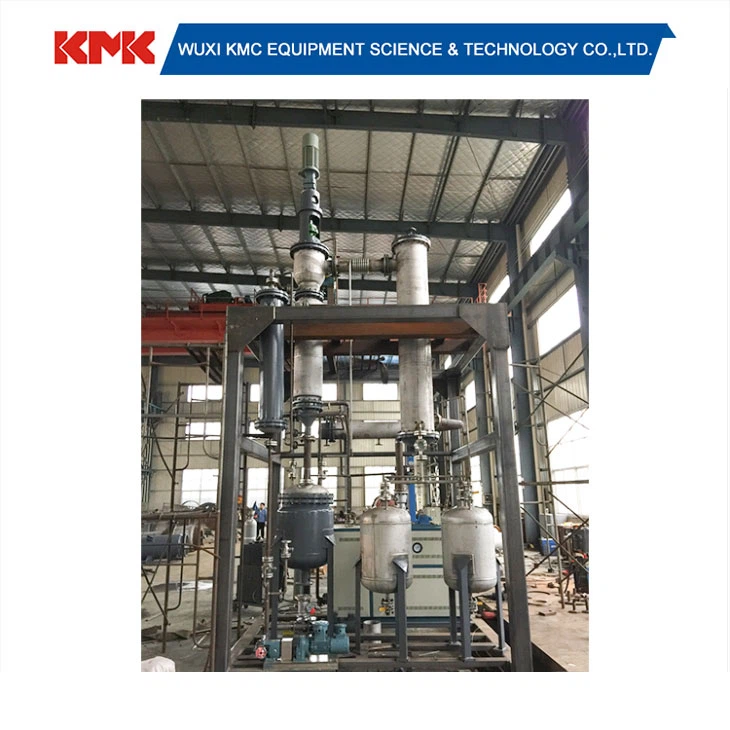
In the realm of chemical, pharmaceutical, and food industries, film evaporators have long been recognized as essential equipment for efficient separation and concentration processes. As a leading supplier of film evaporators, I've witnessed firsthand the transformative impact of automation on these devices. In this blog, I'll delve into the numerous benefits of automating a film evaporator, highlighting how it can enhance productivity, improve product quality, and reduce operational costs.
1. Enhanced Productivity
One of the most significant advantages of automating a film evaporator is the substantial increase in productivity. Manual operation of a film evaporator requires constant monitoring and adjustment of various parameters such as temperature, pressure, flow rate, and feed rate. This not only consumes a significant amount of time and labor but also leaves room for human error.
Automation eliminates these issues by allowing the film evaporator to operate continuously and consistently without the need for constant human intervention. Advanced control systems can precisely regulate all the critical parameters, ensuring optimal operating conditions at all times. For example, the automation system can adjust the feed rate based on the level of the product in the evaporator, maintain a stable temperature and pressure, and control the speed of the rotating film.
This continuous and precise operation leads to a significant increase in the evaporation rate, allowing the film evaporator to process larger volumes of feedstock in a shorter period. As a result, the overall productivity of the production line can be greatly improved, enabling companies to meet higher demand and increase their output.
2. Improved Product Quality
Automation also plays a crucial role in improving the quality of the final product. In manual operation, variations in the operating parameters can lead to inconsistent product quality. For instance, fluctuations in temperature or pressure can cause the product to over - evaporate or under - evaporate, resulting in a product with an incorrect concentration or a degraded quality.
With automation, the film evaporator can maintain a stable and consistent operating environment, ensuring that the product is processed under the same optimal conditions every time. The control system can precisely monitor and adjust the parameters to prevent any deviations from the set values. This consistency in processing leads to a more uniform product quality, with fewer variations in concentration, purity, and other critical properties.
Moreover, automation can also reduce the risk of contamination. In a manual system, human operators may inadvertently introduce contaminants during the operation, such as through improper handling or cleaning. Automated film evaporators can be designed with closed - loop systems and advanced cleaning procedures that minimize the risk of contamination, further enhancing the product quality.
3. Reduced Operational Costs
Automating a film evaporator can lead to significant cost savings in several ways. Firstly, as mentioned earlier, automation increases productivity, which means that more product can be produced with the same amount of resources. This results in a lower cost per unit of production, as the fixed costs of the equipment and the production facility are spread over a larger volume of output.

Secondly, automation reduces the labor requirements. Manual operation of a film evaporator typically requires skilled operators to monitor and adjust the equipment continuously. By automating the process, the need for constant human supervision is eliminated, allowing companies to re - allocate their labor resources to other value - added tasks. This not only reduces labor costs but also improves the overall efficiency of the workforce.
In addition, automation can also lead to energy savings. Advanced control systems can optimize the energy consumption of the film evaporator by adjusting the heating and cooling requirements based on the actual operating conditions. For example, the system can reduce the heating power when the product is close to the desired concentration, or adjust the cooling rate to minimize energy waste. Over time, these energy savings can add up to a significant reduction in operational costs.
4. Increased Safety
Safety is a top priority in any industrial operation, and automating a film evaporator can significantly enhance the safety of the workplace. Manual operation of a film evaporator involves working with high - temperature and high - pressure equipment, which poses a risk of burns, explosions, and other accidents.
Automated film evaporators are equipped with advanced safety features and control systems that can detect and respond to potential safety hazards in real - time. For example, the system can automatically shut down the equipment if it detects a pressure or temperature deviation beyond the safe limits, or if there is a problem with the feed or discharge system. This reduces the risk of accidents and protects the operators from harm.
Furthermore, automation can also reduce the exposure of operators to hazardous chemicals. In a manual system, operators may need to handle chemicals directly during the filling and emptying of the evaporator. Automated systems can be designed with closed - loop transfer systems that minimize the contact between operators and chemicals, further improving the safety of the workplace.
5. Flexibility and Adaptability
Automated film evaporators offer greater flexibility and adaptability compared to their manual counterparts. The control system can be easily programmed to adjust the operating parameters according to different production requirements. For example, if a company needs to process a different type of feedstock or produce a product with a different concentration, the automation system can be re - configured to optimize the evaporation process for the new requirements.
This flexibility allows companies to quickly respond to changes in the market demand or product specifications. They can easily switch between different production runs without the need for extensive re - engineering or manual adjustments of the equipment. As a result, companies can be more competitive in the market by offering a wider range of products and services.
Our Product Offerings
As a supplier of film evaporators, we offer a wide range of automated film evaporator solutions to meet the diverse needs of our customers. Our product portfolio includes Three Effect Falling Film Evaporator, which is designed for high - efficiency evaporation and concentration processes. It utilizes a three - effect design to maximize the energy utilization and reduce the operating costs.
We also provide Horizontal Thin Film Evaporators, which are ideal for heat - sensitive materials. The horizontal design allows for a short residence time of the product in the evaporator, minimizing the thermal degradation of the product.
In addition, our Forced Circulation Evaporation Equipment is suitable for applications where a high - viscosity or fouling feedstock needs to be processed. The forced circulation system ensures a uniform flow of the product through the evaporator, preventing the formation of deposits and improving the overall efficiency of the process.
Contact Us for Purchase and Consultation
If you're interested in learning more about the benefits of automating a film evaporator or would like to explore our product offerings, we encourage you to contact us. Our team of experts is ready to provide you with detailed information, technical support, and customized solutions based on your specific requirements. Whether you're a small - scale producer or a large - scale industrial enterprise, we can help you find the right film evaporator solution to enhance your production efficiency and product quality.
References
- Perry, R. H., & Green, D. W. (1997). Perry's Chemical Engineers' Handbook. McGraw - Hill.
- Walas, S. M. (1988). Chemical Process Equipment: Selection and Design. Butterworth - Heinemann.