

How to evaluate the performance of different film evaporators?
Jan 08, 2026
Leave a message
When it comes to the world of industrial evaporation, film evaporators stand out as a crucial piece of equipment. As a film evaporator supplier, I've witnessed firsthand the diverse applications and varying performance levels of different film evaporators. In this blog, I'll share insights on how to evaluate the performance of these essential devices.
Understanding Film Evaporators
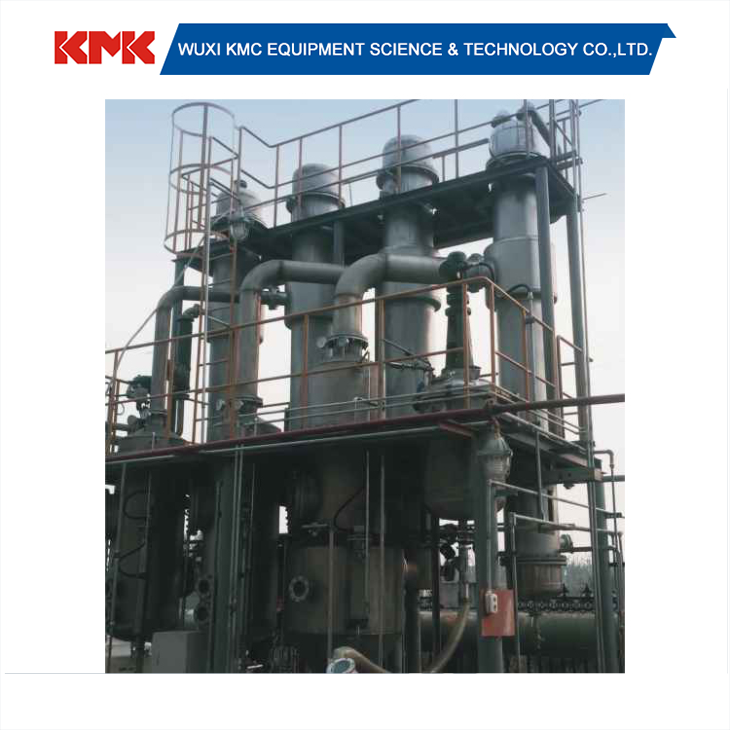
Film evaporators are designed to separate a liquid mixture by vaporizing the more volatile components. They operate by creating a thin film of the liquid on a heated surface, which significantly enhances the heat transfer rate and reduces the residence time of the liquid. This results in efficient evaporation and is particularly useful for heat - sensitive materials. There are several types of film evaporators, including Rising Film Evaporator, Single Effect Evaporator, and Multi Effect Falling Film Evaporator. Each type has its own unique characteristics and performance metrics.
Key Performance Indicators
1. Evaporation Capacity
Evaporation capacity is one of the most fundamental performance indicators. It refers to the amount of liquid that can be evaporated per unit of time. A high - capacity film evaporator is essential for large - scale industrial processes. To evaluate this, we need to measure the mass flow rate of the feed liquid and the mass flow rate of the vapor produced. The difference between the two gives us the evaporation rate. For example, in a chemical manufacturing plant, a film evaporator with a high evaporation capacity can quickly separate solvents from reaction mixtures, increasing the overall production efficiency.
2. Heat Transfer Efficiency
Heat transfer efficiency is a measure of how effectively the film evaporator transfers heat from the heating medium to the liquid being evaporated. A high - efficiency heat transfer process means less energy is wasted, resulting in lower operating costs. To assess heat transfer efficiency, we can calculate the overall heat transfer coefficient (U). This coefficient takes into account factors such as the thermal conductivity of the materials, the flow rates of the heating medium and the liquid, and the surface area of the heat transfer surface. A higher U value indicates better heat transfer efficiency.
3. Product Quality
The quality of the evaporated product is a critical consideration, especially in industries such as food and pharmaceuticals. Film evaporators should be able to maintain the integrity of the product during the evaporation process. For heat - sensitive products, a short residence time and gentle evaporation conditions are necessary to prevent degradation. We can evaluate product quality by analyzing the chemical composition, physical properties, and sensory characteristics of the evaporated product. For instance, in the production of fruit juices, a film evaporator that can preserve the natural flavor and nutritional value of the juice is highly desirable.
4. Energy Consumption
Energy consumption is directly related to the operating cost of the film evaporator. A more energy - efficient evaporator will reduce the overall production cost. We can measure energy consumption by monitoring the power consumption of the heating system, pumps, and other auxiliary equipment. Additionally, the use of multi - effect evaporators can significantly reduce energy consumption by reusing the latent heat of the vapor produced in the previous effect. For example, a Multi Effect Falling Film Evaporator can achieve substantial energy savings compared to a single - effect evaporator.

5. Fouling and Scaling
Fouling and scaling on the heat transfer surface can significantly reduce the performance of a film evaporator over time. Fouling occurs when impurities in the liquid deposit on the surface, while scaling is the formation of hard mineral deposits. These deposits act as insulators, reducing the heat transfer efficiency and increasing the pressure drop across the evaporator. To evaluate the resistance to fouling and scaling, we can monitor the change in heat transfer coefficient and pressure drop over a period of time. Regular cleaning and maintenance are essential to minimize the impact of fouling and scaling.
Evaluation Methods
1. Laboratory Testing
Laboratory testing is an effective way to evaluate the performance of film evaporators on a small scale. We can use a pilot - scale film evaporator to simulate the actual industrial process. By varying the operating conditions such as feed flow rate, heating temperature, and pressure, we can measure the key performance indicators mentioned above. Laboratory testing allows us to quickly obtain data and optimize the operating parameters before scaling up to a full - scale production.
2. On - site Monitoring
On - site monitoring is crucial for evaluating the long - term performance of film evaporators in real - world industrial settings. We can install sensors to continuously monitor parameters such as temperature, pressure, flow rate, and composition. The data collected can be used to analyze the performance trends over time and identify any potential issues. For example, if the heat transfer efficiency starts to decline, we can investigate whether it is due to fouling, scaling, or other factors.
3. Comparison with Benchmarks
Comparing the performance of a film evaporator with industry benchmarks can provide valuable insights. Benchmarks can be obtained from industry reports, research papers, or the performance data of similar evaporators. By comparing our evaporator's performance with the benchmarks, we can determine its relative competitiveness and identify areas for improvement.
Case Studies
Case 1: Rising Film Evaporator in a Dairy Industry
In a dairy processing plant, a Rising Film Evaporator was used to concentrate milk. The evaporation capacity was evaluated by measuring the amount of water removed from the milk per hour. The heat transfer efficiency was calculated based on the temperature difference between the heating steam and the milk, as well as the flow rates. By optimizing the operating parameters such as the feed rate and steam pressure, the plant was able to increase the evaporation capacity by 15% and improve the heat transfer efficiency by 10%.
Case 2: Multi Effect Falling Film Evaporator in a Chemical Industry
A chemical company installed a Multi Effect Falling Film Evaporator to separate solvents from chemical solutions. The energy consumption was a major concern. By monitoring the power consumption of the heating system and the pumps, the company found that the multi - effect design reduced the energy consumption by 30% compared to a single - effect evaporator. Additionally, the product quality was maintained at a high level, as the short residence time in the evaporator prevented the degradation of the chemical products.
Conclusion
Evaluating the performance of different film evaporators is a complex but essential task. By considering key performance indicators such as evaporation capacity, heat transfer efficiency, product quality, energy consumption, and fouling resistance, and using appropriate evaluation methods such as laboratory testing, on - site monitoring, and benchmark comparison, we can make informed decisions when selecting and operating film evaporators.
As a film evaporator supplier, we are committed to providing high - performance equipment that meets the diverse needs of our customers. If you are interested in learning more about our film evaporators or have specific requirements for your industrial process, please feel free to contact us for further discussion and procurement negotiation.
References
- Perry, R. H., & Green, D. W. (1997). Perry's Chemical Engineers' Handbook. McGraw - Hill.
- Kern, D. Q. (1950). Process Heat Transfer. McGraw - Hill.
- Mujumdar, A. S. (2014). Handbook of Industrial Drying. CRC Press.