

Can a Short Path Evaporator be used for processing natural products?
Dec 04, 2025
Leave a message
In the realm of natural product processing, the search for efficient and reliable equipment is a constant pursuit. As a supplier of Short Path Evaporators, I am frequently asked whether this technology can be effectively used for processing natural products. In this blog post, I will delve into the capabilities of Short Path Evaporators and explore their suitability for various natural product applications.
Understanding Short Path Evaporators
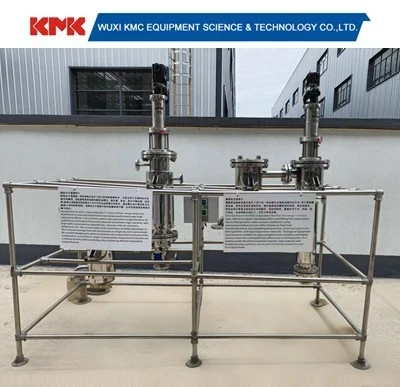
Before discussing their application in natural product processing, it's essential to understand what Short Path Evaporators are. A Short Path Evaporator is a type of distillation equipment designed to separate mixtures under high vacuum conditions. It operates on the principle of molecular distillation, where the distance between the evaporation surface and the condensation surface is very short. This short path reduces the time and distance that molecules need to travel, minimizing the risk of thermal degradation and allowing for the separation of heat - sensitive compounds.
The key components of a Short Path Evaporator include an evaporation surface, a condenser, and a high - vacuum system. The feed material is introduced onto the evaporation surface, where it is heated under vacuum. The volatile components evaporate and travel a short distance to the condenser, where they are condensed and collected as the distillate. The non - volatile components remain on the evaporation surface and are removed as the residue.
Advantages of Short Path Evaporators for Natural Product Processing
One of the primary advantages of Short Path Evaporators in natural product processing is their ability to handle heat - sensitive compounds. Many natural products, such as essential oils, fatty acids, and bioactive compounds, are sensitive to high temperatures. Prolonged exposure to heat can cause these compounds to degrade, lose their biological activity, or develop off - flavors. Short Path Evaporators operate at relatively low temperatures due to the high vacuum environment, which significantly reduces the thermal stress on the natural products.
Another advantage is the high separation efficiency. The short distance between the evaporation and condensation surfaces allows for a more efficient separation of components with different boiling points. This results in a higher purity of the distillate, which is crucial for natural product applications where purity can directly impact the quality and value of the final product.
Short Path Evaporators also offer a high degree of flexibility. They can be used for a wide range of natural product processing tasks, including the purification of essential oils, the separation of fatty acids from vegetable oils, and the concentration of bioactive compounds from plant extracts. The ability to adjust the operating parameters, such as temperature, vacuum level, and feed rate, allows for precise control over the separation process, making it suitable for different types of natural products.
Applications in Natural Product Processing
Essential Oil Purification
Essential oils are widely used in the fragrance, cosmetics, and aromatherapy industries. They are typically extracted from plants through methods such as steam distillation or solvent extraction. However, the crude essential oils obtained from these methods often contain impurities, such as waxes, resins, and other non - volatile components. Short Path Evaporators can be used to purify essential oils by removing these impurities. The heat - sensitive nature of essential oils makes them an ideal candidate for Short Path Evaporation, as the low - temperature operation helps to preserve their aroma and biological properties.
Fatty Acid Separation
Vegetable oils are rich in various fatty acids, which have different physical and chemical properties. The separation of specific fatty acids from vegetable oils is important for applications in the food, pharmaceutical, and cosmetic industries. Short Path Evaporators can be used to separate fatty acids based on their boiling points. For example, in the production of omega - 3 fatty acids from fish oil, Short Path Evaporation can be used to concentrate and purify these valuable fatty acids while minimizing oxidation and degradation.
Bioactive Compound Concentration
Many plants contain bioactive compounds with potential health benefits, such as antioxidants, flavonoids, and alkaloids. Extracting and concentrating these bioactive compounds from plant materials is a challenging task. Short Path Evaporators can be used to concentrate these compounds from plant extracts by removing the solvent and other low - molecular - weight components. The low - temperature operation of Short Path Evaporators helps to preserve the biological activity of these compounds, making them suitable for use in nutraceuticals and functional foods.
Comparison with Other Evaporator Types
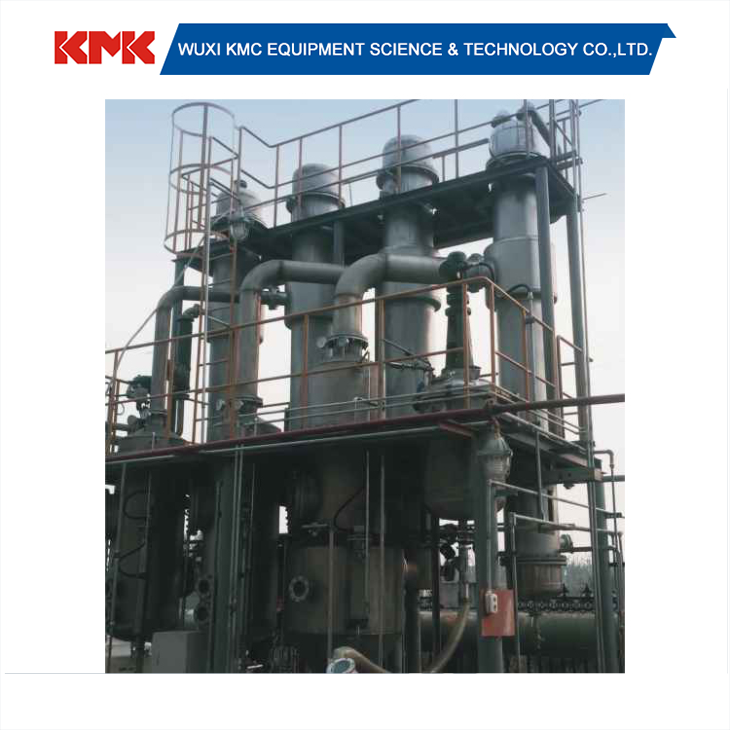
When considering equipment for natural product processing, it's important to compare Short Path Evaporators with other types of evaporators. For example, Multi Effect Falling Film Evaporator is another commonly used evaporator in the industry. Multi Effect Falling Film Evaporators are suitable for large - scale evaporation processes and are often used for concentrating solutions with high solids content. However, they operate at relatively high temperatures, which may not be suitable for heat - sensitive natural products.
Thin Film And Wiped Film Evaporators are also similar to Short Path Evaporators in some aspects. They both operate under vacuum and are designed to handle heat - sensitive materials. However, Thin Film And Wiped Film Evaporators have a longer evaporation path compared to Short Path Evaporators, which may result in a slightly lower separation efficiency and a higher risk of thermal degradation for some heat - sensitive natural products.
Wastewater Evaporators are mainly used for treating industrial wastewater by evaporating the water and concentrating the contaminants. While they share some basic principles with Short Path Evaporators, their design and operating parameters are optimized for wastewater treatment rather than natural product processing.
Challenges and Considerations
Although Short Path Evaporators offer many advantages for natural product processing, there are also some challenges and considerations. One of the main challenges is the high cost of equipment. Short Path Evaporators require a high - quality vacuum system and precision components, which can make them more expensive than other types of evaporators. Additionally, the operation and maintenance of Short Path Evaporators require a certain level of technical expertise. Incorrect operation can lead to reduced separation efficiency, product degradation, or equipment damage.
Another consideration is the scale of production. Short Path Evaporators are typically more suitable for small - to medium - scale production due to their relatively low throughput compared to some other types of evaporators. For large - scale natural product processing, multiple Short Path Evaporators may need to be used in parallel or in combination with other types of equipment.
Conclusion
In conclusion, Short Path Evaporators can be effectively used for processing natural products. Their ability to handle heat - sensitive compounds, high separation efficiency, and flexibility make them a valuable tool in the natural product industry. However, like any equipment, they have their own advantages and limitations. When considering using a Short Path Evaporator for natural product processing, it's important to carefully evaluate the specific requirements of the product, the scale of production, and the available budget.
If you are interested in learning more about how a Short Path Evaporator can meet your natural product processing needs, or if you have any questions about our products, please feel free to contact us for a detailed discussion. We are committed to providing high - quality equipment and professional technical support to help you achieve your processing goals.
References
- Merson, R. L., & Morgan, J. G. (1976). Evaporation. In Handbook of Food Engineering (pp. 1 - 50). CRC Press.
- King, C. J. (1980). Separation Processes. McGraw - Hill.
- Reichert, R., & Meier, H. (2004). Molecular Distillation: Principles and Applications. Ullmann's Encyclopedia of Industrial Chemistry.