

Can a Fall Film Evaporator be used in the pharmaceutical industry?
Dec 19, 2025
Leave a message
Can a Fall Film Evaporator be used in the pharmaceutical industry?
In the fast - paced and highly regulated pharmaceutical industry, the choice of equipment can significantly impact product quality, production efficiency, and overall profitability. One such piece of equipment that has gained attention is the fall film evaporator. As a supplier of fall film evaporators, I am frequently asked about the suitability of these systems for pharmaceutical applications. In this blog, we will explore the potential of fall film evaporators in the pharmaceutical industry and analyze their advantages, limitations, and applications.
Understanding Fall Film Evaporators
A fall film evaporator is a type of evaporator where the feed liquid is distributed evenly over the inner surface of a vertical tube bundle. The liquid flows down the tube as a thin film under the influence of gravity, while heating medium (usually steam) is supplied on the outside of the tubes. As the liquid film flows downward, evaporation occurs, and the vapor is separated from the concentrated liquid at the bottom of the evaporator.
Fall film evaporators come in different configurations, such as Three Effect Falling Film Evaporator and Single Effect Evaporator. The three - effect falling film evaporator is designed to reuse the energy from the vapor produced in one effect to heat the subsequent effects, making it more energy - efficient compared to a single - effect evaporator.
Advantages of Fall Film Evaporators in the Pharmaceutical Industry
-
Gentle Evaporation Process
One of the most significant advantages of fall film evaporators is their gentle evaporation process. In the pharmaceutical industry, many active ingredients are heat - sensitive. Excessive heat can cause degradation of these substances, leading to a loss of potency and quality. Fall film evaporators operate at relatively low temperatures and short residence times, minimizing the exposure of the product to high temperatures. This gentle process helps preserve the integrity of the pharmaceutical compounds, ensuring that the final product meets the required quality standards. -
High Heat Transfer Efficiency
The thin film of liquid in a fall film evaporator provides a large surface area for heat transfer. This results in high heat transfer coefficients, which means that more heat can be transferred per unit area and time. As a result, fall film evaporators can achieve rapid evaporation rates, increasing the productivity of the pharmaceutical manufacturing process. High heat transfer efficiency also reduces the energy consumption per unit of evaporation, making it a cost - effective solution for large - scale production. -
Uniform Concentration
The design of fall film evaporators ensures a uniform flow of the liquid film over the tube surface. This leads to uniform evaporation and concentration of the product. In pharmaceutical manufacturing, consistent product quality is crucial. Uniform concentration helps in producing pharmaceutical formulations with consistent strength and purity, which is essential for meeting regulatory requirements and ensuring patient safety. -
Scalability
Fall film evaporators can be easily scaled up or down to meet the production requirements of different pharmaceutical companies. Whether it is a small - scale research and development laboratory or a large - scale production facility, there is a fall film evaporator configuration available. This scalability makes it a versatile option for the pharmaceutical industry, which often needs to adapt to changing market demands and production volumes.
Applications of Fall Film Evaporators in the Pharmaceutical Industry
-
Concentration of Pharma Solutions
Many pharmaceutical solutions, such as extracts, syrups, and suspensions, need to be concentrated during the manufacturing process. Fall film evaporators are ideal for this application as they can efficiently remove the solvent from these solutions without causing thermal damage to the active ingredients. For example, in the production of herbal extracts, fall film evaporators can be used to concentrate the aqueous extracts to obtain a more potent and stable product. -
Separation and Purification
Fall film evaporators can also be used in the separation and purification of pharmaceutical compounds. By evaporating the solvent selectively, it is possible to separate the desired pharmaceutical ingredient from impurities. Evaporative Distillation Engineering techniques based on fall film evaporators can be employed to achieve high - purity products. This is particularly important in the production of injectable drugs, where the presence of impurities can have serious consequences for patient health. -
Solvent Recovery
In the pharmaceutical manufacturing process, large amounts of solvents are used. Solvent recovery not only helps in reducing the production cost but also minimizes the environmental impact. Fall film evaporators can be used to recover solvents from pharmaceutical waste streams. The recovered solvents can be reused in subsequent production processes, making the manufacturing process more sustainable.
Limitations of Fall Film Evaporators in the Pharmaceutical Industry
-
Feed Requirements
Fall film evaporators require a relatively clean feed liquid. Particulate matter or high - viscosity substances can cause fouling of the tube surface, reducing the heat transfer efficiency and increasing the maintenance requirements. In the pharmaceutical industry, where the feed may contain various solids or have a high viscosity, additional pretreatment steps may be required to ensure the smooth operation of the fall film evaporator.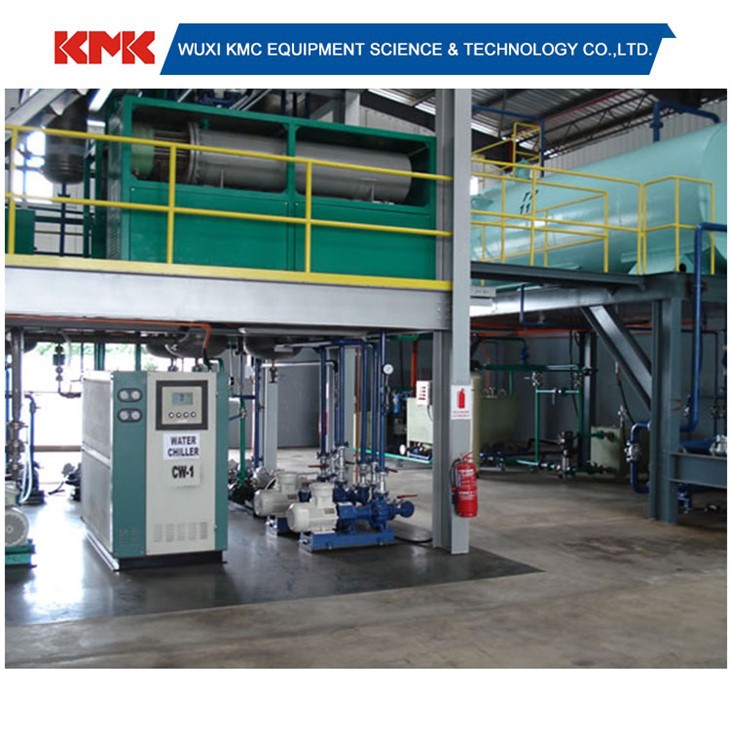

-
Initial Investment
The initial investment for a fall film evaporator system can be relatively high, especially for large - scale and multi - effect configurations. This can be a barrier for small - and medium - sized pharmaceutical companies with limited capital budgets. However, it is important to consider the long - term benefits in terms of energy savings, product quality, and productivity when evaluating the cost - effectiveness of the equipment.
Considerations for Using Fall Film Evaporators in the Pharmaceutical Industry
-
Compliance with Regulations
The pharmaceutical industry is highly regulated, and all equipment used in the manufacturing process must comply with strict standards. When selecting a fall film evaporator, it is essential to ensure that it meets the relevant pharmaceutical manufacturing regulations, such as Good Manufacturing Practices (GMP). This includes considerations such as material of construction, ease of cleaning, and preventions of cross - contamination. -
Technical Support and Maintenance
A reliable fall film evaporator system requires regular maintenance and technical support. As a supplier, we offer comprehensive training and support services to ensure that our customers can operate and maintain their evaporators effectively. We also provide spare parts and troubleshooting assistance to minimize the downtime of the equipment. -
Process Integration
Fall film evaporators need to be integrated into the overall pharmaceutical manufacturing process. This requires careful consideration of the process flow, material handling, and control systems. Our team of experts can work with pharmaceutical companies to design and implement customized solutions that optimize the use of fall film evaporators in their specific production processes.
Conclusion
In conclusion, fall film evaporators have significant potential for use in the pharmaceutical industry. Their gentle evaporation process, high heat transfer efficiency, uniform concentration, and scalability make them well - suited for various applications, including concentration, separation, purification, and solvent recovery. However, it is important to be aware of their limitations, such as feed requirements and initial investment, and to take appropriate considerations when using them in a pharmaceutical manufacturing environment.
If you are a pharmaceutical company looking for a reliable and efficient evaporation solution, we would be happy to discuss your specific needs. Our fall film evaporators are designed to meet the highest quality and performance standards, and our team of experts can provide you with the support and guidance you need. Contact us today to start a conversation about how our fall film evaporators can enhance your pharmaceutical manufacturing process.
References
- Perry, R. H., & Green, D. W. (2008). Perry's Chemical Engineers' Handbook. McGraw - Hill Professional.
- Walas, S. M. (2013). Chemical Process Equipment: Selection and Design. Butterworth - Heinemann.